

There’s something almost magical about a great pasta recipe. It’s the meal you crave after a long day, the dish that fills your kitchen with warmth, and the one recipe every home cook returns to again and again. Whether you’re hunting for a simple pasta recipe you can pull off on a Tuesday night or dreaming of making a proper homemade pasta recipe from scratch, this guide has everything you need. We’re covering it all white sauce, red sauce, fresh pasta dough, spaghetti classics, and even the viral rasta pasta recipe that’s taken over everyone’s feeds. Let’s cook.
Table of Contents
What Makes a Perfect Pasta Recipe? (The Basics Everyone Gets Wrong)
Before you touch a pot or a pan, let’s talk about the fundamentals because these are the things that quietly separate a great pasta recipe from a forgettable one.
First: shape meets sauce.
This is Italian law, and it’s worth following. Long, smooth pasta like spaghetti loves smooth, olive-oil-based or light tomato sauces that cling to its surface. Short, ridged pasta like rigatoni or penne is designed for chunky, meat-heavy sauces the ridges and hollow tubes trap every bit of flavour. Matching your pasta shape to your sauce isn’t fussiness; it’s the difference between a dish that tastes unified and one that feels like two separate things on the same plate.
Second: salt your water like you mean it.
Pasta water should taste pleasantly salty not like the ocean, but somewhere close. Use at least 1–2 tablespoons of salt per large pot of water. This is your only real chance to season the pasta itself, and no amount of sauce will compensate for bland, underseasoned noodles.
Third: al dente is non-negotiable.
Al dente — Italian for “to the tooth” means pasta that’s cooked through but still offers a slight, satisfying resistance when you bite into it. Mushy pasta is sad pasta. Start tasting your pasta 2 minutes before the package says it’s done.
The secret weapon: pasta water.
Before you drain your pasta, scoop out a full cup of that cloudy, starchy cooking water and set it aside. This liquid gold is the key to emulsification it binds fat and sauce into a silky, cohesive coating that clings to every noodle. I always have a mug ready by the stove. Don’t skip this.
Pasta Recipe Ingredients: What You Really Need
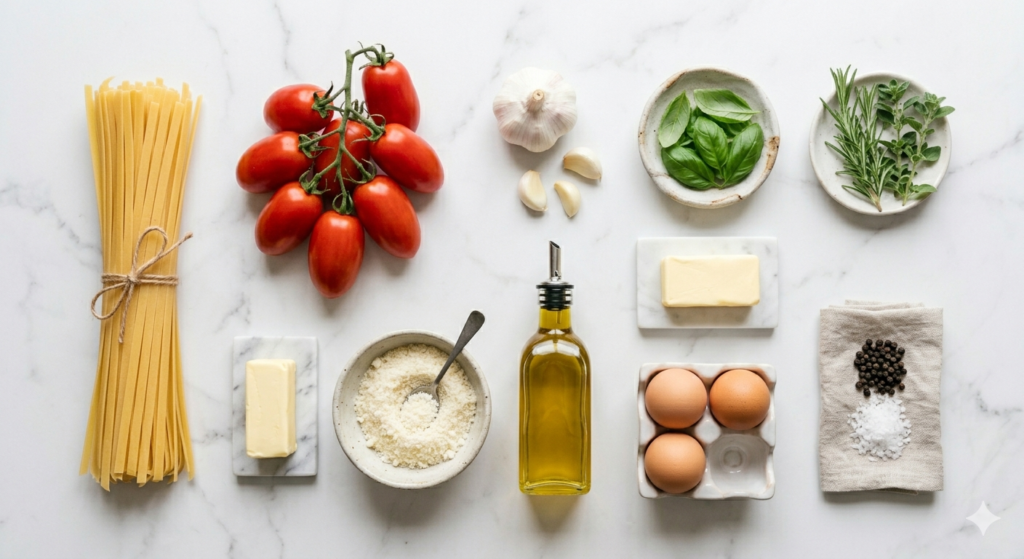
Ingredients for white sauce pasta recipe (béchamel — per 2 servings)
- Pasta (penne or fettuccine) — 200g per person: These shapes hold the creamy sauce beautifully. Fettuccine is classic; penne works brilliantly for a baked version.
- Butter — 2 tbsp: This is your roux base. Butter adds richness that olive oil simply can’t replicate in a cream sauce.
- All-purpose flour — 2 tbsp: The thickening agent. It cooks with the butter to form a roux, which gives béchamel sauce its signature silky body.
- Whole milk (or heavy cream) — 1½ cups: Whole milk gives a lighter result; heavy cream takes it to full restaurant-level richness. Your call.
- Garlic — 2–3 cloves, freshly minced (never jarred): Pre-minced jarred garlic has a sharp, acrid bite that ruins a delicate white sauce. Fresh makes all the difference.
- Parmesan cheese — ½ cup, finely grated: Do not use pre-shredded. Anti-caking agents in pre-shredded cheese prevent it from melting smoothly, leaving you with a grainy sauce.
- Salt, black pepper, Italian herbs, nutmeg (pinch): Nutmeg is the quiet secret of every great béchamel — it adds warmth without being identifiable.
- Optional: red chili flakes, extra Parmesan to serve
Ingredients for red sauce pasta recipe (per 4 servings)
- Pasta (spaghetti or penne) — 200g per person: Spaghetti for a classic marinara; penne if you want it more substantial.
- San Marzano crushed tomatoes — 1 x 400g can: These are sweeter and less acidic than standard tinned tomatoes. Worth the extra 50p, every single time.
- Extra virgin olive oil — 3 tbsp: The foundation of authentic Italian cooking. Don’t substitute vegetable oil.
- Onion, carrot, celery (mirepoix base) — 1 small each: This trio is the soffritto the flavour bedrock of restaurant-quality Italian sauces.
- Garlic cloves — 3–4, sliced thin
- Fresh basil, dried oregano
- Red wine — ½ cup (optional): Adds extraordinary depth and a subtle acidity that balances the tomatoes beautifully.
- Salt, black pepper, sugar — a pinch of sugar to balance tomato acidity if needed
Simple Pasta Recipe: White Sauce (Béchamel Pasta) — Step by Step
Step 1 — Boil the pasta
Bring a large pot of water to a rolling boil, then salt it generously — it should taste pleasantly salty. Cook your pasta until al dente, checking 2 minutes before the package time. Here’s the trick most people miss: before you drain, scoop out 1 full cup of pasta water and set it aside. This starchy water is your secret weapon for adjusting sauce consistency later.
Step 2 — Make the roux
Melt butter over medium heat in a wide pan, then add flour at a 1:1 ratio. Stir constantly for exactly 1 minute. Don’t skip this step cooking the flour in the butter removes the raw, powdery taste that ruins a white sauce. You’re looking for a pale golden paste that smells faintly nutty.
Step 3 — Add milk slowly
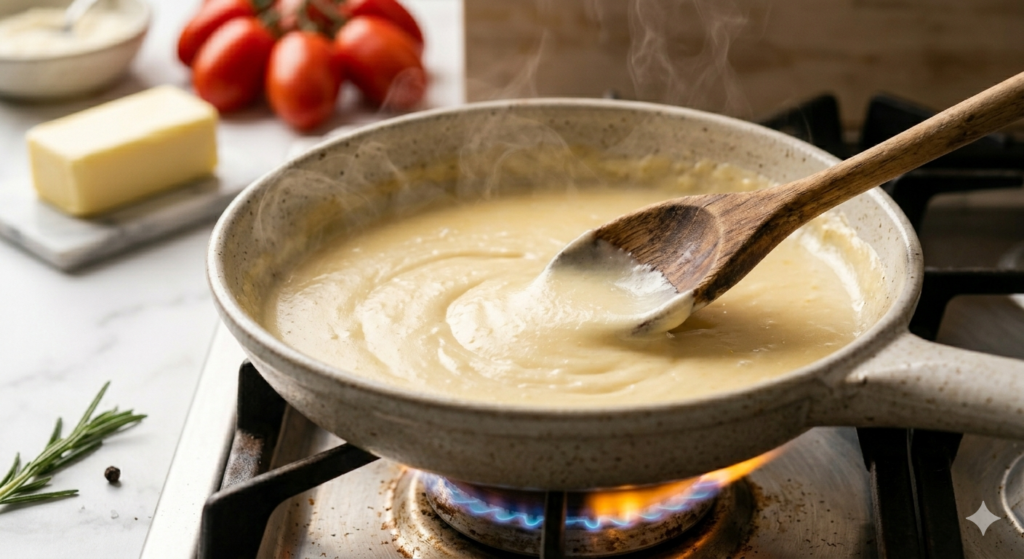
This is where lumps happen or don’t. Use warm milk, never cold. Cold milk hitting a hot roux shocks the starches into clumping. Pour in a steady, thin stream while whisking constantly with your other hand. Medium-low heat the entire time. After 3–4 minutes of whisking, your béchamel sauce should be smooth, glossy, and thick enough to coat the back of a spoon.
Step 4 — Season and layer flavour
Now add your flavour layers in stages: sauté the garlic first in a little extra butter in a separate pan, then fold it in. Add a pinch of nutmeg, black pepper, and Italian herbs. Once off the heat, stir in your finely grated Parmesan it melts beautifully into the warm sauce without seizing.
Step 5 — Combine pasta and sauce
Add pasta to sauce — never sauce to pasta. Tipping the sauce over pasta in a bowl means it slides to the bottom and the pasta sits dry on top. Instead, add your drained pasta directly into the pan of sauce and toss everything together. If it’s too thick, splash in some of that reserved pasta water, a tablespoon at a time.
Step 6 — Serve immediately
White sauce thickens quickly as it cools this pasta recipe is always best eaten straight from the pan. Plate it, top with extra Parmesan and red pepper flakes, and serve at once.
Pasta Recipe Red Sauce: Authentic Italian Tomato Sauce from Scratch
Step 1 — Build the soffritto
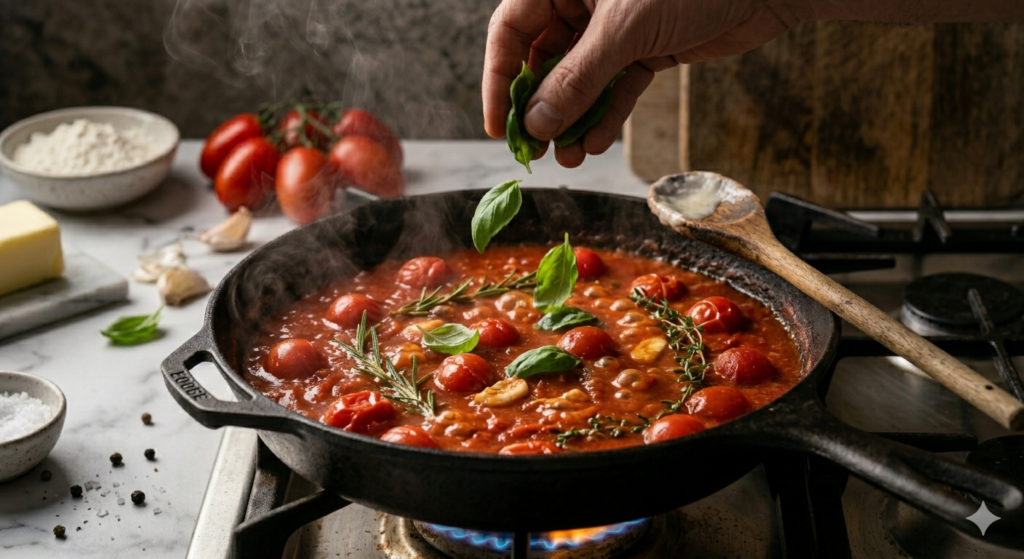
Heat extra virgin olive oil in a wide, heavy pan over medium-low heat. Add your finely diced onion, carrot, and celery the Italian soffritto and cook low and slow for 10–12 minutes until completely soft, sweet, and golden. This is the secret to restaurant-quality sauce that most home cooks rush past. Patience here is not optional.
Step 2 — Brown the garlic
Add thinly sliced garlic to the softened vegetables and cook for exactly 30 seconds, stirring constantly. Golden garlic = nutty, sweet, complex. Burnt garlic = bitter and unrescuable. Thirty seconds. Set a timer if you need to.
Step 3 — Deglaze and add tomatoes
If using red wine, pour it in now and let the alcohol cook off for 2 minutes you’ll smell it go from sharp to mellow. Then add your San Marzano crushed tomatoes, crushing any large pieces with the back of your spoon. Stir everything together and bring to a gentle simmer.
Step 4 — Low and slow simmer
Reduce heat to the lowest possible setting. Place the lid slightly ajar and let the sauce simmer for a minimum of 30–45 minutes. The science here is simple: as the sauce reduces, water evaporates and the tomato sugars concentrate, turning sharp acidity into rich, rounded depth. A rushed 10-minute sauce and a slow-cooked 45-minute sauce taste like different recipes entirely.
Step 5 — Season and finish
Taste and season with salt, pepper, and a pinch of sugar if the tomatoes are acidic. Then tear in your fresh basil and stir once fresh basil goes in at the very end. Heat destroys the delicate aromatic oils that make basil taste alive. Add it too early and it turns bitter and grey.
Step 6 — Toss pasta in sauce
This is the Italian way: add your almost-cooked pasta directly into the sauce for the final 1–2 minutes of cooking. The pasta absorbs flavour from the sauce, and the pasta’s starch slightly thickens the sauce. It’s a small step that makes a disproportionately big difference.
Homemade Pasta Recipe: Fresh Pasta from Scratch (2 Ingredients Only)
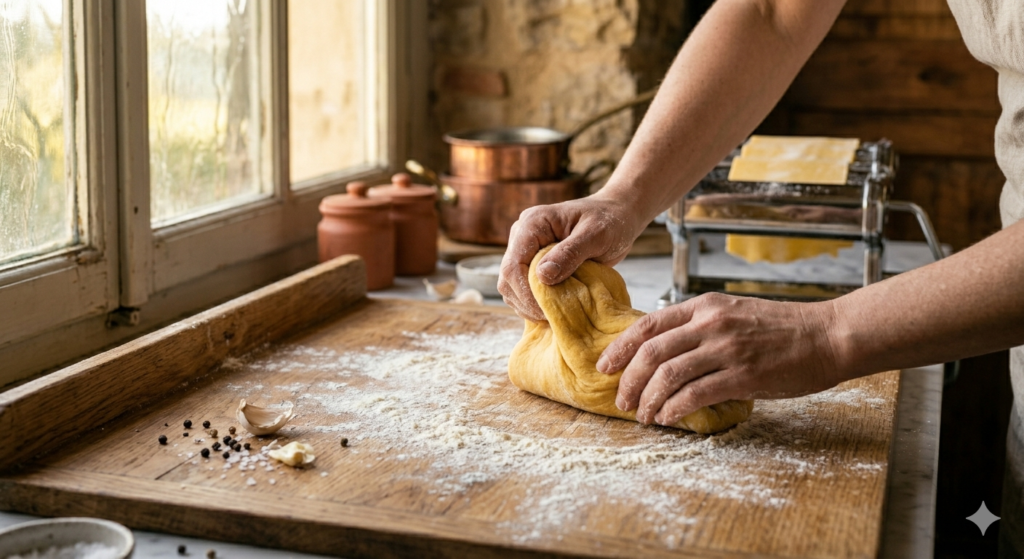
A homemade pasta recipe sounds intimidating until you realise it has exactly two ingredients: 00 flour and eggs. That’s it. The ratio is simple — 100g of flour per 1 large egg — and scales perfectly whether you’re making pasta for two or ten.
Why 00 flour? It’s milled extra-fine, creating a silkier, more elastic pasta dough than all-purpose flour. If you can’t find it, all-purpose works fine just expect a slightly more rustic texture.
Make a well in the centre of your flour, crack the eggs in, and use a fork to gradually incorporate the flour from the inside out. Once it comes together as a shaggy dough, start kneading with the heel of your hand. Knead for a full 10 minutes not 5, not 8. Under-kneaded dough tears when you roll it.
You’ll know the dough is ready by the “singing dough” test: press your ear close as you fold it, and you’ll hear tiny popping sounds as the gluten bubbles burst. That’s your cue to stop.
Wrap the dough tightly in cling film and rest it for at least 30 minutes at room temperature. Resting allows the gluten to relax, making rolling dramatically easier and preventing the dough from springing back at you.
Roll with a pasta machine for best results — start at the widest setting and work down gradually, flouring lightly as you go. A rolling pin works too; aim for about 2mm thickness. Cut into fettuccine, tagliatelle, or pappardelle depending on your sauce.
Fresh pasta cooks in 2–3 minutes in heavily salted boiling water far faster than the 8–12 minutes dried pasta needs. Watch it closely.
Spaghetti Pasta Recipes: 3 Classic Ways
Spaghetti aglio e olio (garlic & olive oil)
This is the ultimate simple pasta recipe — six ingredients, 15 minutes, and it tastes like you know what you’re doing. Boil 200g of spaghetti until al dente. Meanwhile, warm 4 tbsp of good extra virgin olive oil over medium-low heat and gently toast 4 sliced garlic cloves until golden (not brown). Add a generous pinch of red pepper flakes, then toss the drained pasta straight into the pan with a splash of pasta water to emulsify the garlic olive oil into a light, glossy sauce. Finish with flat-leaf parsley and grated Parmesan. That’s it and it’s cooked to perfection every time.
Spaghetti bolognese (classic meat sauce)
True Bolognese is a slow-cooked, deeply savoury meat sauce built on a soffritto base, with ground beef and pork (50/50 for the best flavour), a splash of red wine, and a genuine secret: a cup of whole milk added in the final 30 minutes of simmering. The milk tenderises the meat and gives the sauce a silky, velvety finish that no other recipe achieves. Total simmer time: minimum 90 minutes. It’s not a weeknight dinner recipe — it’s a Sunday ritual. See our full spaghetti Bolognese recipe for the detailed step-by-step.
Rasta pasta recipe
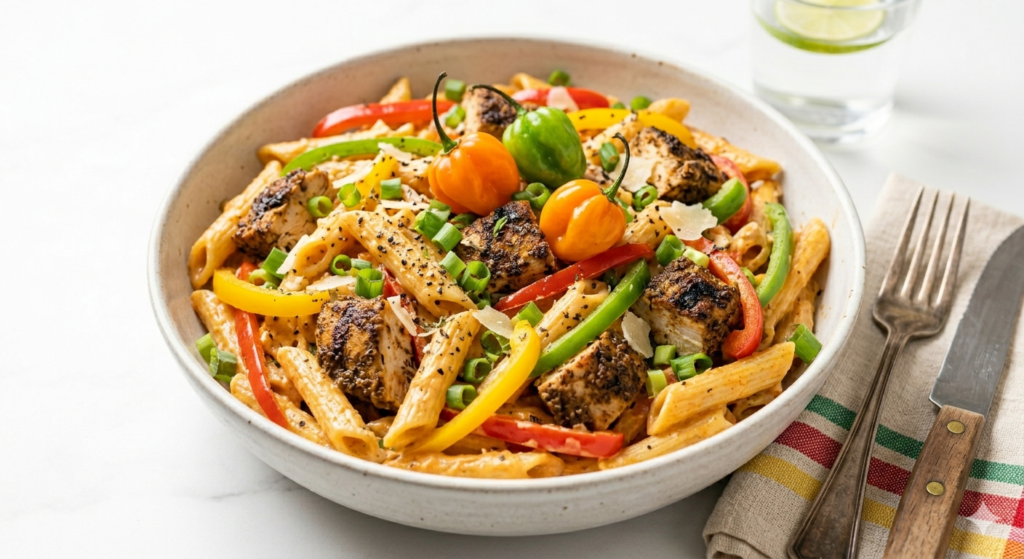
If you haven’t tried a rasta pasta recipe yet, this is your sign. It’s a Caribbean-Italian fusion dish that went viral for good reason the flavours are bold, colourful, and completely addictive. The name comes from the Rastafarian colours red, yellow, and green reflected beautifully in the bell peppers that are central to the dish.
Ingredients: 300g penne or rigatoni | 2 chicken breasts (or 300g shrimp) | 1 tbsp jerk seasoning | 1 red, 1 yellow, 1 green bell pepper (sliced) | 1 Scotch bonnet pepper (whole, for heat without burn) | 1 cup heavy cream or coconut milk | 3 garlic cloves | spring onions, to serve
Method: Season and sear the jerk chicken until cooked through, then slice. In the same pan, sauté garlic and all three bell peppers until softened. Pour in the cream or coconut milk, add the whole Scotch bonnet (remove before serving to control heat), and simmer for 5 minutes. Toss in the cooked pasta and sliced chicken, coat everything in the creamy sauce, and garnish with spring onions. It’s one of those easy pasta dinner recipes that looks far more impressive than the effort involved.
The Biggest Pasta Mistakes (and How to Fix Them)
- Not salting the water enough — Pasta water should taste pleasantly salty. Under-seasoned water means under-seasoned pasta, and no amount of sauce rescues it.
- Rinsing pasta after cooking — This washes away the starch coating that helps sauce adhere. Never rinse your pasta. Ever.
- Adding pasta to sauce too early — Always finish pasta in the sauce, not before. Those last 1–2 minutes in the sauce are where the magic happens.
- Overcooking pasta — Check 2 minutes before the package time. Test a strand by biting through — it should be just barely resistant in the very centre.
- Using pre-shredded cheese — Anti-caking agents in pre-shredded Parmesan and mozzarella prevent smooth melting. Always grate fresh.
- Skipping pasta water in white sauce — Starchy pasta water creates emulsification, binding the fat and liquid into a silky, clingy sauce. A splash transforms the texture.
- Cooking garlic on high heat — Garlic burns in seconds on high heat and turns irreversibly bitter. Always medium-low, always watchful.
If you want to build on your pasta skills with a celebrity-inspired upgrade, our viral Gigi Hadid pasta recipe takes this classic foundation into bold, spicy vodka-tomato territory — it became an internet sensation for good reason, and it is just as easy to pull off at home as a traditional pasta sauce. To complete the perfect Italian dinner, pair your pasta with our garlic bread recipe — a crispy, buttery loaf that soaks up every drop of sauce and elevates the whole meal from simple weeknight dinner to something special. Find more pasta recipes and dinner ideas at MyRecipesCollections.
Storage, Reheating & Freezing Pasta
Refrigerator: Store cooked pasta (ideally with sauce) in an airtight container for up to 4 days. Toss with a tiny bit of olive oil if storing plain pasta to prevent clumping.
Reheating: Always add a splash of water or milk (for white sauce pasta) before reheating on the stovetop over medium-low heat, stirring frequently. Microwaving without added liquid turns pasta dry and rubbery if you must use a microwave, add liquid and cover loosely.
Freezing: For best results, freeze pasta and sauce separately. Tomato-based red sauce freezes beautifully for up to 3 months. Fresh homemade pasta dough freezes well for up to 1 month dust with semolina flour to prevent sticking before freezing flat on a tray, then transfer to a bag. White sauce pasta can be frozen but may separate slightly on reheating; whisk gently over low heat with a splash of milk to bring it back.
What is the simplest pasta recipe for beginners?
Spaghetti Aglio e Olio is the gold standard for beginner pasta recipes. It uses just six ingredients — spaghetti, extra virgin olive oil, garlic, parsley, Parmesan, and red pepper flakes — takes about 15 minutes from start to finish, and teaches you the foundational technique of emulsifying pasta water and olive oil. Foolproof, fast, and genuinely delicious.
What is rasta pasta made of?
Rasta pasta is a Caribbean-Italian fusion dish featuring a creamy sauce (made with heavy cream or coconut milk), three coloured bell peppers (red, yellow, and green), jerk-seasoned chicken or shrimp, a Scotch bonnet pepper for heat, and penne or rigatoni pasta. The dish takes its name from the Rastafarian colours — red, yellow, and green — visible in the three-pepper combination. It’s bold, creamy, and genuinely addictive.
How do you make pasta white sauce without lumps?
Three rules prevent lumpy béchamel: always use warm milk (never cold), cook the roux for a full minute before adding any liquid, and pour the milk in a steady thin stream while whisking constantly. Keep heat at medium-low throughout. If lumps appear despite this, pass the sauce through a fine sieve — it’s a quick fix.
What pasta is best for red sauce?
Spaghetti, rigatoni, penne, and pappardelle all pair wonderfully with tomato-based sauce. Ridged or tubular pasta (rigatoni, penne) is ideal for chunky, meaty red sauces because the ridges grip the sauce. Long pasta (spaghetti) works best with smoother, lighter tomato sauces. The rule is: the thicker and chunkier the sauce, the more robust and textured the pasta shape should be.
How long does homemade pasta take to cook?
Fresh homemade pasta cooks in just 2–3 minutes in heavily boiling salted water — dramatically faster than dried pasta, which typically takes 8–12 minutes. Watch it closely and taste early. Fresh pasta turns from perfectly al dente to overdone very quickly.

Hi, I’m Jamie! I’m a home cook turned recipe developer with a deep love for honest, approachable food. After years of experimenting in my own kitchen — and feeding anyone who’d sit still long enough — I started My Recipes Collections to share the dishes that have become staples at my table.
My recipes focus on bold flavors, simple techniques, and ingredients you can actually find at your local grocery store. Whether you’re a weeknight warrior or a weekend baker, there’s something here for you.

