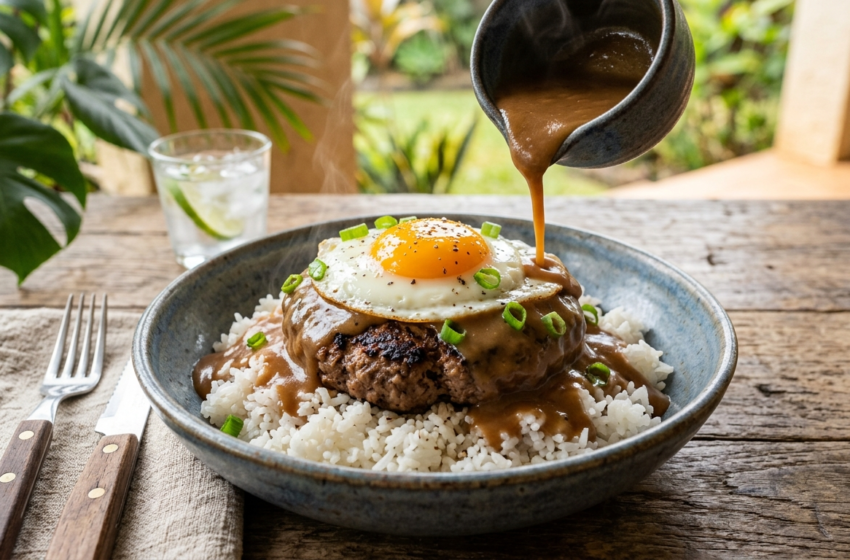
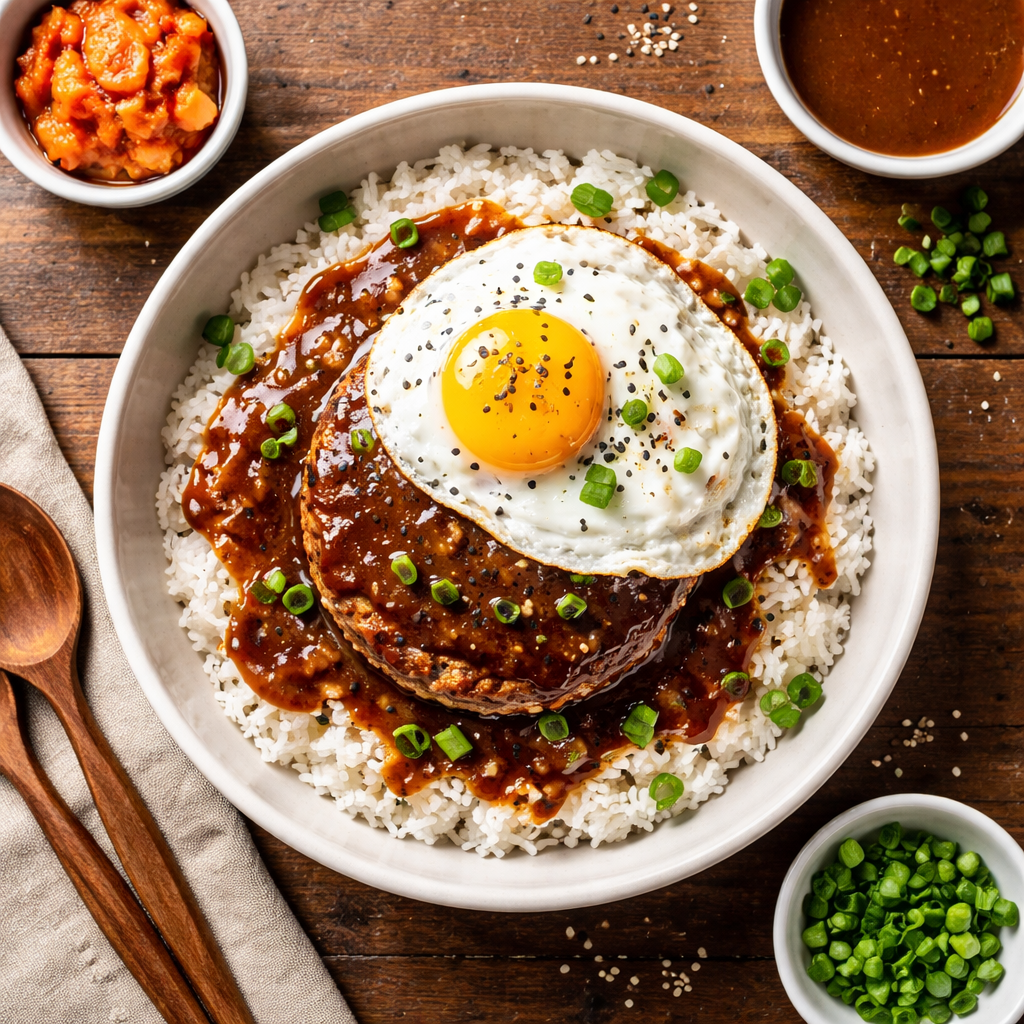
Close your eyes for a second and imagine this: a wide bowl of glossy, sticky white rice, warm from the cooker. A thick beef patty sits on top — deeply browned on the outside, still juicy in the center. Rich, dark brown gravy cascades over the edges, pooling into the rice. And right on top, a perfectly fried sunny-side-up egg, the yolk trembling and orange, waiting for you to break it open and let it run down through everything. That is a loco moco recipe, and once you’ve had it, nothing else quite scratches the same itch.
This beloved Hawaiian loco moco recipe was born in the diners of Hilo back in 1949 and has been a cornerstone of Hawaiian plate lunch culture ever since. The good news? You don’t need a flight to Honolulu to make the best loco moco recipe at home. With pantry staples, a cast-iron skillet, and about 35 minutes, you can have a restaurant-quality bowl on your table tonight.
⏱️ Prep Time: 10 mins
🍳 Cook Time: 25 mins
⏰ Total Time: 35 mins
🍽️ Servings: 4
🌟 Difficulty: Easy
🏷️ Cuisine: Hawaiian
⭐ Rating: ★★★★★ 4.9 (247 reviews)
Table of Contents
What Is Loco Moco? (The Hawaiian Dish Everyone Needs to Know)
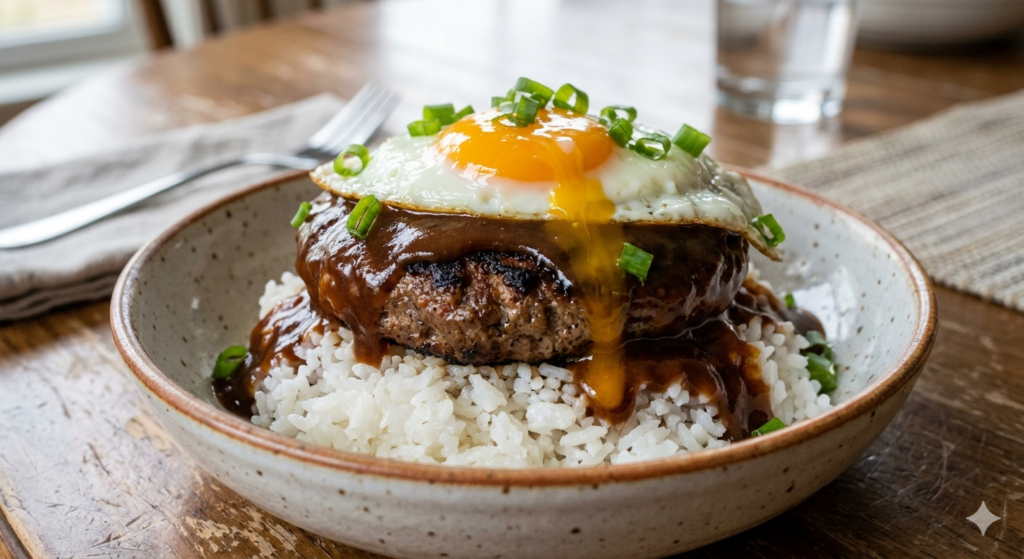
At its core, loco moco is a four-layer Hawaiian comfort bowl: a base of sticky short-grain white rice, a seasoned ground beef patty placed on top, a generous ladle of rich brown gravy poured over everything, and a fried egg — always sunny-side up — crowning the whole thing. Simple to describe, impossible to forget once you’ve tasted it.
The name is wonderfully nonsensical. “Loco” is Spanish for “crazy,” which was the nickname of one of the teenagers who first requested the dish. “Moco” doesn’t carry a specific meaning — it was chosen simply because it rhymed, in the playful tradition of Hawaiian Pidgin slang. The name stuck along with the dish.
Ingredients for the Best Loco Moco Recipe
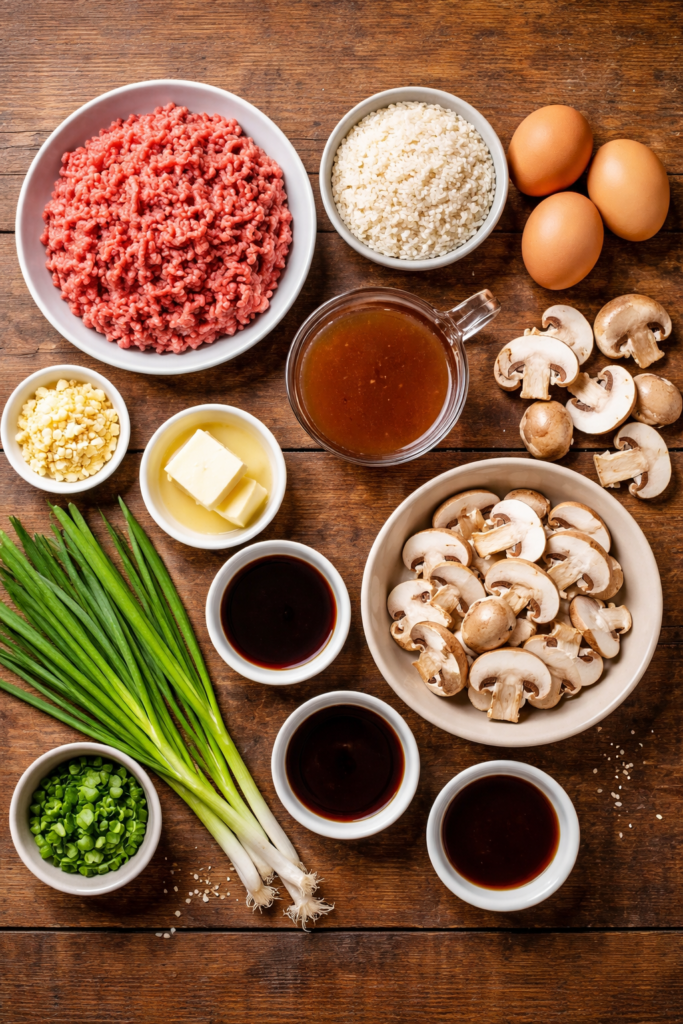
For the Hamburger Patty
- 800g (1.75 lbs) ground beef — 80/20 fat ratio (see tip below)
- 1 medium yellow onion, very finely minced
- 1 tbsp Worcestershire sauce
- 1 tbsp soy sauce
- 2 cloves garlic, minced
- 1 tsp salt
- ½ tsp freshly cracked black pepper
- Optional binders: 2 tbsp breadcrumbs + 1 egg (for very loose or lean beef)
💡 The Secret to a Juicy Patty: Why 80/20 Ground Beef Is Non-Negotiable
The numbers refer to the lean-to-fat ratio. An 80/20 blend means 80% lean beef and 20% fat — and that fat is everything. It bastes the patty from the inside as it cooks, keeping the meat tender and juicy rather than tough and dry. An 85/15 or 90/10 blend will shrink more, cook faster, and deliver a noticeably drier result that no amount of gravy can fully rescue. For grass-fed beef lovers: grass-fed beef tends to have less intramuscular fat, so if you go that route, consider blending in a little extra fat or be especially careful not to overcook. Always start with cold beef straight from the fridge — warm beef melts its fat before cooking even begins.
For the Loco Moco Gravy (Brown Gravy)
- 2 cups (480ml) beef broth or beef stock — low-sodium preferred
- 2 tbsp unsalted butter (plus 1 extra tbsp for finishing)
- 2 tbsp all-purpose flour (for the roux)
- 1–2 tbsp soy sauce (to taste — this is the umami key)
- 1 tsp Worcestershire sauce
- 150g cremini or button mushrooms, sliced (optional but highly recommended)
- 1 clove garlic, minced
- Salt and black pepper to taste
For the Rest of the Bowl
- 3 cups short-grain white rice (Calrose or Japanese sushi rice — uncooked)
- 4 large eggs
- 3 stalks green scallions / spring onions, thinly sliced
- 1–2 tbsp neutral oil (vegetable or avocado oil) for frying
How to Make Loco Moco — Step-by-Step Recipe
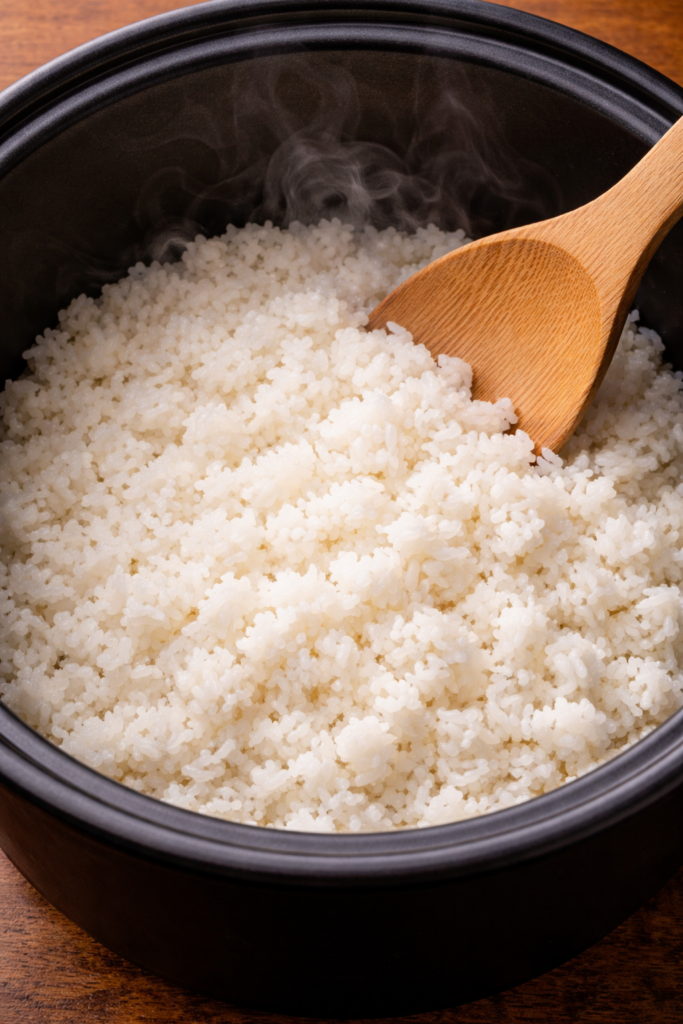
Start the rice before anything else — it takes the longest and must be warm when you assemble the bowls. Rinse your short-grain or medium-grain rice under cold running water, stirring with your fingers, until the water runs nearly clear. This removes excess surface starch and prevents a gluey texture.
Cook with a 1:1.5 rice-to-water ratio (so 3 cups rice needs 4.5 cups water), bring to a boil, then reduce to the lowest simmer, cover, and cook for 15 minutes. Let it steam off heat, covered, for another 5 minutes before fluffing. Japanese short-grain rice — like Calrose — is the authentic choice: its stickier, chewier consistency holds up beautifully under hot gravy without turning to mush the way long-grain rice does.
Step 2 — Make the Hamburger Patties
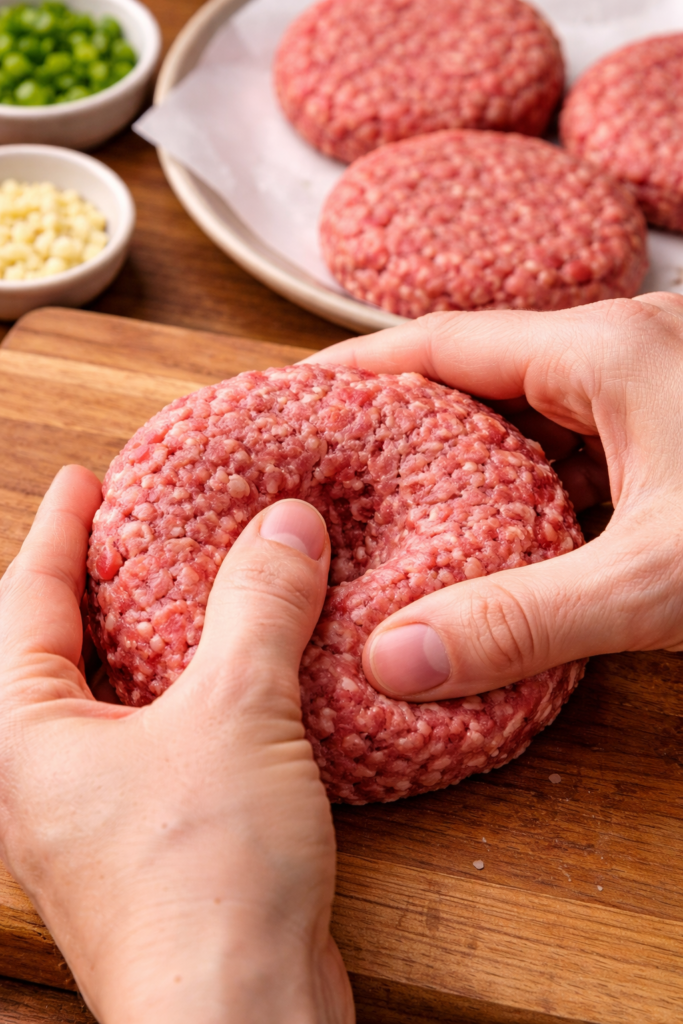
Combine the cold ground beef, minced onion, soy sauce, Worcestershire, minced garlic, salt, and pepper in a large mixing bowl. Use your hands, but mix as little as possible — just enough to distribute the seasonings evenly. Over-mixing develops the myosin proteins in beef, which creates a dense, rubbery patty rather than a tender one. Divide the mixture into four equal portions (about 200g / 7oz each) and shape them into round patties roughly 1 inch thick.
Press your thumb firmly into the center of each patty to create a shallow indent. This counteracts the patty’s tendency to puff up in the middle during cooking — without it, you’d end up with a dome-shaped patty that sits awkwardly on the rice. If time allows, refrigerate the shaped patties for 15 minutes before cooking; the cold temperature helps them hold their shape in the hot pan.
Step 3 — Sear the Patties to Perfection
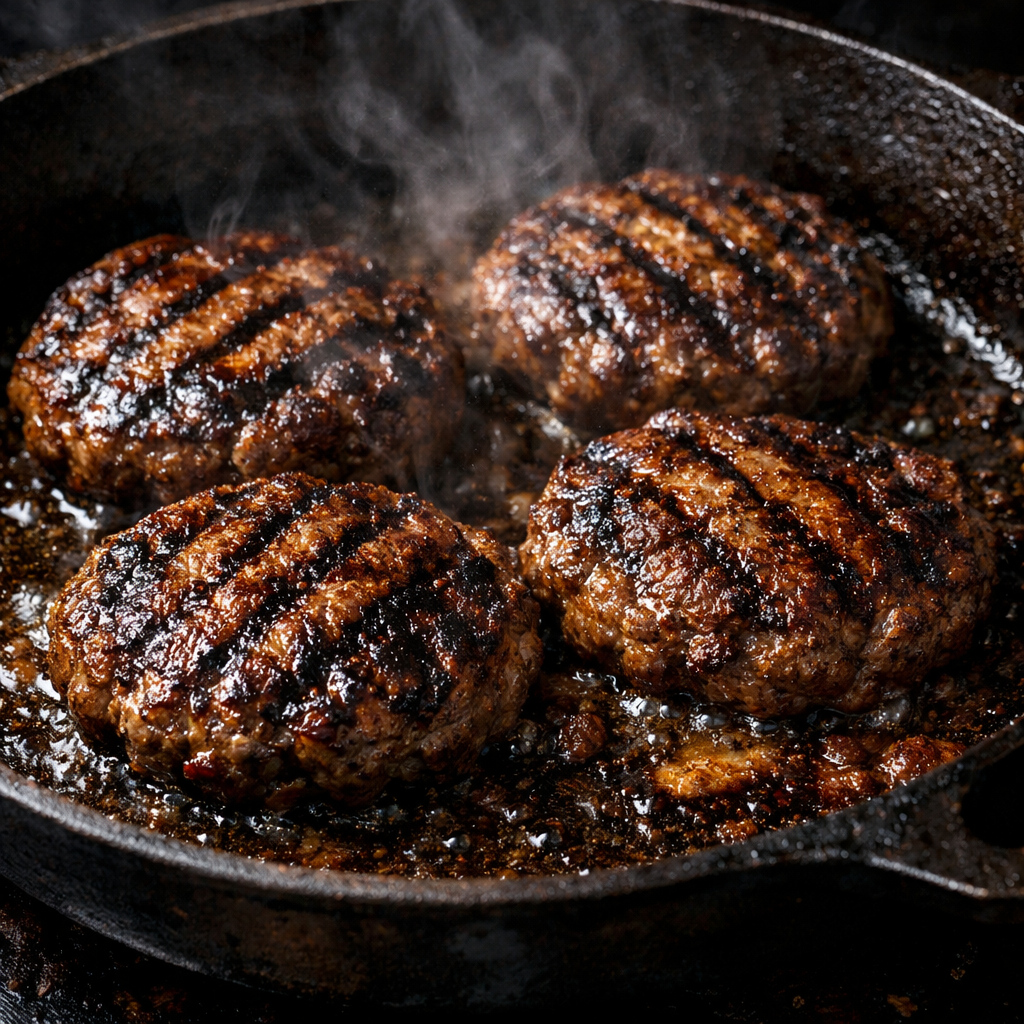
Heat a cast-iron skillet or heavy-bottomed stainless pan over medium-high heat for at least 2 minutes — you want it genuinely hot before the beef touches it. Add a thin film of neutral oil and wait until it just begins to shimmer and you see the faintest wisp of smoke. Lay the patties in the pan and do not touch them. Do not press them with a spatula. Do not move them. Pressing squeezes out the very juices you’re trying to keep inside.
Cook for 3–4 minutes on the first side until a deep brown crust forms — you should see the color change creeping up the sides of the patty. Flip once and cook another 3–4 minutes. The internal temperature should reach 160°F / 71°C for food-safe ground beef. Transfer the patties to a plate to rest. Critically: do not clean the pan. Those brown drippings and caramelized bits stuck to the bottom — called fond — are 90% of your gravy’s flavor.
Step 4 — Make the Loco Moco Gravy (Brown Gravy Recipe)
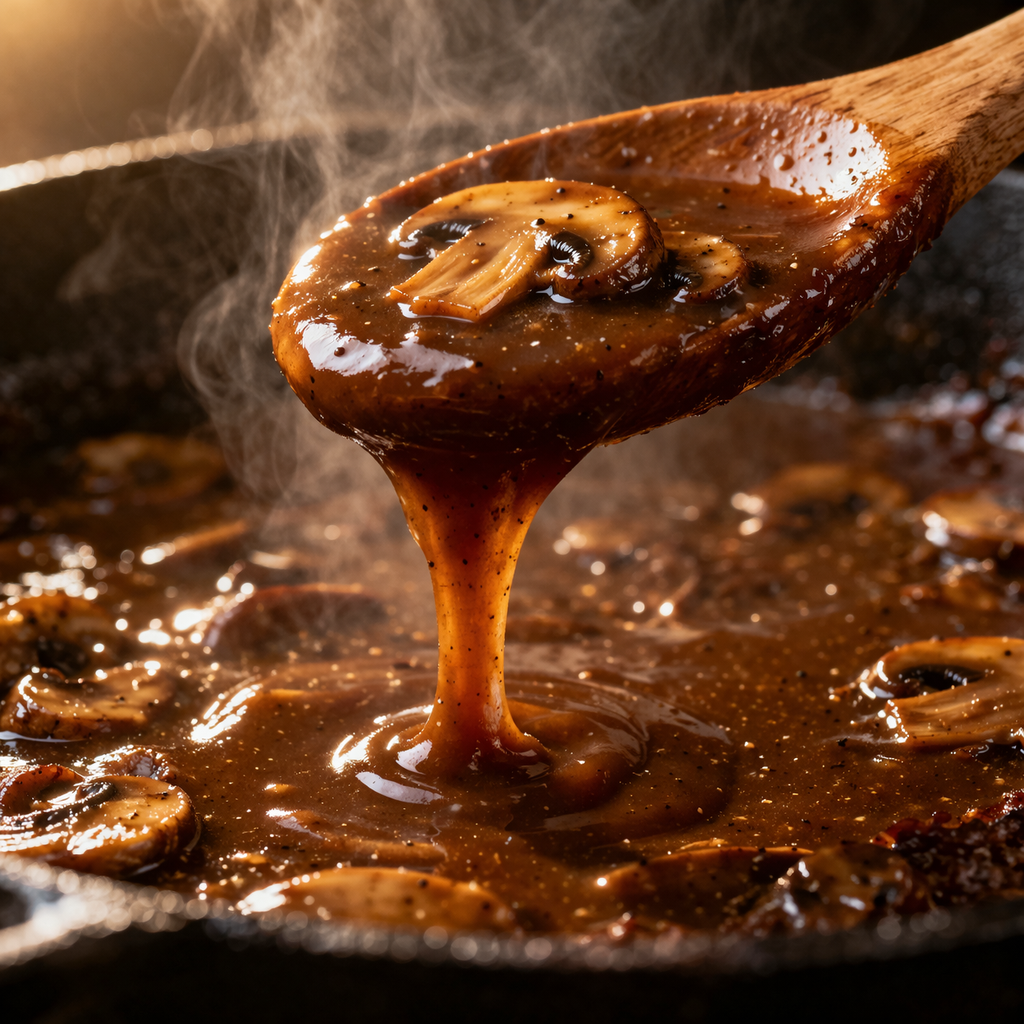
With the heat under your skillet turned to medium, add the sliced mushrooms directly into the drippings. Let them cook undisturbed for 2 minutes before stirring — this is how you get the golden-brown caramelized edges that add so much flavour. Cook for 3–4 minutes total, then add the minced garlic and stir for 30 seconds until fragrant.
Add the butter and let it melt, then sprinkle in the flour. Stir constantly for 1–2 minutes — this cooks out the raw flour taste and creates your roux base. The mixture will look paste-like and slightly darker than you expect: that’s perfect. Now pour in the beef broth in a slow, steady stream while whisking constantly to prevent lumps. Add the soy sauce and Worcestershire sauce, whisk to combine, and let the gravy simmer on medium-low heat for 4–5 minutes, stirring occasionally, until it thickens to a glossy, coat-a-spoon consistency. Taste and season. Remove from heat and stir in the final tablespoon of cold butter — this is a classic French technique called monter au beurre, and it gives the gravy a beautiful sheen.
💡 3 Ways to Thicken Loco Moco Gravy — Compared
| Method | How To Do It | Best For |
|---|---|---|
| Roux (Classic) | Cook butter + flour in the pan for 1–2 min before adding broth | Traditional deep flavour; the authentic method |
| Cornstarch Slurry | Mix 1 tbsp cornstarch with 2 tbsp cold water; stir into hot simmering gravy | Quick fix; gluten-free option; very smooth texture |
| Beurre Manié | Knead equal parts softened butter and flour into balls; drop into simmering gravy | French technique; adds richness; silky finish |
Step 5 — Fry the Perfect Sunny-Side Up Egg
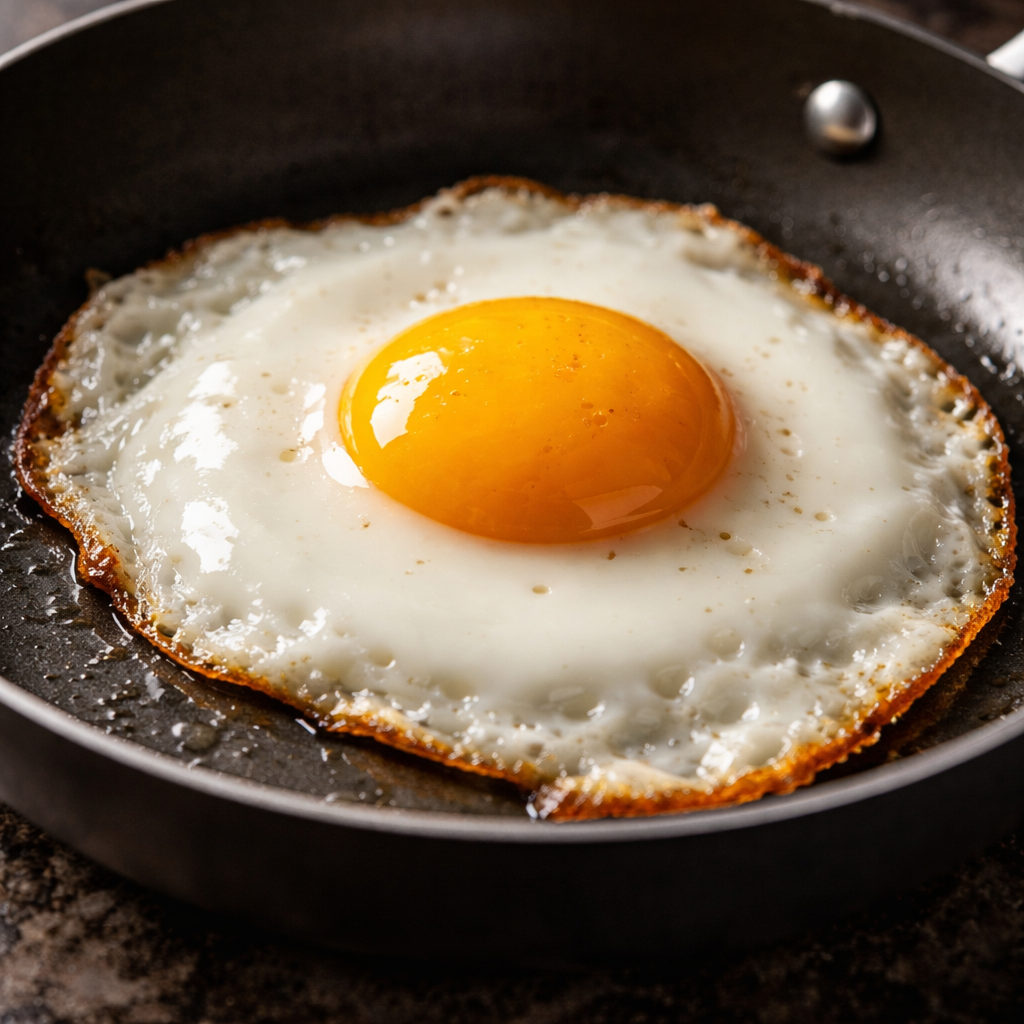
The egg is the soul of this dish. Get it wrong and the whole bowl suffers. In a separate small non-stick pan, add butter or oil over low-medium heat — this is the most important detail. High heat will set the yolk before the white is fully cooked, give you rubbery edges, and produce the grey-green ring around the yolk that signals an overcooked egg.
Crack the egg gently into the center of the pan and immediately cover with a lid. The trapped steam cooks the top of the white without requiring you to flip the egg. Check after 90 seconds to 2 minutes — the white should be fully set and opaque all the way to the edges, while the yolk remains a vivid orange dome that wobbles gently when you nudge the pan. Slide directly onto the assembled bowl and serve without delay; a fried egg waits for no one.
Step 6 — Assemble the Loco Moco Bowl
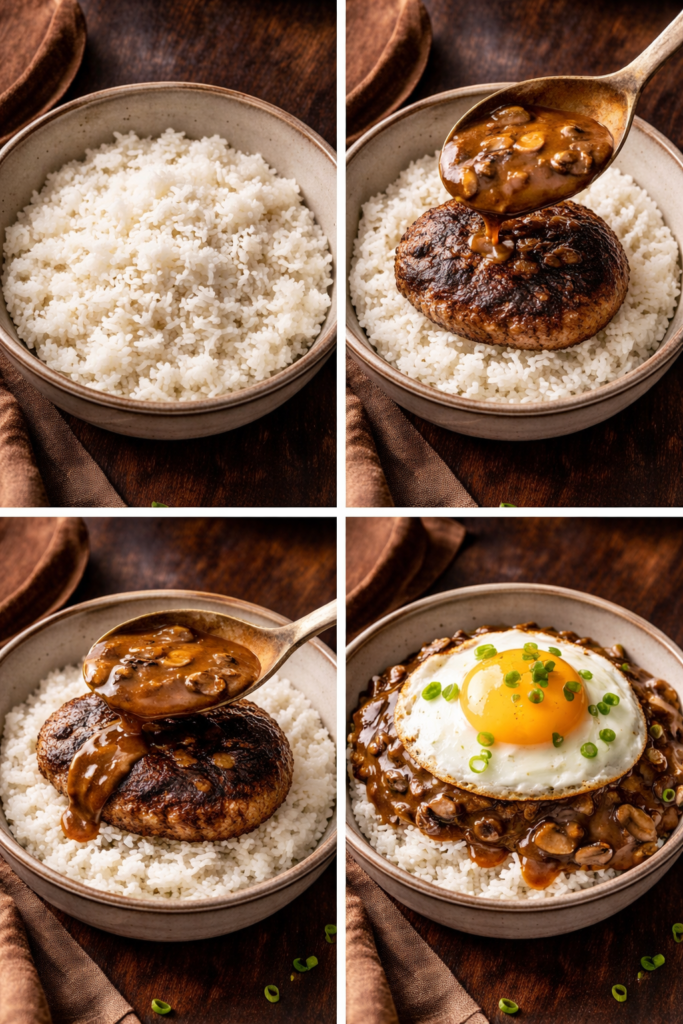
Choose a wide, deep bowl — one that holds everything without crowding. Add a generous scoop of hot rice and use the back of a spoon to press it gently into a mound. Center the beef patty on top of the rice. Ladle 3–4 spoonfuls of hot gravy directly over the patty and let it cascade onto the rice — don’t be shy, the rice should be glossy and half-submerged in gravy. Place the fried egg directly on top of the patty. Scatter thinly sliced green scallions over everything.
Serve immediately. The moment that egg yolk breaks — whether you cut it yourself or a diner does — is the moment this whole dish comes alive. The golden yolk mixes with the gravy, flows into the rice, and coats every single bite.
Best Loco Moco Recipe — Pro Tips for Restaurant-Quality Results
- Keep the beef cold before cooking. Cold fat from the fridge renders more slowly in the pan, keeping the inside of the patty juicy while the outside sears. Room-temperature beef melts its fat too fast.
- Never skip the thumb indent. It looks fussy but it works. Without it, the center of the patty puffs up into a dome during cooking, leaving you with uneven thickness that cooks unevenly.
- Never press the patty. I know it’s tempting. Resist. Pressing forces the juices straight into the pan. That’s juice you’ll never get back.
- Build the gravy in the same pan — always. The brown fond clinging to the bottom of your cast iron after searing the patties contains more flavour than anything you could add from a bottle. Deglaze it with your broth and watch the colour of the gravy deepen instantly.
- Use Japanese short-grain rice. Calrose or sushi rice holds up under heavy gravy far better than long-grain varieties, which can become waterlogged and break apart.
- Low and slow for the egg. Patience gives you the perfect contrast: fully set whites, brilliantly runny yolk. Rushing on high heat gives you rubbery whites and a chalky yolk.
- Finish the gravy with cold butter off the heat. Drop in a cold tablespoon of butter once you’ve taken the pan off the heat and swirl it in. The gravy goes from good to glossy in thirty seconds.
- Season every layer separately. The rice needs salt. The patty mixture needs salt. The gravy needs to be tasted and adjusted. Under-seasoning any single layer creates a flat-tasting bowl.
Loco Moco Gravy Recipe — The Complete Guide
If you searched specifically for a loco moco gravy recipe, this section is for you. The gravy is what separates an average bowl from an extraordinary one, and it deserves its own spotlight.
What makes loco moco gravy distinct from a standard brown gravy is its umami intensity. Two tablespoons of soy sauce in place of (or alongside) plain salt transforms the broth into something deeply savory and complex. Worcestershire sauce adds a tangy, slightly sweet undercurrent. And cooking it directly in the beef drippings rather than starting from a clean pan builds layers of flavour that a packet of gravy mix simply cannot replicate.
Classic Mushroom Brown Gravy (Stovetop Method)
- Heat the pan (with beef drippings) over medium heat.
- Add sliced cremini mushrooms. Cook undisturbed for 2 minutes, then stir. Total: 3–4 minutes until golden.
- Add 1 minced garlic clove. Stir 30 seconds.
- Add 2 tbsp butter. Once melted, add 2 tbsp flour. Stir constantly for 1–2 minutes (this is the roux).
- Pour in 2 cups beef broth gradually, whisking to prevent lumps.
- Add 1–2 tbsp soy sauce and 1 tsp Worcestershire sauce.
- Simmer on medium-low for 4–5 minutes until thick enough to coat a spoon.
- Remove from heat. Add 1 tbsp cold butter and swirl until melted. Season to taste.
Gravy Without Drippings (If Using Pre-Made Patties)
If you’re using store-bought patties and don’t have fresh drippings, melt 2 tbsp butter in a saucepan, cook mushrooms and garlic until golden, then proceed with the roux-and-broth method above. Add an extra teaspoon of Worcestershire and a splash of soy sauce to compensate for the missing depth from drippings. A small amount of beef bouillon paste dissolved in your broth also helps.
Troubleshooting the Gravy
- Gravy too thin? Either simmer longer to reduce, or mix 1 tsp cornstarch with 1 tbsp cold water and whisk in while simmering.
- Gravy too thick? Add a splash (2–3 tbsp) of warm beef broth and whisk off the heat until smooth.
- Gravy tastes bland? You likely skipped the fond, under-seasoned, or used low-quality broth. Add more soy sauce (a teaspoon at a time) and Worcestershire. A tiny pinch of MSG or a drop of fish sauce also works wonders.
Authentic Hawaiian Loco Moco Recipe — What Makes It Truly Hawaiian
The internet is full of “elevated” loco moco recipes topped with truffle oil, served with arugula, or made with quinoa instead of rice. With respect: that is not a loco moco. An authentic Hawaiian loco moco is defined by its simplicity, its affordability, and its specific cultural DNA.
The use of short-grain Japanese white rice is non-negotiable — a direct reflection of Hawaii’s large Japanese-American community, which has shaped the islands’ food culture more profoundly than any other single influence. The rice is never brown rice, never cauliflower rice, and never fried rice in the traditional version. It is simple, plain, perfectly cooked sticky white rice.
The beef patty is not a gourmet burger patty — no brioche bun energy here. It’s a straightforward, well-seasoned ground beef patty. The gravy is not a red wine reduction or a demi-glace; it’s a simple, soy-forward brown gravy built from beef stock and pan drippings.
At Rainbow Drive-In in Honolulu — open since 1961 and one of the most beloved local institutions on Oahu — loco moco comes in a styrofoam clamshell with macaroni salad on the side. No garnish, no foam, no microgreens. That is the benchmark. The dish represents Hawaii’s multicultural plate lunch culture: eating well, eating together, and eating simply. Honouring that spirit matters more than any trendy upgrade.
Easy Loco Moco Recipe — Make It in 30 Minutes
Weeknight reality check: sometimes you want a great easy loco moco recipe without the full production. Here’s how to build a legitimately satisfying version in 15–20 minutes using smart shortcuts.
🕐 30-Minute Weeknight Version
- Use pre-made frozen beef patties. Yes, really. Season them before cooking with a little soy sauce and Worcestershire brushed on the surface.
- Use a store-bought beef gravy mix, but upgrade it: add 1 tbsp soy sauce, 1 tsp Worcestershire, and sauté a handful of sliced mushrooms in butter before adding the mix.
- Microwave rice pouches (like Calrose or jasmine pouches) are your friend here. Ready in 90 seconds and genuinely decent.
- Always fry the egg fresh. This is the one step that cannot be rushed or pre-made. It takes 2 minutes and makes all the difference.
- Total active time: under 15 minutes. Total time including heating: 20–25 minutes.
Loco Moco Recipe Variations — 7 Ways to Make It Your Own
1. Classic Hawaiian Loco Moco (The Original)
The recipe detailed in full throughout this article. Ground beef patty, soy-forward brown gravy, sticky white rice, sunny-side-up egg. This is the version Richard Inouye assembled at Lincoln Grill in 1949 and the standard against which all other versions are measured. Keep it exactly as written and you’ll never need another recipe.
2. Spam Loco Moco
Slice a can of SPAM into ½-inch rounds and pan-fry in a hot skillet until deeply caramelized on both sides — about 2 minutes per side. Place over rice, cover with brown gravy, and top with a fried egg. This is one of the most beloved local Hawaiian versions, especially as a quick, salty breakfast. SPAM has an iconic status in Hawaiian food culture due to its introduction by American military during World War II.
3. Deluxe Loco Moco
Double the patty (two per bowl), double the gravy, and top with two fried eggs. Serve with a generous scoop of Hawaiian macaroni salad on the side — a classic combination at every Hawaiian plate lunch counter. This is the version serious loco moco enthusiasts order when they mean business. Not for the faint of appetite.
4. Vegetarian Loco Moco
Replace the beef patty with a thick mushroom patty or a black bean patty seasoned with soy sauce, garlic, and smoked paprika. For the gravy, use vegetable broth, cremini mushrooms, soy sauce, and Worcestershire (use a vegan Worcestershire or soy-based substitute to keep it fully plant-based). A fried egg still works beautifully unless you need a fully vegan bowl — in that case, pan-fried firm tofu or a soft egg-free patty makes a satisfying substitute.
5. Chicken Loco Moco
Ground chicken makes a lighter, lower-fat patty — but it needs extra help staying together. Add one egg and 3 tbsp of breadcrumbs to the mixture as binders, since chicken has less fat to act as a natural adhesive. Build the gravy with chicken broth instead of beef broth for a paler, milder version. The result is genuinely satisfying and noticeably lighter than the beef original.
6. Japanese-Style Loco Moco (Hambagu Style)
This is the version you’ll find across Japan in family restaurants. The patty is a blend of 50% ground beef and 50% ground pork — the classic Hambagu ratio — which creates a finer, silkier texture. The gravy leans more heavily on soy sauce and mirin, and a little dashi stock adds a distinctly Japanese depth. Often served with a side of shredded cabbage and a small Japanese rice bowl rather than the large Hawaiian portion.
7. Breakfast Loco Moco
Swap the rice base for crispy hash browns or home fries. Add two eggs instead of one, and lay two strips of crispy bacon alongside the patty. The gravy still goes over everything. This version leans fully into the American diner tradition that influenced the original dish’s creation, making it a spectacular weekend breakfast for people who find regular eggs and toast insufficient.
Loco Moco Nutrition Facts (Per Serving)
| Nutrition Per Serving (1 Bowl) | |
|---|---|
| Calories | ~720 kcal |
| Protein | 42 g |
| Carbohydrates | 58 g |
| Total Fat | 32 g |
| Saturated Fat | 11 g |
| Sodium | 920 mg |
| Dietary Fiber | 2 g |
| Total Sugar | 3 g |
Values are approximate and vary based on ground beef fat percentage, rice portion size, and specific brands of broth and condiments used.
For a complete, hearty brunch spread, pair loco moco with our perfectly crispy home fries recipe — golden, well-seasoned potatoes that take just minutes to prepare and add the perfect starchy complement to a plate of rich brown gravy and runny fried egg. If you love bold, satisfying comfort food that brings everyone to the table, our crowd-pleasing chicken wings recipe delivers equally impressive results for game nights, backyard cookouts, or any casual gathering. Explore more hearty, global comfort food classics at MyRecipesCollections.
Troubleshooting — Common Loco Moco Problems & How to Fix Them
| Problem | Why It Happens | The Fix |
|---|---|---|
| Patty falling apart | Beef is too lean (90/10), or no binder was used | Use 80/20 beef; add 1 egg + 2 tbsp breadcrumbs to the mixture |
| Patty shrunken & tough | Over-mixed or overcooked; no thumb indent made | Mix minimally; use a thermometer; stop at 160°F; always make the indent |
| Gravy too thin | Not enough flour in the roux, or too much broth added | Simmer longer on medium heat, OR add a cornstarch slurry (1 tsp cornstarch + 1 tbsp cold water) |
| Gravy too thick | Too much roux or gravy reduced too long | Add 2–3 tbsp warm beef broth and whisk off the heat until smooth |
| Gravy tastes bland | Cooked in a clean pan (no fond), under-seasoned, or low-quality broth | Always cook in the searing pan; add more soy sauce a tsp at a time; use a good-quality stock |
| Egg overcooked | Heat too high; no lid used; cooked too long | Use low-medium heat, always cover with a lid, check at 90 seconds |
| Egg white not setting | Pan not preheated properly; egg too cold | Preheat pan for 1 minute before adding oil; let egg come to room temperature for 5 minutes |
| Rice mushy under gravy | Too much water used, or rice overcooked | Use 1:1.5 rice-to-water ratio; rinse rice thoroughly before cooking; steam off heat for 5 min |
Final Thoughts — Why This Is the Only Loco Moco Recipe You’ll Ever Need
There is something almost magical about the way four humble ingredients — rice, beef, gravy, egg — come together into something so much greater than the sum of their parts. That is the genius of loco moco: maximum comfort from minimum fuss.
This loco moco recipe gives you everything: the authentic history, the technique behind every layer, the gravy tricks the restaurants won’t tell you, and the confidence to troubleshoot when something goes sideways. Whether you’re cooking the classic version or exploring the Spam, vegetarian, or Japanese Hambagu variations, the soul of the dish remains the same — warm, generous, unapologetically satisfying.
This is the kind of food that connects you to a place and a people. Every bite is a little piece of Hawaii — its multicultural roots, its spirit of sharing, its beautiful, casual abundance. The best loco moco recipe isn’t the fanciest one. It’s the one that tastes like someone made it with heart.

Hi, I’m Jamie! I’m a home cook turned recipe developer with a deep love for honest, approachable food. After years of experimenting in my own kitchen — and feeding anyone who’d sit still long enough — I started My Recipes Collections to share the dishes that have become staples at my table.
My recipes focus on bold flavors, simple techniques, and ingredients you can actually find at your local grocery store. Whether you’re a weeknight warrior or a weekend baker, there’s something here for you.