Close your eyes and picture Granny’s kitchen on a Sunday afternoon — the sweet, buttery smell drifting through every room, a 9×13 pan cooling on the counter, and everyone hovering nearby, waiting. That’s the magic of a proper chess cake recipe. This isn’t some shortcut imitation — it’s the real, original Southern classic, passed down through generations of church potlucks, family reunions, and holiday gatherings. If you’ve never had a truly perfect chess cake, today is your lucky day.
Table of Contents
What Is Chess Cake? (The Southern Secret Most People Don’t Know)
Before you bake a single bite, let’s settle something: chess cake is one of those recipes that most people have eaten but few can actually explain. Here’s everything you need to know.
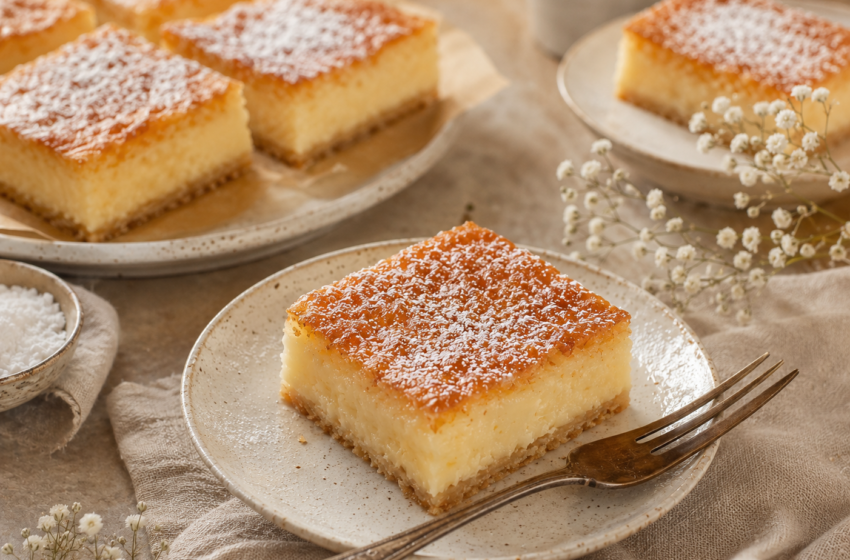
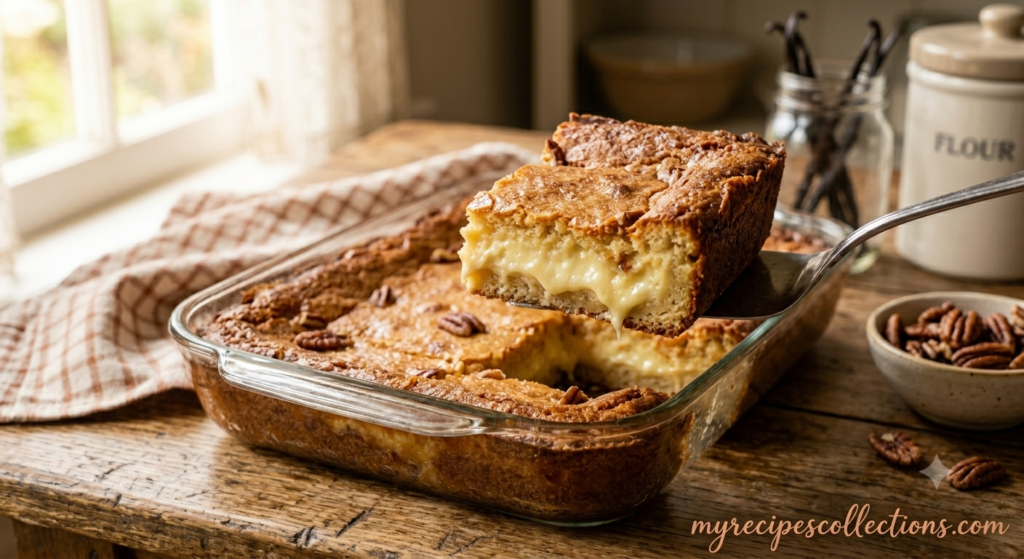
Chess cake is a two-layer bar dessert born in the American South. The bottom layer is a dense, buttery crust — almost like a pressed cookie dough — made from yellow cake mix (or flour from scratch), one egg, and melted butter. The top layer is where the magic happens: a silky, custardy mixture of cream cheese, eggs, powdered sugar, vanilla, and butter poured right over the unbaked crust and baked together until the top turns a gorgeous, deep amber-gold.
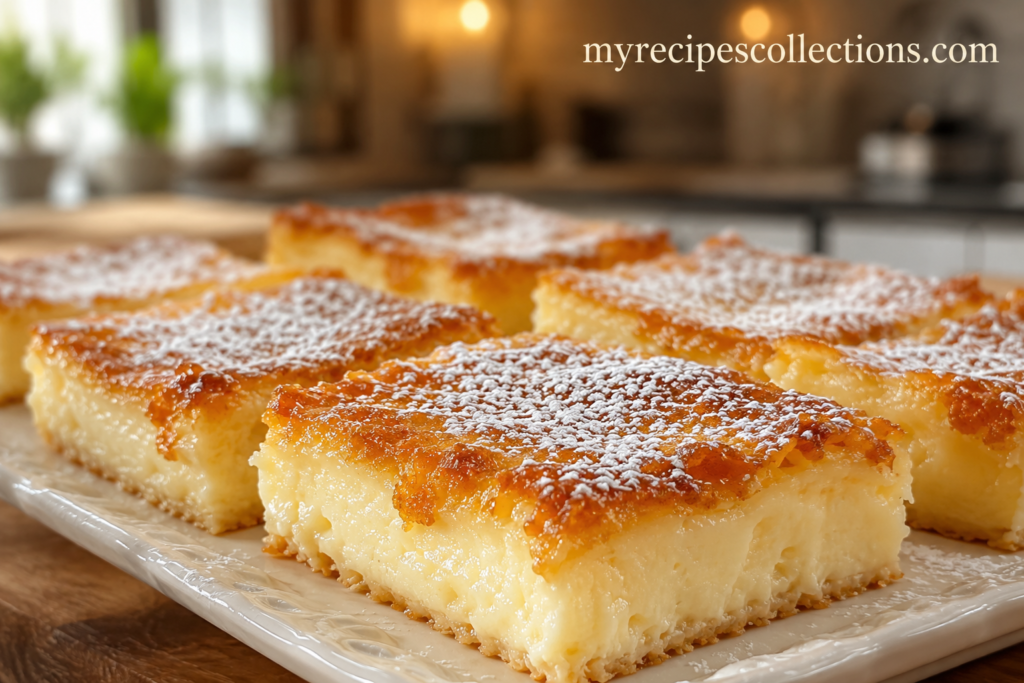
The result? A bar that’s crisp on top, pillowy and gooey in the center, with a slightly firm crust underneath. It is, in the truest sense, Southern comfort food at its finest.
Why Is It Called Chess Cake?
Nobody knows for certain — and that mystery is part of the charm. Food historians point to three leading theories:
- The “Chest Cake” theory: In the pre-refrigeration South, pies and cakes were stored in wooden “pie chests” or “pie safes.” Over generations, “chest cake” likely softened into “chess cake” through regional pronunciation.
- The “Jes’ Cake” theory: When asked what kind of dessert it was, Southerners would shrug and say “it’s jes’ cake” — meaning “just cake” — and the name stuck.
- The “Cheese Cake” corruption theory: Early versions of the custard topping used cottage cheese or curd cheese, not cream cheese. Over time, “cheese cake” evolved into “chess cake” as the recipe changed and the name followed phonetically.
Chess Cake vs. Chess Pie: What’s the Difference?
This is one of the most common questions — and a critical one! Chess pie is a single-layer custard pie baked in a pastry shell, typically made with butter, sugar, eggs, and a small amount of cornmeal or flour. It’s firm, sweet, and pourable. Chess cake, on the other hand, is a layered bar dessert baked in a rectangular pan — no pastry crust, and with that signature cream cheese topping that gives it a completely different, luscious texture. Think of chess pie as the elegant dinner-table cousin; chess cake is the irresistible potluck superstar.
What’s It Called Where You Live?
Depending on where you grew up, you may know this dessert by a completely different name — and that’s entirely normal. In the Mid-South, these are called chess squares. Head north to Chicago or Detroit and you’ll hear ooey gooey cake. In St. Louis, Missouri, the same recipe is a proud local institution called gooey butter cake. All regional cousins of the same magnificent original chess cake recipe.
Chess cake’s roots run deep into 1950s and ’60s Southern church culture — the era when home cooks needed crowd-feeding desserts that could be made ahead, traveled well, and disappeared in minutes at a potluck table. This recipe checked every box.
Chess Cake Ingredients: Everything You Need for the Best Chess Cake
One of the great things about this recipe is how simple the chess cake ingredients are. You likely have most of them on hand right now. Let’s break it down by layer:
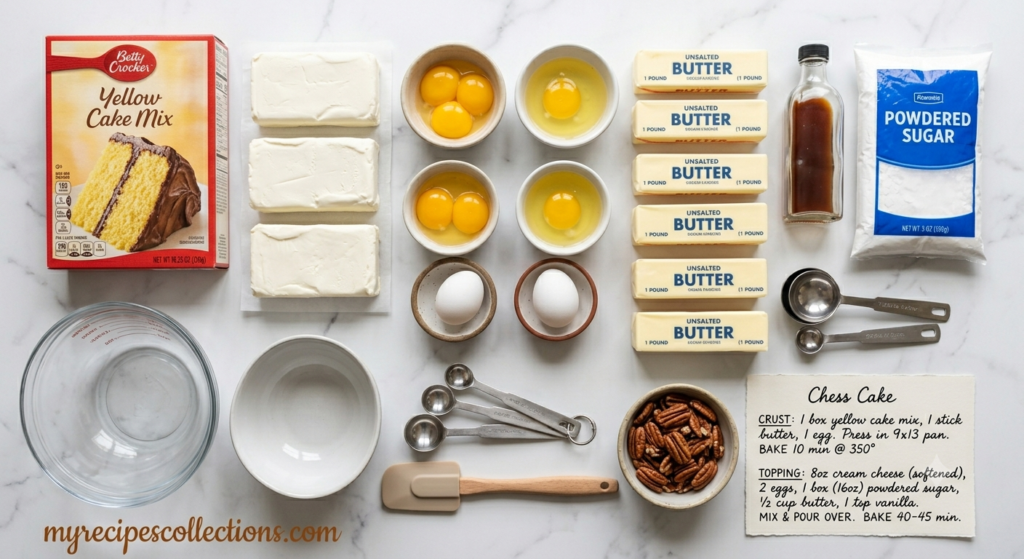
For the Base Layer (Chess Cake Crust)
- 1 box (15.25 oz) yellow cake mix— The backbone of the crust. Duncan Hines Classic Yellow consistently gives the best flavor and texture; Pillsbury is a close second. For a from-scratch version, see the section below.
- 1 large egg, at room temperature — Binds the dough. Room temperature eggs incorporate more evenly.
- ½ cup (1 stick) unsalted butter, melted — Gives the crust richness and that signature buttery flavor. Unsalted lets you control the salt level.
For the Cream Cheese Topping
- 8 oz cream cheese, softened to room temperature — The star of the show. Full-fat Philadelphia brand is the gold standard. Do not use reduced-fat — it won’t set properly and lacks the richness that makes chess cake what it is.
- 3 large eggs, room temperature — These set the custard. Adding them one at a time prevents the mixture from breaking.
- 1 teaspoon pure vanilla extract— Use pure, not imitation. The difference in a simple recipe like this is noticeable.
- 4 cups (1 lb) powdered/confectioners’ sugar, sifted — Creates that sweet, glossy custard top. Sifting is non-negotiable — lumps in powdered sugar become lumps in your topping.
- ½ cup (1 stick) unsalted butter, melted — Adds richness to the topping and helps it set with that gorgeous golden crust.
⭐ Pro Tips on Ingredients
Room temperature cream cheese is essential. Cold cream cheese will leave lumps no amount of beating can fix. Pull it from the fridge at least 45 minutes ahead. For the eggs, a quick warm-water bath (10 minutes in a bowl of warm water) does the trick if you forgot. On butter: always use unsalted in baking — salted butter varies by brand, throwing off your recipe’s salt balance. And that powdered sugar sifting tip? Do it over a large bowl with a fine-mesh strainer. Takes 30 seconds, saves you lumpy topping.
Original Chess Cake Recipe: Step-by-Step Instructions
After testing this recipe six times to nail the exact ratio, timing, and technique — here is the definitive, original chess cake recipe. Follow these steps precisely and you will have perfection in your pan.
Step 1: Preparation (5 minutes)
- 1Preheat & PreparePreheat your oven to 350°F (175°C). Position the rack in the center of the oven — not the top, not the bottom. Center placement ensures the crust bakes without burning and the topping sets evenly without over-browning.
- 2Grease the PanGenerously grease a 9×13 inch baking pan with cooking spray or softened butter, reaching all the way into the corners and up the sides. This matters more than people realize — a well-greased pan means clean edges and squares that lift out beautifully. If your pan is glass, reduce oven temperature to 325°F to prevent the crust from over-darkening on the bottom.
Step 2: Making the Base Layer (5 minutes)
- 3Mix the CrustIn a large mixing bowl, combine the dry yellow cake mix, 1 egg (slightly beaten), and melted butter (make sure it’s cooled slightly — not scalding hot). Stir together with a wooden spoon or spatula until a thick, sticky dough forms. It will look and feel very much like cookie dough — that’s exactly right.
- 4Press Into PanTurn the dough into your prepared 9×13 pan and press it into an even layer covering the entire bottom. Pro tip: dampen your fingertips slightly with water to prevent sticking, or use the flat bottom of a measuring cup to press the dough smooth. You want it evenly distributed — thin spots mean uneven texture after baking.
Step 3: Making the Cream Cheese Topping (5 minutes)
- 5Beat the Cream CheeseIn a separate, clean mixing bowl, beat the softened cream cheese with an electric hand mixer (or stand mixer with paddle attachment) on medium speed for a full 2 minutes until it is completely smooth with zero lumps. This step is the most important in the entire recipe. Any lump left in the cream cheese at this stage will remain in your finished topping. Don’t rush it.
- 6Add Eggs One at a TimeAdd eggs to the cream cheese mixture one at a time, beating on low speed for about 20 seconds after each addition before adding the next. This prevents the mixture from curdling and ensures a silky, uniform custard. Add the vanilla extract along with the second egg.
- 7Add Powdered SugarReduce mixer speed to low. Add the sifted powdered sugar gradually, about one cup at a time. Before you start the mixer, drape a clean kitchen towel over the bowl — powdered sugar will billow up like a cloud otherwise. Mix until each addition is incorporated before adding the next. The mixture should be thick, glossy, and completely smooth.
- 8Add Melted ButterAdd the melted (and slightly cooled) butter in a thin stream while mixing on low. The topping will loosen into a pourable, ribbon-like consistency — think of slightly thinned cake batter. This is exactly what you want.
Step 4: Assembly & Baking (45–50 minutes)
- 9Pour the ToppingPour the cream cheese mixture directly over the unbaked base layer in the pan. Do not stir, do not mix. The two layers bake separately — the base rises slightly, the topping sets on top. Use a spatula to gently spread the topping to the edges and corners, keeping the layers distinct.
- 10BakeSlide the pan into your preheated 350°F oven and bake for 45 to 50 minutes. Do not open the oven in the first 35 minutes — temperature fluctuation can cause the topping to crack or fall.
⚠️ The Toothpick Method FAILS for Chess Cake. Here’s what no competitor tells you: if you insert a toothpick into chess cake and it comes out clean, you’ve likely overbaked it. The cream cheese topping is intentionally gooey in the center when properly baked — a clean toothpick means all that luscious gooeyness has dried out. Instead, use the visual test: the top should be deep golden-brown — think the color of a perfectly baked sugar cookie. The center may look slightly jiggly; that is correct and will firm up as the cake cools. If the top is darkening too quickly (before 45 minutes), loosely tent the pan with aluminum foil.
Step 5: Cooling & Cutting
- 11Cool CompletelyAllow the chess cake to cool in the pan at room temperature for a minimum of 1 to 2 hours before cutting. This is non-negotiable. The cream cheese custard continues to set as it cools — cutting too early gives you a runny, collapsed mess instead of clean, beautiful chess squares. For faster results, place the cooled-to-room-temperature pan in the refrigerator for 30–45 minutes.
- 12Cut & ServeUsing a sharp knife (wipe clean between cuts for pristine edges), cut into 1.5 to 2-inch squares — 6 cuts across and 4 cuts down gives you 24 perfect chess squares. Dust lightly with additional powdered sugar through a fine-mesh sieve just before serving for a beautiful presentation. Serve at room temperature.
Chess Cake Recipe Without Cake Mix (From-Scratch Version)
Want to make a completely homemade chess cake recipe without cake mix? This from-scratch base delivers a slightly richer, more complex flavor and lets you control every ingredient. The cream cheese topping remains identical — it’s the crust that changes.
From-Scratch Crust Ingredients
- 1¾ cups all-purpose flour
- 1 cup granulated sugar
- ½ cup cold unsalted butter, cut into cubes
- 1 egg yolk
- 1 teaspoon baking powder
- Pinch of fine sea salt
How to make the from-scratch crust: Whisk together the flour, sugar, baking powder, and salt in a large bowl. Add the cold cubed butter and work it in with your fingertips (or a pastry cutter) until the mixture resembles coarse, damp sand — you want visible pea-sized butter pieces remaining. Add the egg yolk and mix until the dough just comes together. Press into your greased 9×13 pan in an even layer, then proceed with the cream cheese topping exactly as written above.
🧁 Cake Mix vs. From Scratch: Which Is Better?
Both are genuinely excellent — the decision comes down to your priorities. See the comparison below.
| Factor | Cake Mix Version | From-Scratch Version |
|---|---|---|
| Flavor | Classic buttery sweetness, familiar | Richer, more nuanced, slightly more complex |
| Texture | Tender, soft crust with slight chew | Denser, shortbread-like, more substantial |
| Prep Time | 5 minutes flat | About 10 minutes |
| Convenience | ⭐⭐⭐⭐⭐ — hard to beat | ⭐⭐⭐ — requires pantry staples |
| Crowd-pleaser? | Universally loved, very consistent | Impresses home baking enthusiasts |
| Best for | Last-minute potlucks, weeknight baking | Sunday baking, special occasions |
Verdict: If you’re feeding a crowd on a Tuesday, use the cake mix. If you want to truly impress someone, go from scratch. Either way, the cream cheese topping is the star — and it’s identical in both.
Chess Cake Ideas: 8 Delicious Variations to Try
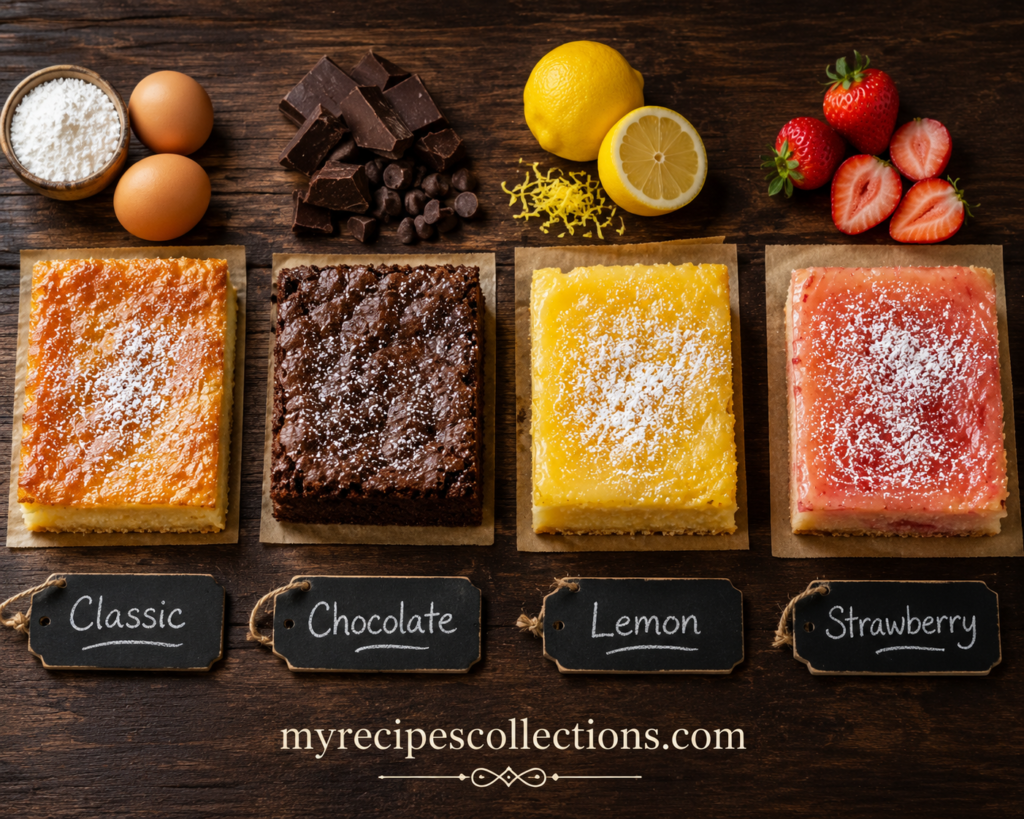
Once you’ve mastered the original, the world of chess cake ideas opens up beautifully. Here are eight variations — each one tested and worthy of any occasion.
| Flavor | Base Change | Extra Ingredients / Modifications | Taste & Texture |
|---|---|---|---|
| Chocolate Chess Cake | Chocolate cake mix | Add 2 tbsp dark cocoa powder to cream cheese topping + mini chocolate chips | Rich, fudgy, and extra indulgent |
| Lemon Chess Cake | Lemon cake mix | Add 2 tbsp lemon zest + 1 tbsp fresh lemon juice to cream cheese layer | Bright, tangy, and refreshing |
| Strawberry Chess Cake | Strawberry cake mix | Swirl ¼ cup strawberry preserves into topping before baking | Sweet with beautiful pink ribbons |
| Pumpkin Chess Cake | Yellow cake mix | Mix in ½ cup pumpkin purée, 1 tsp cinnamon, ¼ tsp nutmeg, and ¼ tsp ginger | Warm, cozy, and perfectly spiced |
| Red Velvet Chess Cake | Red velvet cake mix | Add red food coloring to topping + crushed pecans on top | Creamy with crunchy texture and dramatic color |
| Gluten-Free Chess Cake | Gluten-free yellow cake mix | No other changes needed | Same gooey, golden texture |
| Oreo Chess Cake | Classic cake mix base | Add 20 crushed Oreos to base + ½ cup mini chocolate chips to topping | Cookies-and-cream perfection |
| Pecan Chess Squares | Classic cake mix base | Add 1 cup chopped pecans + 2 tbsp brown sugar on top | Nutty, caramelized, and crunchy |
If you loved this chess cake, you’ll definitely want to try our other beloved Southern dessert recipes — each one tested and perfected just like Granny used to make.
Why Is This the Best Chess Cake Recipe? (What Makes Granny’s Version Special)
With hundreds of chess cake recipes floating around online, what makes this one worth bookmarking? Here’s the honest answer, backed by six rounds of recipe testing:
- The ratio is dialed in. The biggest variable in chess cake is the ratio of base layer to topping. Too much base and you lose the gooey center; too little and the whole thing collapses. This recipe’s 1:2 ratio (one layer of crust to double the volume of topping) gives you that perfect balance of crisp edge, firm base, and silky, yielding center.
- Room temperature ingredients change everything. Cold cream cheese creates lumps. Cold eggs prevent proper emulsification. Room temperature butter incorporates more evenly. Every ingredient instruction in this recipe exists for a reason — follow them and the texture is effortless.
- The visual cue method over the toothpick. This is the single biggest game-changer. Knowing that a golden-brown top — not a clean toothpick — signals doneness lets you pull the cake at exactly the right moment, preserving that signature gooey center that makes people close their eyes when they take a bite.
- Sifted powdered sugar, every time. Lumpy powdered sugar going in means lumpy topping coming out. Sifting takes 30 seconds and makes the custard visibly smoother and more elegant.
- It’s actually better the next day. After testing, this chess cake hits its flavor peak about 12 to 18 hours after baking. The flavors meld, the texture firms just slightly, and the top develops an almost candy-like crust. Make it the night before your event — it’s not just allowed, it’s encouraged.
How to Store Chess Cake (And Does It Freeze Well?)
| Storage Method | Duration | Instructions |
|---|---|---|
| Room Temperature | 2 Days | Cover tightly with plastic wrap. Keep away from direct sunlight or heat. |
| Refrigerator | 5 Days | Store in an airtight container. Bring to room temperature before serving — about 20 minutes on the counter restores the gooey texture. |
| Freezer | 3 Months | Wrap individual squares in plastic wrap, then place in a zip-top freezer bag. Thaw overnight in the refrigerator. |
💡Make-ahead tip: Chess cake is one of the rare desserts that genuinely tastes better the next day. The flavors deepen and meld overnight, the top develops a slightly firmer, almost caramelized crust, and the center becomes even more luxuriously gooey. Bake the day before your event, refrigerate overnight, and pull it out 30 minutes before serving.
Why didn’t my chess cake set properly?
Chess cake that doesn’t set is almost always caused by one of three things: underbaking (the topping needs the full 45–50 minutes to set properly), an oven that runs cool (use an oven thermometer to check accuracy), or cream cheese that wasn’t brought to room temperature before mixing. Cold cream cheese won’t incorporate smoothly and can prevent the custard from setting into that firm, gooey texture.
Can I use butter cake mix instead of yellow cake mix?
Yes — butter cake mix works wonderfully and gives the crust an even richer, more buttery flavor that many bakers prefer. The method and all other measurements remain exactly the same. The result is slightly denser and more golden in color, with a subtly richer taste that pairs beautifully with the cream cheese topping.
How do I know when chess cake is done without a toothpick?
Chess cake is done when the top is deep, uniform golden-brown — the color of a well-baked sugar cookie — all the way to the edges of the pan. The center may look slightly jiggly when you gently shake the pan; that’s perfectly correct and will firm up during the 1–2 hour cooling period. Never test with a toothpick — the gooey center is intentional, and a clean toothpick actually indicates overbaking.
Is chess cake the same as gooey butter cake?
They are essentially the same dessert with different regional names. Gooey butter cake is the St. Louis, Missouri name for what the Mid-South calls chess cake or chess squares, and what Northern states call ooey gooey cake. The traditional St. Louis version sometimes uses yeast dough as the base instead of cake mix, giving it a slightly different texture — but the cream cheese custard topping is nearly identical to the Southern original.
Can I make chess cake in a smaller pan?
Yes — an 8×8 pan works well with approximately ¼ of the full recipe (scale down to about 6 servings). Use the same 350°F temperature but reduce baking time to 30–35 minutes, watching for that golden-brown top as your visual cue. An 8×8 chess cake will be thicker in proportion, so allow the full 2-hour cooling time before cutting.

Hi, I’m Jamie! I’m a home cook turned recipe developer with a deep love for honest, approachable food. After years of experimenting in my own kitchen — and feeding anyone who’d sit still long enough — I started My Recipes Collections to share the dishes that have become staples at my table.
My recipes focus on bold flavors, simple techniques, and ingredients you can actually find at your local grocery store. Whether you’re a weeknight warrior or a weekend baker, there’s something here for you.