
Imagine cutting into a perfectly grilled skirt steak and drizzling it with a vibrant, herbaceous green sauce that smells like a Buenos Aires summer. That sauce — bright, punchy, garlicky, and alive with fresh parsley — is chimichurri, and this chimichurri recipe is the last one you’ll ever need to search for.
The Only Chimichurri Recipe You’ll Ever Need
Most store-bought chimichurri tastes flat and oily, robbed of the zing that makes the authentic version so addictive. And while plenty of online recipes exist, many get the ratios wrong or skip the critical resting step that unlocks the sauce’s full depth. This guide fixes all of that.
Whether you want a classic steak sauce, a bold marinade for chicken, or a dipping sauce for crusty bread, this authentic chimichurri recipe delivers restaurant-quality flavor in under 10 minutes of active prep — no blender required.
| QUICK RECIPE SUMMARYAuthentic Argentinian Chimichurri Sauce |
| Prep Time: 10 minutes Rest Time: 30 minutes (recommended)Total Time: 40 minutes Servings: 8-10 servings (about 1 cup)Difficulty: Easy Cuisine: Argentinian / South AmericanCalories: ~90 kcal per 2 tbsp Diet: Vegan, Gluten-Free, Keto |
How Is Chimichurri Used?
Chimichurri functions in three ways in the kitchen:
- As a finishing sauce — drizzled over grilled steak, chicken, or fish right before serving
- As a marinade — used to tenderize and flavor meats hours before cooking
- As a condiment or dip — served alongside bread, vegetables, or empanadas
Why You’ll Love This Chimichurri Recipe
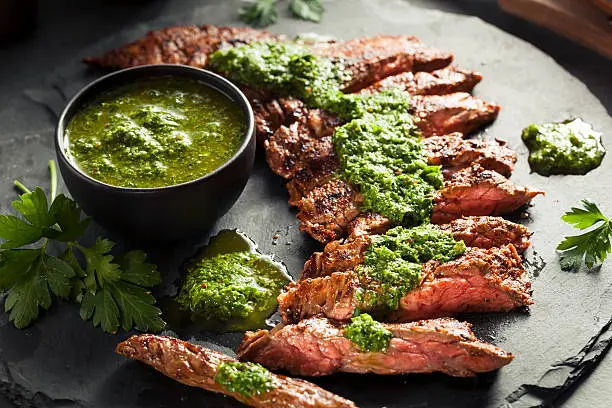
This isn’t a generic “herb sauce” recipe. Every decision here has been made with flavor in mind:
- No blender needed — hand-chopping gives better texture and prevents the sauce from becoming muddy
- Ready in 10 minutes of active work — the rest is just letting it sit
- Naturally vegan, keto, and gluten-free
- Endlessly versatile — works as a sauce, marinade, or dip
- Tastes even better the next day once the flavors meld
- Uses simple, affordable pantry and produce staples
Chimichurri Ingredients
The quality of your ingredients matters enormously here. Because this sauce is uncooked, there’s nowhere to hide — use the freshest herbs and a good-quality olive oil.
| Ingredient | Quantity | Notes & Substitutes |
| Fresh flat-leaf parsley | 1 cup (packed) | Curly parsley works but flat-leaf has more flavor. Do NOT use dried. |
| Fresh oregano | 2 tbsp | Or 1 tsp dried oregano if fresh is unavailable |
| Garlic cloves | 4-6 cloves | Fresh is essential — no garlic powder. Use more for stronger flavor. |
| Extra virgin olive oil | 1/2 cup | Use a good quality EVOO — it’s the base of the sauce |
| Red wine vinegar | 3 tbsp | Sub with sherry vinegar or fresh lemon juice |
| Red pepper flakes | 1/2 tsp | Adjust to heat preference; omit for a mild version |
| Kosher salt | 1 tsp | Or flaky sea salt. Adjust to taste. |
| Black pepper | 1/2 tsp | Freshly cracked preferred |
| Lemon juice (optional) | 1 tbsp | Adds brightness; great for chicken or fish pairings |
Ingredient Deep-Dive: Why Each One Matters
Fresh flat-leaf parsley: The backbone of the sauce. It provides color, freshness, and a slightly peppery bitterness that balances the oil. Always use fresh — dried parsley produces a dull, lifeless result.
Red wine vinegar: This is the acid that gives chimichurri its characteristic tang. It also acts as a natural preservative, extending the sauce’s shelf life.
Fresh garlic: Non-negotiable. The raw garlic punch is a defining feature of authentic chimichurri. Do not use garlic powder or pre-minced garlic from a jar.
Extra virgin olive oil: Use the best you can afford. The oil is the medium that carries every other flavor, so its quality directly impacts the finished sauce.
How to Make Chimichurri — Step-by-Step
Method 1: Traditional Hand-Chopped (Recommended)
- Prepare the herbs. Wash and thoroughly dry the parsley and oregano. Wet herbs will water down your sauce. Pat them dry with a paper towel or use a salad spinner.
- Finely mince the herbs. Strip the leaves from the stems (thick stems can be bitter). Pile the leaves together and rock-chop them with a sharp knife until very fine but not paste-like. You want texture, not slurry.
- Mince the garlic. Smash the garlic cloves with the flat of your knife to loosen the skin, then mince very finely. For an even more intense garlic flavor, use a microplane grater.
- Combine everything. In a medium bowl, combine the parsley, oregano, garlic, red pepper flakes, salt, and black pepper. Stir together.
- Add the acid and oil. Pour in the red wine vinegar, stir to combine, then slowly drizzle in the olive oil while stirring. Do not emulsify — you want a loose, separated sauce.
- Taste and adjust. Taste for salt, acidity, and heat. Add more vinegar for tang, more red pepper for heat, or more salt to balance.
- Rest — this is critical. Let the chimichurri sit at room temperature for at least 30 minutes before serving. This allows the acid to soften the raw garlic edge and the flavors to marry. One hour is even better.
Method 2: Food Processor (Quick Version)
For a smoother, more emulsified chimichurri — use when you need it fast:
- Add parsley, oregano, garlic, salt, pepper, and red pepper flakes to a food processor.
- Pulse 10-12 times until finely chopped (not pureed).
- Add vinegar and pulse 3-4 more times.
- Transfer to a bowl and stir in olive oil by hand for best texture.
- Rest 20-30 minutes before serving.
Note: The food processor version is faster but tends to be greener and slightly more homogenized. The hand-chopped version has superior texture and a more complex mouthfeel.
Pro Tips for the Best Chimichurri Flavor
Chef-Level Secrets
- Dry your herbs completely. Moisture is the enemy of a concentrated sauce. Wet herbs dilute flavor and shorten shelf life.
- Use a sharp knife for hand-chopping. A dull knife bruises and crushes herbs rather than cutting cleanly, releasing bitter compounds.
- Let it rest — every single time. Even 20 minutes makes a remarkable difference. The raw garlic bite mellows, the vinegar softens, and the salt draws out herbal oils.
- Don’t skip the oregano. Many recipes omit it, but oregano adds an earthy, slightly medicinal depth that is distinctly Argentinian.
- Balance to your palate. Real chimichurri is not a fixed formula — it’s a living sauce. Taste and adjust. More vinegar = brighter. More oil = richer. More garlic = bolder.
- Bring it to room temperature before serving. Cold chimichurri is dull. The olive oil solidifies slightly when chilled — always let it warm up for 15 minutes before serving.
- Make it 2-4 hours ahead for company. The flavor improvement from a few hours of resting is dramatic.
Common Chimichurri Mistakes to Avoid
Using dried parsley: This is the most common mistake. Dried parsley has no brightness, no color, and no real flavor contribution. Fresh is non-negotiable.
Blending until smooth: Over-processing oxidizes the herbs and creates a dark, murky sauce. Pulse briefly — you want small, distinct pieces of herb, not a green smoothie.
Using too much vinegar or too little: Under-acidified chimichurri tastes flat and oily. Over-acidified chimichurri is sharp and harsh. The sweet spot is about 3 tablespoons per half cup of oil.
Serving it cold straight from the fridge: Cold olive oil loses fluidity and clings together. Always bring chimichurri to room temperature before serving.
Not salting properly: Salt is what makes chimichurri taste like chimichurri rather than oily herb water. Season generously and taste multiple times.
Using pre-minced garlic from a jar: Jarred garlic has a fermented, sharp aftertaste that clashes with the fresh herbs. Fresh garlic only.
Chimichurri Variations to Try
1. Red Chimichurri (Chimichurri Rojo)
Red chimichurri swaps fresh parsley for a base of rehydrated dried chiles, roasted red peppers, and smoked paprika. It’s deeper, smokier, and slightly sweeter than the classic green version. Widely used in northwest Argentina, particularly Salta province.
- Replace fresh parsley with 1/2 cup roasted red pepper (finely chopped)
- Add 1 tsp smoked paprika and 1/2 tsp cayenne
- Keep all other ingredients the same
2. Spicy Chimichurri
For heat lovers, amplify the red pepper flakes to 1-1.5 teaspoons and add 1 finely minced fresh red chili (jalapeño or Fresno). Some cooks also add a pinch of cayenne. The result is a fiery, herb-forward sauce that pairs beautifully with fatty cuts like ribeye.
3. Cilantro Chimichurri
Not traditional, but wildly popular in Mexican-American kitchens. Replace half the parsley with fresh cilantro. Add lime juice instead of lemon. This variation works brilliantly on fish tacos, grilled shrimp, and corn. Expect a brighter, more citrusy profile.
4. Mint Chimichurri
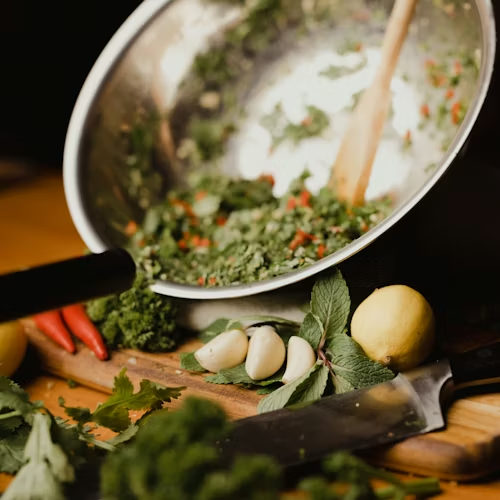
An elegant twist for lamb dishes. Replace a quarter of the parsley with fresh mint leaves and add a teaspoon of honey to balance the sharpness. This Mediterranean-influenced variation is especially popular in upscale restaurant preparations.
5. Walnut Chimichurri
A nod to the Argentine province of Mendoza wine country. Pulse 3 tablespoons of toasted walnuts with the herbs before adding the oil. The walnuts add a nutty richness and slightly thicker body, making this a great option for vegetables and grain bowls.
What to Serve with Chimichurri
Meats
- Skirt steak or flank steak — the classic pairing. The vinegar cuts through the fat beautifully.
- Ribeye or New York strip — pour generously over the sliced steak.
- Grilled chicken thighs or breast — use as both marinade and finishing sauce.
- Lamb chops — classic green chimichurri is an extraordinary match for lamb.
- Chorizo sausages — traditional Argentinian asado pairing.
Seafood
- Grilled salmon or swordfish — the acidity lifts the richness of oily fish.
- Grilled shrimp or prawns — a fast weeknight favorite.
- Halibut or sea bass — especially good with the cilantro-lime variation.
Vegetables & Other Uses
- Roasted potatoes or sweet potatoes — an addictive alternative to ketchup.
- Grilled corn on the cob — brush it on before and after grilling.
- Drizzled over fried eggs or shakshuka for a brunch upgrade.
- Pizza drizzle — use instead of olive oil on white pizza.
- Crusty sourdough bread — for dipping and grazing.
- Grain bowls and farro salads — use as a dressing.
Storage & Shelf Life
Refrigerator
Transfer chimichurri to a clean glass jar with a tight-fitting lid. Pour a thin layer of olive oil over the top to create a seal. Stored properly, it keeps for up to 2 weeks in the refrigerator. The flavor actually improves over the first 2-3 days as ingredients continue to meld.
Freezer
Chimichurri freezes beautifully. Pour into ice cube trays and freeze solid, then transfer the cubes to a zip-lock freezer bag. Frozen chimichurri lasts up to 3 months and defrosts in minutes — perfect for spontaneous weeknight grilling. Note that freezing will slightly dull the bright green color but the flavor remains excellent.
Signs It Has Gone Bad
- Sour or fermented smell beyond the pleasant tang of vinegar
- Visible mold (any color)
- Slimy or unusual texture
When in doubt, throw it out — fresh batches take only minutes to make.
Nutritional Information (Approximate)
Based on a 2 tablespoon serving of classic green chimichurri. Values are approximate and will vary based on exact ingredient quantities.
| Nutrient | Per 2 tbsp Serving |
| Calories | ~90 kcal |
| Total Fat | 9g |
| Saturated Fat | 1.3g |
| Carbohydrates | 1.5g |
| Fiber | 0.4g |
| Protein | 0.4g |
| Sodium | 240mg |
| Vitamin C | 10% DV |
| Vitamin K | 40% DV |
Chimichurri is primarily a fat-based sauce, with the fat coming almost entirely from heart-healthy monounsaturated olive oil. It is naturally low in carbohydrates, making it ideal for keto and low-carb diets. The parsley provides a surprising nutritional boost — it is one of the most vitamin-K rich foods by weight.
Frequently Asked Questions
1. What is chimichurri made of?
Classic chimichurri is made from fresh flat-leaf parsley, fresh oregano, finely minced garlic, extra virgin olive oil, red wine vinegar, red pepper flakes, salt, and black pepper. The exact ratios vary by family and region, but these seven ingredients form the authentic foundation.
2. What does chimichurri taste like?
Chimichurri tastes bright, herbaceous, garlicky, slightly tangy from the vinegar, and mildly spicy from red pepper flakes. It has a fresh, green flavor profile that is assertive but not overwhelming. The olive oil gives it a silky, rich mouthfeel that balances the acidity.
3. Can I make chimichurri ahead of time?
Yes — and you should. Chimichurri tastes significantly better after resting for at least 30 minutes and reaches its peak flavor after 2-4 hours. Making it a day ahead is ideal for entertaining. Store covered in the fridge and bring to room temperature before serving.
4. Can I use a blender or food processor to make chimichurri?
Yes, a food processor works and produces a smoother, more emulsified sauce. However, the traditional method of hand-chopping is preferred because it gives the sauce better texture, more distinct herb pieces, and prevents the oxidation that causes over-processed chimichurri to turn dark and murky. If using a food processor, pulse rather than blend continuously.
5. What is the difference between chimichurri and pesto?
While both are herb-based sauces, they differ significantly. Pesto is Italian, made with basil, pine nuts, Parmesan, garlic, and olive oil — it’s typically thick, rich, and cheesy. Chimichurri is South American, made with parsley, garlic, olive oil, and red wine vinegar — it’s loose, tangy, and dairy-free. Pesto is rarely used as a marinade; chimichurri excels in that role.
6. Is chimichurri the same as salsa verde?
They are closely related but not identical. Italian salsa verde similarly uses parsley, garlic, olive oil, and capers, with the addition of anchovies. Argentine chimichurri uses oregano and red wine vinegar as its characteristic ingredients, and has no capers or anchovies. The flavor profiles differ — salsa verde tends to be more umami-forward, chimichurri more herbal and sharp.
7. Why does my chimichurri taste bitter?
Bitterness usually comes from one of three sources: including too many thick parsley stems (which are naturally bitter), over-processing in a blender (which releases bitter chlorophyll compounds), or using extra-virgin olive oil that is itself slightly bitter. Solutions: strip leaves from stems before chopping, avoid over-blending, and use a milder, fruity olive oil. Also ensure proper salting — salt suppresses bitterness.
Related Recipes You’ll Love
(Internal Linking Suggestions for your website)
- Argentine Asado — The Classic Barbecue Guide
- How to Grill the Perfect Skirt Steak
- 10 Best Chimichurri Marinades for Chicken
- Red Chimichurri Recipe (Chimichurri Rojo)
- Easy Homemade Steak Sauces for Every Cut
Final Thoughts: Your New Favorite Sauce
A great chimichurri recipe isn’t complicated — but it is uncompromising. It demands fresh herbs, real garlic, good olive oil, and — most importantly — the patience to let it rest. When you give it those things, it rewards you with a sauce that is electric, alive, and capable of making even the simplest piece of grilled chicken taste extraordinary.
This is the sauce that gauchos have eaten around open fires for generations. It is the sauce that Argentinian grandmothers make from memory, never measuring, always tasting. And now it’s in your kitchen too.
Make it once and you’ll never buy a bottled sauce again.
Happy grilling