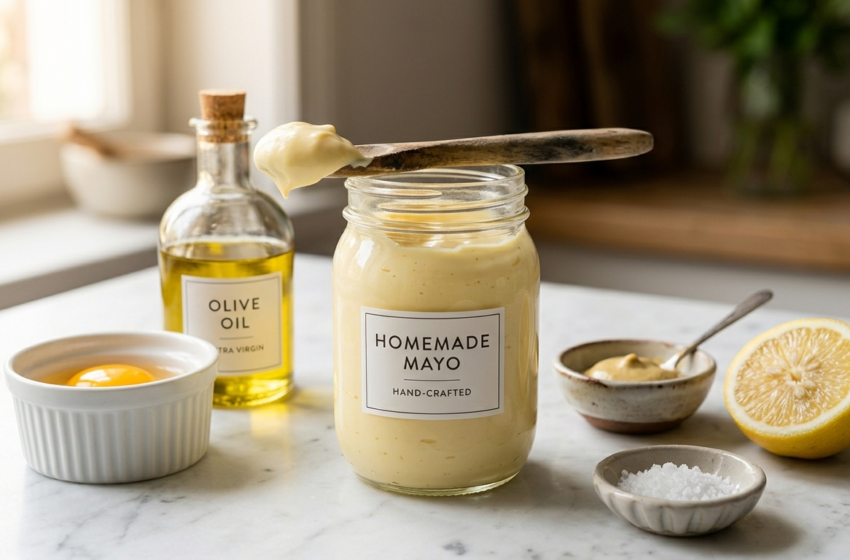
Making a homemade mayonnaise recipe is easier than you think. With just 4 simple ingredients, you can whip up a creamy, easy mayo that blows any store-bought jar right out of the water. I’ve made this hundreds of times and once you taste it fresh, you’ll never go back.
No preservatives. No mystery additives. Just pure, glossy, silky condiment magic.
Table of Contents
What is Mayonnaise? (The Science Behind Perfect Emulsification)
Mayonnaise is an emulsion a stable mixture of two things that normally don’t mix: oil and water. The acid in lemon juice is water-based. Oil, obviously, is not. So how do they stay together?
The answer is egg yolk lecithin.
Lecithin is a naturally occurring phospholipid in egg yolks that acts as an emulsifier. One end of the lecithin molecule binds to water, and the other end binds to oil. As a result, it keeps both in a creamy, stable suspension giving mayo its signature thick, smooth texture.
Understanding this is the key to making mayo that never fails.
Mayonnaise Ingredients — What You Really Need (Only 4!)
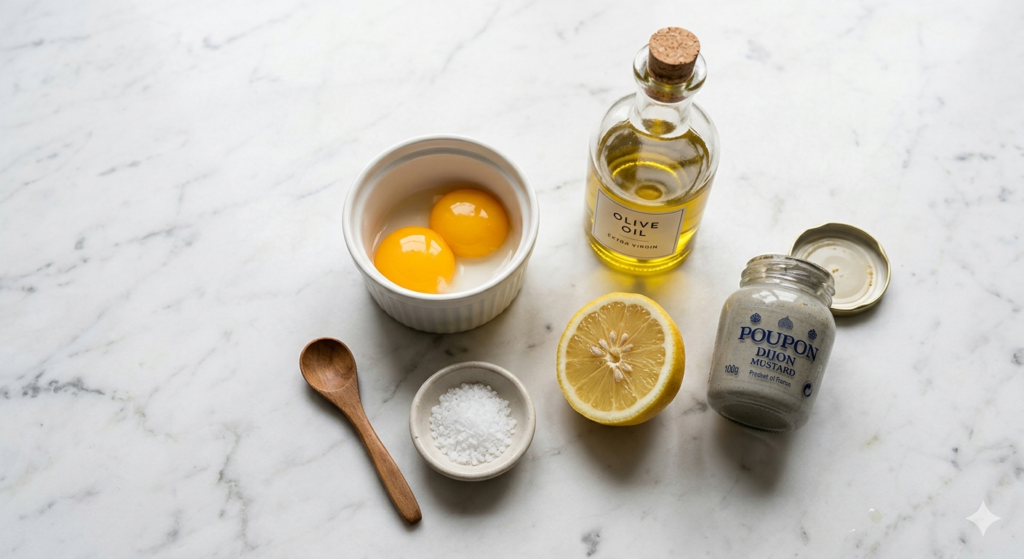
Here’s the beauty of a basic mayonnaise recipe: you only need 4 ingredients. Most competitors list them without explaining why each one matters. Let’s fix that.
1. Egg Yolk (or Whole Egg) The star of the show. The egg yolk contains lecithin, which makes emulsification possible. Without it, you’d have a greasy, separated mess.
2. Neutral Oil (or Olive Oil) The base of the emulsion. Use a light-flavored neutral oil like sunflower, canola, or avocado oil for a clean taste. For a Mediterranean twist, use light olive oil more on that below.
3. Acid — Lemon Juice or Vinegar Acid brightens the flavor and helps stabilize the emulsion. Lemon juice is fresh and citrusy. White wine vinegar is more traditional. Apple cider vinegar adds a mild fruitiness. They’re all excellent use what you love.
4. Dijon Mustard This is the secret weapon most people skip. Mustard acts as a secondary emulsifier, adding extra stability to the mayo while lending a subtle tangy depth of flavor. Don’t skip it.
Salt — technically a fifth ingredient, but more of a seasoning. It ties everything together.
Substitutions: Swap lemon juice for white wine vinegar or apple cider vinegar. Swap sunflower oil for avocado oil or light olive oil. Same great results.
Easy Mayonnaise Recipe — 3 Methods Compared (Blender, Whisk & Immersion Blender)
Here are three ways to make your homemade mayo. Each has its strengths.
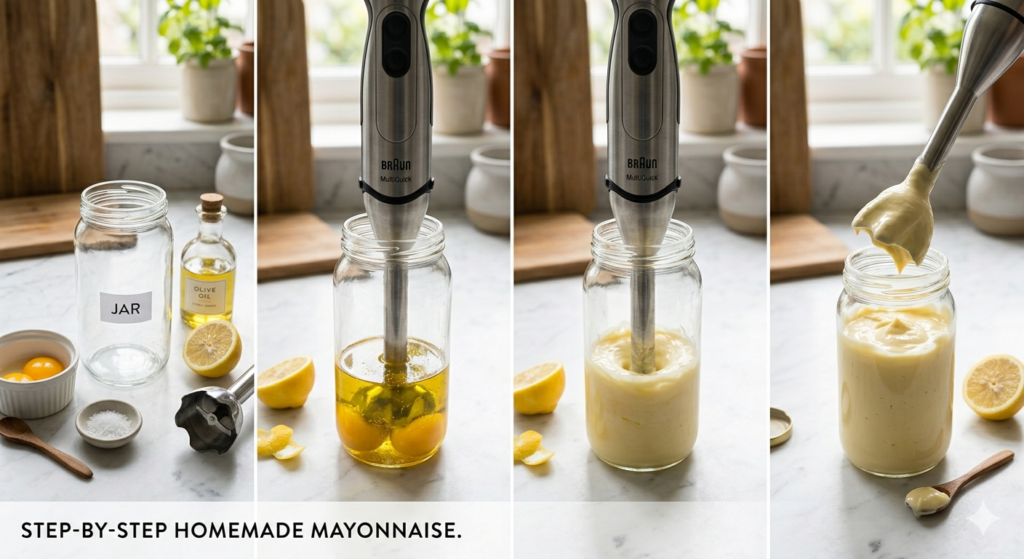
Method 1: Immersion Blender (Fastest — 60 Seconds)
This is my go-to method. It’s virtually foolproof.
Ingredients:
- 1 whole egg (room temperature)
- 1 cup (240ml) neutral oil
- 1 tbsp lemon juice
- 1 tsp Dijon mustard
- ½ tsp salt
Instructions:
- Add the egg to a tall, narrow jar or cup.
- Pour in the oil on top of the egg.
- Add the lemon juice, Dijon mustard, and salt.
- Place the immersion blender (stick blender) at the very bottom of the jar.
- Blend on high without moving the blender for 10–15 seconds — you’ll see the mayo form.
- Slowly lift the blender upward to incorporate any remaining oil.
- Taste and adjust seasoning.
Done. Creamy mayo in under 60 seconds.
Method 2: Hand Whisk (Traditional — Best Texture)
The classic method. More effort, but the texture is extraordinary.
Ingredients:
- 2 egg yolks (room temperature)
- 1 cup (240ml) neutral oil
- 1 tbsp lemon juice
- 1 tsp Dijon mustard
- ½ tsp salt
Instructions:
- In a medium bowl, whisk together the egg yolks, Dijon mustard, and a pinch of salt.
- Begin adding the oil drop by drop, whisking constantly. This is critical — go slow.
- Once the mixture begins to thicken and emulsify (after the first ¼ cup of oil), you can add the oil in a slow, thin stream.
- Continue whisking until all the oil is incorporated and you have a thick, glossy mayo.
- Stir in the lemon juice at the end to brighten the flavor.
- Season with additional salt to taste.
Method 3: Food Processor or Blender (Large Batch)
Best when you’re making mayo for a crowd.
Ingredients: (Double batch)
- 2 whole eggs (room temperature)
- 2 cups (480ml) neutral oil
- 2 tbsp lemon juice
- 2 tsp Dijon mustard
- 1 tsp salt
Instructions:
- Add eggs, mustard, lemon juice, and salt to the food processor bowl.
- Process for 20 seconds until well combined.
- With the processor running, slowly drizzle in the oil through the feed tube — start with a very slow drizzle, then increase to a thin stream.
- Continue processing until the mayo is thick and creamy.
- Taste, adjust seasoning, and transfer to an airtight container.
Best Mayonnaise Recipe — Pro Tips for Thick, Glossy Mayo Every Time
Use room temperature ingredients. Cold eggs and cold oil don’t emulsify as easily. Take your eggs out 30 minutes before you start. This single step prevents most mayo failures.
Add oil slowly — especially at the start. In the whisk method, the first few drops of oil are critical. Adding too much too fast overwhelms the lecithin and breaks the emulsion. Drop by drop at first. Then a slow stream.
Mustard as secondary emulsifier. Dijon mustard contains its own emulsifying compounds. It works alongside egg yolk lecithin to build a stronger, more stable emulsion. It’s not just flavor — it’s structure.
Add acid at the end. In the whisk method, adding lemon juice at the end rather than the beginning gives you more control and brightens the final flavor without interfering with early emulsification.
Follow these four rules and you’ll have thick, glossy, restaurant-quality mayo every time.
Whole Egg Mayonnaise Recipe vs Egg Yolk Only — Which is Better?
Great question — and the answer depends on what you’re after.
Egg Yolk Only (Traditional Mayonnaise) Using just the yolk produces a richer, denser mayo with a deep golden color. Egg yolk has a higher fat content and more lecithin per gram, which makes for an incredibly stable emulsion. This is the traditional mayonnaise method used in classic French cuisine.
Whole Egg Method Using the entire egg (yolk + white) produces a lighter, slightly less rich mayo. The egg white adds water, which dilutes the emulsion slightly, resulting in a softer, more neutral flavor. It’s a great healthy mayonnaise recipe option for those watching calorie density. It also works brilliantly in the immersion blender method.
The verdict: For richness and depth, go yolk only. For everyday use, ease, and a lighter texture, the whole egg method wins.
Mayonnaise Recipe with Olive Oil — A Healthier Twist
Want a healthy homemade mayo with real nutritional benefits? Use olive oil.
Important: Don’t use extra virgin olive oil. It’s too strong and bitter, and it can turn the mayo a greenish hue. Instead, use light olive oil — it has a milder flavor that lets the egg and lemon shine.
Why it’s healthier:
- Olive oil is rich in monounsaturated fats, which support heart health.
- No preservatives, no additives, no hydrogenated oils.
- This Mediterranean mayo contains only clean, whole ingredients.
Flavor comparison: Olive oil mayo has a slightly fruity, nutty undertone compared to vegetable oil mayo. It’s incredible on sandwiches, with grilled fish, or as a base for aioli.
Use the same recipe from Method 1 or 2 simply swap your neutral oil for light olive oil. The olive oil emulsion works exactly the same way.
Once you have a jar of fresh homemade mayonnaise ready, our tuna salad recipe is the perfect immediate use — the creamy, protein-rich classic tastes noticeably better when made with fresh mayo rather than any store-bought alternative. For entertaining, this homemade mayo also forms the base for a sophisticated cocktail sauce — pair it with our elegant shrimp cocktail recipe for a restaurant-worthy appetizer that impresses every time. Find more homemade condiment recipes and easy cooking guides at MyRecipesCollections.
How to Store Homemade Mayo + Shelf Life
Because homemade mayo contains no preservatives, it has a shorter shelf life than commercial mayo. That said, it’s perfectly safe when handled properly.
- Store in an airtight container or jar in the refrigerator.
- Use within 7–10 days.
- Always use a clean spoon to avoid contamination.
- Do not leave at room temperature for more than 2 hours.
A note on raw egg safety: Use the freshest eggs possible. If you’re cooking for vulnerable groups (pregnant women, the elderly, or immunocompromised individuals), consider using pasteurized eggs.
Can I make mayonnaise without a blender?
Yes, absolutely. The hand whisk method (Method 2) requires no equipment at all. Just a bowl, a whisk, and a little patience. The texture is actually superior to machine-made mayo when done correctly.
Is homemade mayonnaise safe to eat?
Yes, when made with fresh eggs and stored properly in the fridge. The acid (lemon juice or vinegar) helps inhibit bacterial growth. Use it within 7–10 days and always refrigerate. For extra peace of mind, use pasteurized eggs.
What oil is best for homemade mayonnaise?
A neutral oil like sunflower, canola, or avocado oil gives the cleanest, most classic flavor. Light olive oil adds a pleasant Mediterranean character. Avoid extra virgin olive oil — it’s too intense and can turn the mayo bitter.
Why is my mayo runny and not thick?
The oil was likely added too fast, or the ingredients were too cold. The emulsion didn’t have time to fully form. Try the fix method above (re-emulsify with a fresh yolk), or chill the broken mayo and try whisking it again after it warms slightly.

Hi, I’m Jamie! I’m a home cook turned recipe developer with a deep love for honest, approachable food. After years of experimenting in my own kitchen — and feeding anyone who’d sit still long enough — I started My Recipes Collections to share the dishes that have become staples at my table.
My recipes focus on bold flavors, simple techniques, and ingredients you can actually find at your local grocery store. Whether you’re a weeknight warrior or a weekend baker, there’s something here for you.