Prep: 15 min + 1 hr restCook
10 min per batchMakes: 8 crumpets
Skill: Beginner
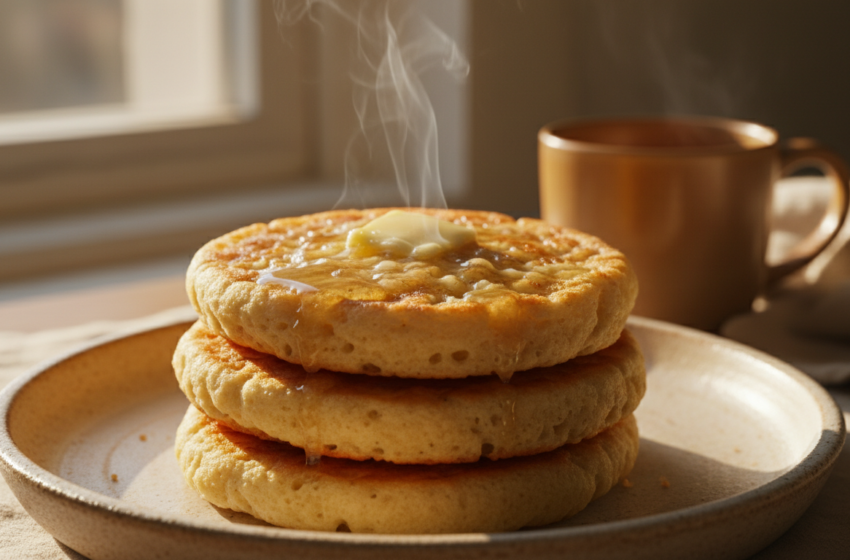
Imagine a cold morning, kettle on, and a crumpet straight from the griddle soaked in butter, pooling into every nook and cranny. That’s the magic of a homemade crumpet recipe. The good news? These iconic English crumpets are surprisingly easy to make at home. You need pantry staples, one bowl, and about an hour. The result is a spongy, golden, hole-filled crumpet far better than anything from a supermarket shelf.
Quick Answer A crumpet recipe uses flour, yeast, warm milk, and baking soda to create a thick batter that cooks in rings on a griddle, forming iconic bubbles on top. The batter needs a resting period so the yeast activates and produces the CO₂ responsible for those signature holes.
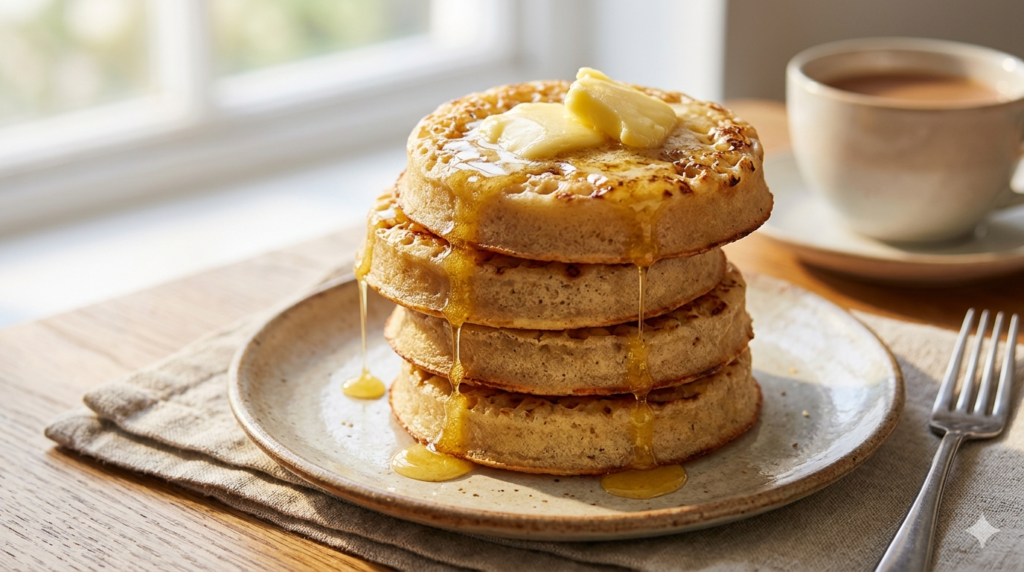
Table of Contents
What Makes a Perfect Crumpet? (The Science Behind the Holes)
The holes in a crumpet aren’t an accident — they’re the entire point. Here’s what’s happening inside your batter. When you combine active yeast with baking soda, you get a double-leavening reaction. The yeast produces CO₂ as it ferments, and the baking soda gives an extra burst of carbon dioxide when it meets the slightly acidic batter.
This creates a thick batter packed with bubbles. When you pour it into a hot ring on a griddle, the bottom sets quickly, but those bubbles continue rising upward and popping — creating the signature holey, spongy top you’re after. The key is the rest time. Without it, you won’t get enough bubble activity to form those nooks and crannies.
Heat control is equally important. Too hot, and the bottom burns before the top sets. Too cool, and the bubbles don’t pop cleanly. Medium-low heat is your best friend for fluffy crumpets with a golden bottom and a bubbly, open texture on top. Get these two things right the rest and the heat and you’ve cracked the crumpet code.
Ingredients for the Best Homemade Crumpet Recipe
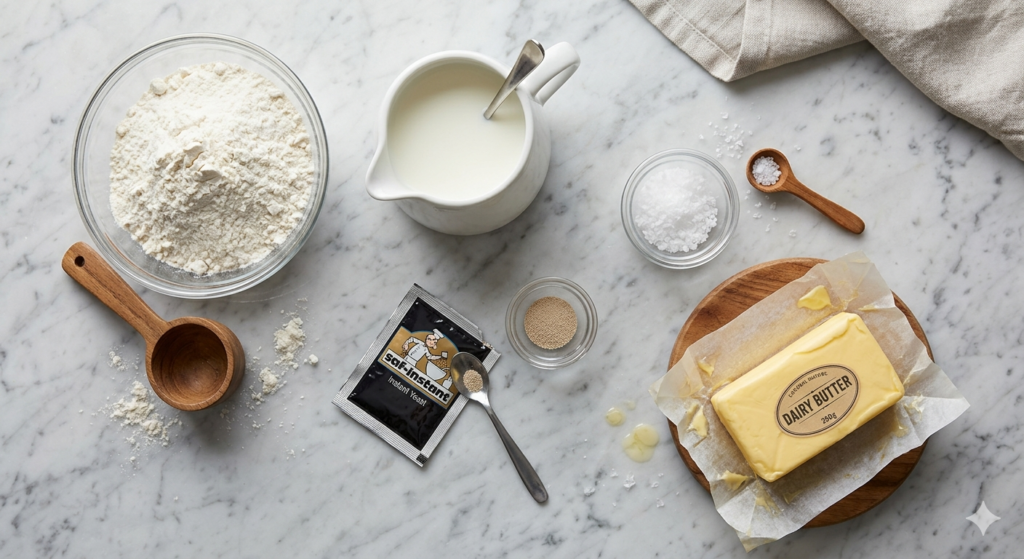
You don’t need anything exotic. This easy crumpet recipe uses basic baking staples. Here’s what you’ll need to make 8 crumpets:
Ingredients — Makes 8 Crumpets
| Ingredient | Quantity | Easy Explanation |
|---|---|---|
| Flour (Maida / All-purpose ya Bread Flour) | 300g / 2½ cups | Base ingredient |
| Yeast (Active dry ya Instant) | 1 tsp | Batter ko phulane ke liye |
| Sugar | 1 tsp | Yeast activate karne ke liye |
| Warm Milk | 300 ml / 1¼ cup | Halka garam (not hot) |
| Warm Water | 150 ml / ⅔ cup | Halka garam |
| Baking Soda | 1 tsp | Soft texture ke liye |
| Salt (Namak) | ½ tsp | Taste ke liye |
| Butter / Oil | As needed | Greasing ke liye |
Pro Tip: Bread flour gives chewier crumpets with more structure; all-purpose gives a softer, more delicate result. King Arthur Baking recommends bread flour for maximum structure and those deep, well-defined holes. Both work beautifully — pick based on your texture preference.
How to Make Crumpets at Home — Step-by-Step
Follow these steps in order and you’ll have perfect crumpets every time. The process is forgiving — the main thing is not to rush the resting stage.
- 1 Activate your yeast. Combine the warm milk, sugar, and yeast in a jug. Stir gently and leave for 5 minutes. You’re looking for a foamy, fragrant surface — that’s your yeast waking up. If it stays flat after 5–7 minutes, your yeast is old and needs replacing.
- 2 Mix your dry ingredients. Sift the flour and salt into a large bowl and whisk to combine. You want an even, lump-free dry base before any liquid goes in.
- 3 Add liquid and whisk. Pour in the yeast mixture and warm water. Whisk vigorously until you have a smooth, thick batter with no flour lumps. It should be thicker than pancake batter but still pourable — roughly like heavy cream.
- 4 Rest the batter (key step). Cover the bowl with a damp tea towel or cling film and leave at room temperature for 45–60 minutes. You’ll know it’s ready when the surface is alive with bubbles. Don’t skip or shorten this — it’s where the crumpet magic happens.
- 5 Add the baking soda. Dissolve 1 tsp baking soda in 2 tablespoons of warm water and gently fold it into the rested batter. You’ll see it go slightly frothy. This is the second leavening agent that drives those bubbles to the surface.
- 6 Heat your griddle. Set a non-stick griddle or cast iron pan over medium-low heat. Give it 3–4 minutes to come to a steady, even temperature. No hot spots — consistency is everything.
- 7 Grease your rings. Butter the inside of your crumpet rings generously. Place them on the hot griddle and let them heat for a minute before adding batter. You can use egg rings, metal cookie cutters, or purpose-made crumpet rings.
- 8 Pour in the batter. Ladle batter into each ring to about ¾ of the height. Resist the urge to fill to the top — the batter will rise and needs room. If batter runs under the ring, your griddle is slightly uneven; tilt gently to correct.
- 9 Cook until the top sets. Leave the crumpets completely undisturbed for 8–10 minutes. Watch the top — it starts off glossy and wet, then gradually sets as bubbles pop and leave holes. Once the surface looks dry and full of holes, your crumpets are ready to flip.
- 10 Flip and finish. Remove the rings carefully (they’ll be hot — use tongs). Flip each crumpet and cook the smooth side for just 1–2 minutes until pale golden. You’re not trying to brown the top — just set it.
- 11 Toast and serve. Crumpets are always better toasted. Pop them in a toaster or under the grill for 2–3 minutes, then load with butter immediately. The butter melts through every hole — that’s the whole point.
Easy Crumpet Recipe Tips for Beginners
If it’s your first time, these five tips will save you a batch and teach you more than any recipe can.
- Batter thickness matters. Your batter should be thick enough to hold its shape in the ring, but thin enough to still flow and bubble. If holes aren’t forming, thin the batter slightly with a tablespoon of warm water at a time.
- Low and slow wins the race. Medium-low heat is non-negotiable. High heat scorches the bottom before the top can set, giving you a raw, gummy surface. If your crumpets are browning too fast, turn the heat down.
- Grease rings thoroughly. Buttering the inside of your rings generously prevents sticking. If the crumpet grips the ring when you try to remove it, you need more butter. Don’t be shy.
- Don’t flip too early. The top of a crumpet should look completely dry and covered in holes before you flip. If you flip while the surface is still wet or glossy, the crumpet collapses and you lose the fluffy crumpet texture you worked for.
- Always toast before eating. Freshly cooked crumpets are good. Toasted crumpets are golden brown, crisp-edged, and exceptional. The toasting process finishes the texture and opens the holes further for maximum butter absorption.
Sourdough Crumpet Recipe (Extra Tangy & Flavorful)
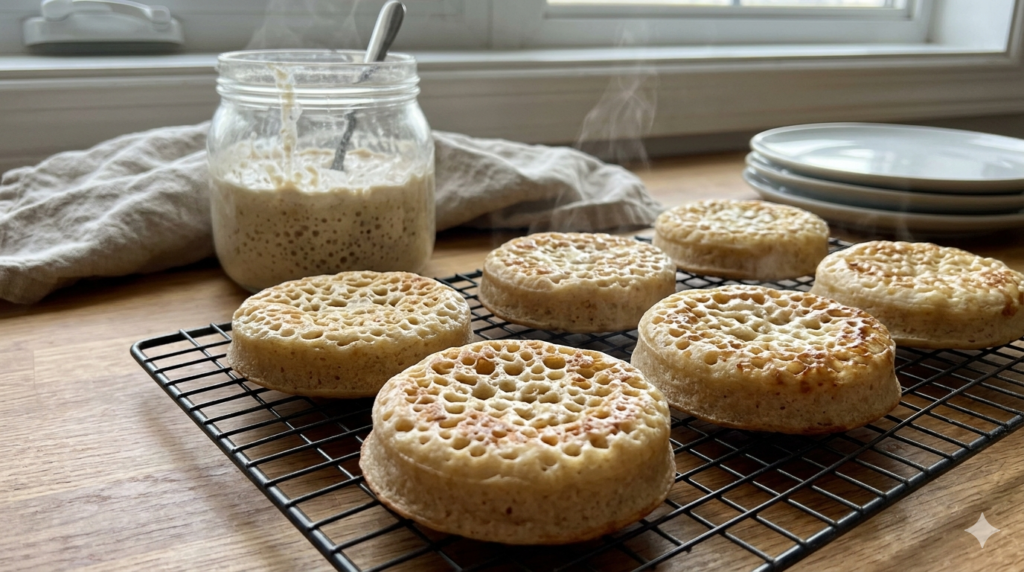
If you maintain a sourdough starter, this variation is worth every extra step. A sourdough crumpet recipe delivers a deeper, tangier flavor that commercial yeast simply can’t replicate. The fermentation process also improves digestibility, making these crumpets easier on the stomach.
Sourdough Variation — Makes 8 crumpets
Replace the yeast, milk, and warm water with: 200g active, bubbly sourdough starter + 200ml warm milk + 100ml warm water. Use 250g flour (reduced slightly) and the same salt and baking soda. Mix as usual, but extend the rest time to 2–4 hours at room temperature, or overnight in the fridge. The batter is ready when it’s clearly bubbly and has a pleasant sour smell. Dissolve the baking soda in warm water and fold in just before cooking.
The extra fermentation time produces more complex flavor — mildly sour, almost nutty, with a chewier crumb. If you refrigerate the batter overnight, pull it out 30 minutes before cooking to take the chill off. This sourdough crumpet recipe is a brilliant way to use up starter discard without waste.
King Arthur Crumpet Recipe Method — What Makes It Special?
King Arthur Baking is one of the most trusted names in American home baking. Their approach to crumpets reflects their signature commitment to precision and high-protein flour. Here’s what sets their method apart — and where it overlaps with a traditional english crumpet recipe.
King Arthur emphasizes bread flour above all else. The higher protein content (around 12–13%) creates a stronger gluten network that holds bubble structure better during the long cook. This gives you deeper, more defined holes and a slightly chewier bite. Their batter hydration is also on the higher end, producing a more open crumb with airier pockets.
They also typically recommend a longer resting period — sometimes up to 90 minutes for maximum bubble development. This aligns with traditional methods used in English bakeries. The main difference from a classic british approach is the flour choice. Traditional english crumpet recipes often use plain or all-purpose flour for a softer result. King Arthur’s bread flour approach is excellent if you prefer a chewier, more structured crumpet. If you want the classic soft, pillowy texture, all-purpose flour gets you there.
English Crumpet Recipe vs American Crumpets — What’s the Difference?
Crumpets are fundamentally a British invention, but they’ve crossed the Atlantic and picked up some regional variations. Here’s a clear breakdown:
| Feature | English Crumpet | American Crumpet |
|---|---|---|
| Leavening | Yeast + baking soda double-leavening | Sometimes baking powder only (quicker) |
| Flour | Plain (all-purpose) flour typically | Often bread flour for structure |
| Rest time | 45–90 minutes (yeast fermentation) | Often shorter, sometimes none |
| Texture | Soft, spongy, deeply holey | Slightly denser, fewer holes |
| Cooking method | Griddle, one side primarily | Griddle, sometimes both sides browned |
| Flavor | Mild, yeasty, slightly tangy | Neutral, bready |
| Serving tradition | Always toasted, heavily buttered | Toasted, with a wider range of toppings |
How to Serve, Store & Freeze Crumpets
Best Crumpet Toppings
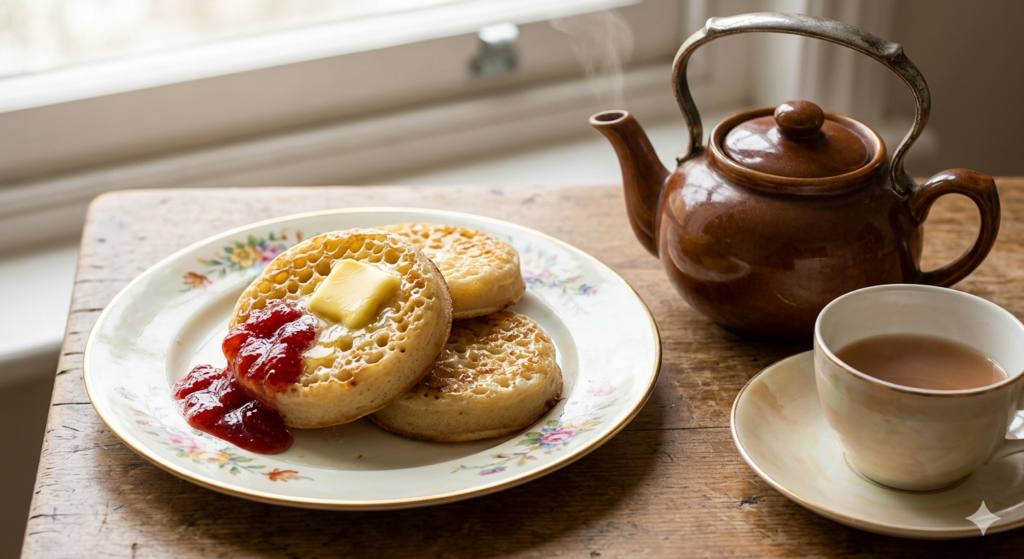
The classic is always best: salted butter, applied immediately after toasting so it melts completely into the holes. Beyond that, here are the toppings worth trying:
- Honey and butter. The combination of salted butter and runny honey is quintessentially British. Let both melt through the holes together.
- Strawberry jam. A good-quality jam on a toasted crumpet is hard to beat. The sweetness works beautifully against the mild tang of the crumpet itself.
- Cream cheese and smoked salmon. A more grown-up option — cream cheese spread thickly, topped with smoked salmon and a twist of black pepper.
- Marmite and butter. This is divisive, deeply British, and absolutely correct. The salty, umami intensity of Marmite is made for a crumpet.
- Avocado and chilli flakes. A modern twist. Mash ripe avocado onto a toasted crumpet, season well, and add chilli flakes for heat.
Crumpet Recipe FAQs
Why don’t my crumpets have holes?
Holes form when CO₂ bubbles rise through the batter and pop at the surface. If you’re not getting holes, your batter is likely too thick, your heat too high, or your yeast wasn’t active enough. Make sure to rest the batter for the full 45–60 minutes and use fresh yeast — a foamy yeast mixture before mixing is non-negotiable. Adding the baking soda too early (before the rest is complete) can also cause problems, as it depletes the gas before cooking begins.
Can I make crumpets without crumpet rings?
You can. Clean tuna cans with both ends removed make excellent improvised crumpet rings, as do egg rings and round cookie cutters. You can also make free-form crumpets by dropping spoonfuls of thicker batter onto the griddle — they won’t be as tall or round, but they’ll still have that bubbly texture. The rings simply help maintain the classic thick, uniform shape.
What is the difference between a crumpet and an English muffin?
Crumpets and English muffins are both griddle breads, but they’re quite different. Crumpets are cooked only on one side, producing a spongy holey top and a smooth, sealed bottom. English muffins are cooked on both sides, then split open to reveal a doughy, irregular interior. Crumpets use a wet batter; English muffins use a firmer dough. Crumpets are also softer and spongier overall, while English muffins have more chew and structure. You can explore our English muffin recipe to compare both side by side.
Can I make a dairy-free crumpet recipe?
Yes, easily. Simply replace the warm milk with an equal quantity of oat milk, soy milk, or almond milk. Oat milk works best here — it has a mild flavor that doesn’t interfere with the crumpet’s taste and a protein content that supports structure. The texture will be slightly lighter, but the holes and spongy quality remain intact. Use a neutral oil instead of butter to grease the rings and griddle.
How do I get my crumpets fluffy and soft?
Three things: fresh yeast, full resting time, and low heat. Use yeast that foams actively within 5 minutes of activating. Rest the batter until you can see visible bubbles on the surface — don’t cut this short. And cook on medium-low heat so the interior stays soft and spongy while the exterior sets gently. Rushing any of these three steps will give you dense, flat crumpets instead of the fluffy crumpets you’re after.
If you enjoy making breakfast breads from scratch, our guide on how to make pancakes is a natural next step — the same careful technique of resting your batter and controlling cooking heat applies directly to consistently fluffy, golden stacks every morning. For a savory bread recipe that is equally rewarding to make from scratch at any time of day, our garlic bread recipe produces a crispy, buttery loaf that pairs beautifully with any meal. Explore more bread and breakfast recipes at MyRecipesCollections.

Hi, I’m Jamie! I’m a home cook turned recipe developer with a deep love for honest, approachable food. After years of experimenting in my own kitchen — and feeding anyone who’d sit still long enough — I started My Recipes Collections to share the dishes that have become staples at my table.
My recipes focus on bold flavors, simple techniques, and ingredients you can actually find at your local grocery store. Whether you’re a weeknight warrior or a weekend baker, there’s something here for you.