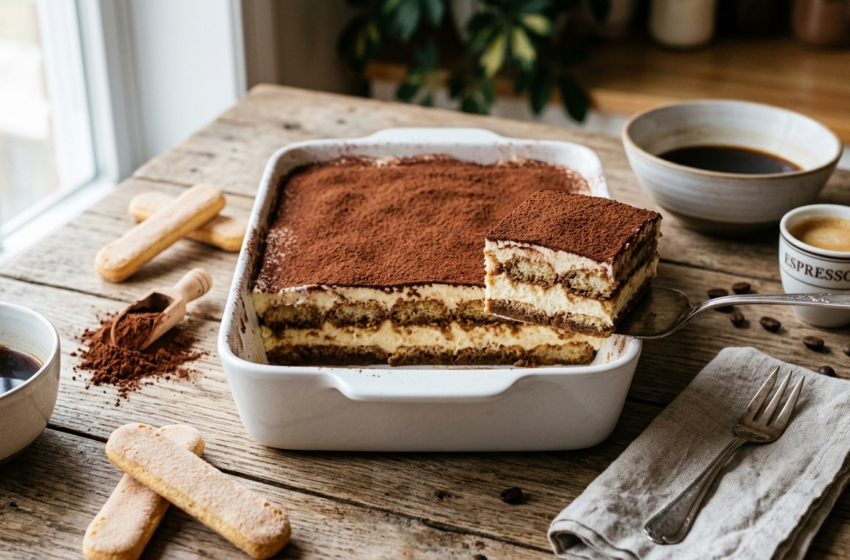
Silky mascarpone cream, espresso-soaked savoiardi, and a blizzard of dark cocoa — tested 20+ times to nail the perfect layer ratio.
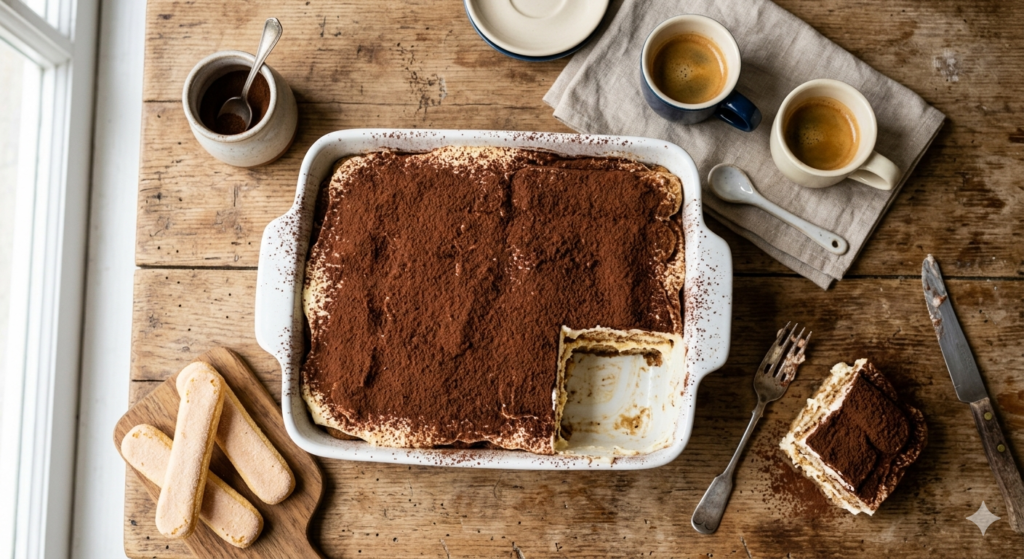
Close your eyes for a moment and picture it: a cloud of silky mascarpone cream, layers of espresso-soaked savoiardi ladyfingers, and a generous dusting of bittersweet cocoa that settles like snow. That’s tiramisu — Italy’s most beloved no-bake dessert, born in the kitchens of the Veneto region and now adored on every continent. This is the best tiramisu recipe you’ll ever make — classic, authentic, Italian to the core, and perfectly foolproof. It’s a genuine make-ahead recipe that tastes even better the next day.
Table of Contents
Classic Tiramisu Recipe
Ingredients
- 6 large egg yolks
- 150g (¾ cup) granulated white sugar
- 500g (2¼ cups) mascarpone cheese, room temperature
- 300ml (1¼ cups) heavy whipping cream, cold
- 30–35 savoiardi (ladyfinger biscuits)
- 300ml (1¼ cups) strong espresso, cooled
- 3 tbsp Marsala wine or dark rum (optional)
- Unsweetened cocoa powder, for dusting
Instructions (Quick)
- Whisk egg yolks + sugar until thick and pale (4–5 min)
- Fold in room-temp mascarpone until smooth
- Whip cream to soft peaks; fold into mascarpone mix
- Combine cooled espresso + Marsala in a shallow bowl
- Dip each ladyfinger for 1 second per side; layer in dish
- Spread half the cream over first ladyfinger layer
- Repeat with second layer of biscuits and cream
- Cover and refrigerate 6 hours minimum, overnight preferred
- Dust generously with cocoa powder just before serving
What Is Tiramisu? (Origin & History)
Tiramisu — written as tiramisù in Italian — literally translates to “pick me up” or “lift me up,” from the Italian tirami su. The name is a nod to the stimulating combination of espresso and sugar that once made it a popular after-dinner reviver in Italian restaurants and cafés.
The dessert’s true birthplace is a lively topic of debate among Italian food historians. The most widely accepted account traces tiramisu to Treviso in the Veneto region, where it was reputedly created in the early 1960s at the restaurant Le Beccherie by pastry chef Roberto Linguanotto, who combined sabayon (zabaglione), mascarpone, and espresso-soaked biscuits in a single dish. The city of Treviso still stakes a proud territorial claim, and tiramisu is celebrated as part of the broader tradition of Italian pastry culture that UNESCO has recognized.
A competing claim places tiramisu’s origin in Friuli-Venezia Giulia, associated with a chef named Norma Pielli. Others cite Venice. What every version agrees on is the core structure: egg yolk custard, mascarpone cream, coffee-soaked ladyfinger biscuits, and cocoa powder — the four pillars that define every authentic Italian tiramisu recipe.
Today it is one of the most ordered Italian desserts worldwide — a chilled dessert beloved for its make-ahead convenience, its coffee-forward flavour, and the sheer elegance of those perfect pale-and-dark layers.
Ingredients for Classic Tiramisu Recipe
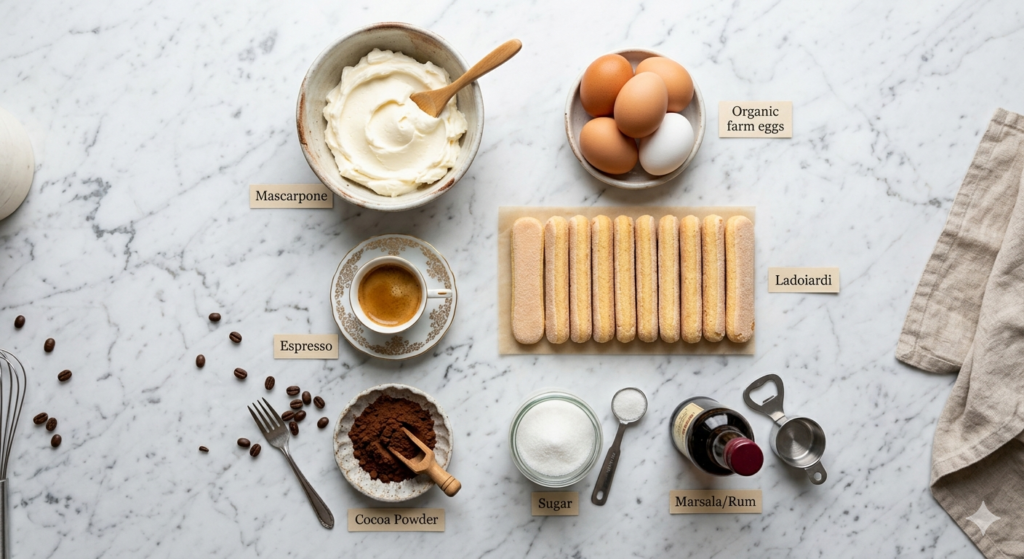
The Authentic Ingredient List (6 Traditional Ingredients)
Authentic Italian tiramisu uses just six core ingredients. That simplicity is its brilliance. Every single component plays a structural or flavour role — there is no filler here.
“
- 🥚 Egg YolksWhy used:
- Egg yolks whipped with sugar create a thick, aerated zabaglione base that gives the cream its richness, structure, and golden colour.Substitution: For egg-free versions, use only whipped heavy cream. For cooked safety, use the double-boiler method
- 🧀 Mascarpone CheeseWhy used:
- This creamy Italian cheese (70–75% fat) is the soul of tiramisu. Its neutral richness and smooth, buttery texture are utterly irreplaceable. Best brands: Galbani, BelGioioso, or any full-fat Italian mascarpone.Substitution: Full-fat cream cheese beaten with 2–3 tbsp heavy cream — tangier, but workable.
- 🍪 Savoiardi (Ladyfingers)Why used:
- These crisp, egg-based Italian sponge biscuits (also called boudoir biscuits) absorb the espresso perfectly without disintegrating. They provide the structural backbone of the dessert. Best brand: Vicenzi Savoiardi or Balocco.Substitution: Sponge cake fingers or panettone slices at a pinch, but texture will differ.
- ☕ Strong EspressoWhy used:
- Espresso is the flavour backbone. Use 2–3 freshly brewed shots, cooled to room temperature. The intensity of espresso — not regular coffee — creates that deep, bittersweet contrast to the sweet cream.Substitution: Strong Moka pot coffee, or 2 tsp instant espresso powder dissolved in 300ml hot water.
- 🥛 Heavy Whipping Cream
- Why used:
- Cold heavy cream whipped to soft peaks adds lightness and volume to the mascarpone mixture, making the layers airy and cloud-like rather than dense.Substitution: Some traditional Italian recipes use no cream at all, relying solely on the egg-mascarpone mixture — perfectly valid and slightly richer.
- 🍷 Marsala Wine (Optional)
- Why used: A splash of dry or semi-sweet Marsala wine stirred into the espresso adds a subtle, nutty complexity that defines many authentic tiramisu recipes. Dark rum or coffee liqueur (Kahlúa) are equally classic.Substitution: Simply omit for a kid-friendly or alcohol-free version — the dessert still tastes magnificent.
- 🍫 Unsweetened Cocoa Powder
- Why used:
- The final generous dusting of dark cocoa is non-negotiable. It adds a bittersweet top note and the iconic appearance. Use Dutch-process cocoa for the deepest colour and flavour.Substitution: Finely grated dark chocolate works beautifully as a garnish alternative.
Authentic Tiramisu Recipe (Step-by-Step)
Step 1: How to Make the Mascarpone Cream
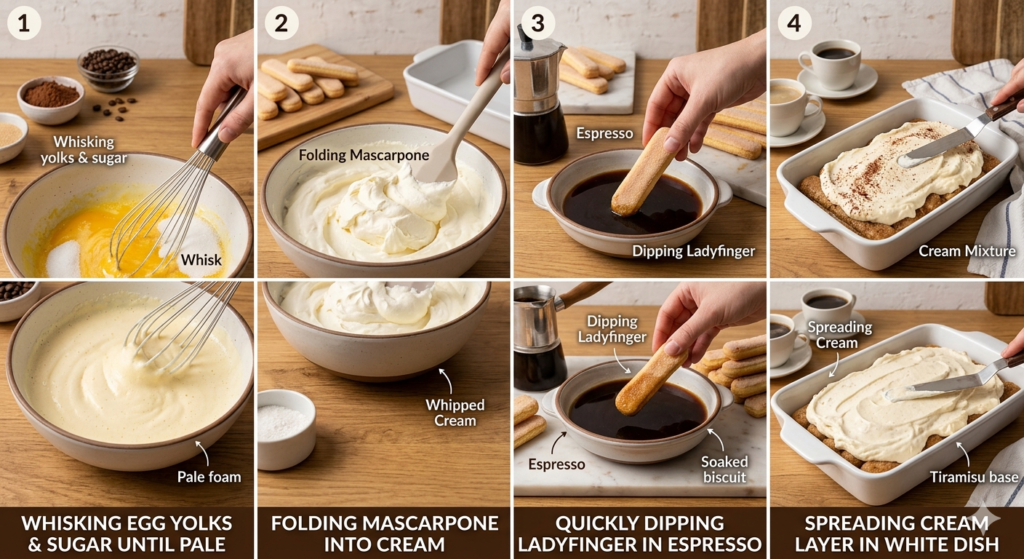
- Whip the egg yolks and sugar.In a large bowl, combine the 6 egg yolks and 150g sugar. Beat with an electric mixer on medium-high for 4–5 minutes until the mixture is thick, pale yellow, and falls from the beater in a thick ribbon. This is your zabaglione base.
- Add the mascarpone.Spoon the room-temperature mascarpone into the egg mixture and gently fold with a rubber spatula until fully combined and silky smooth. Do not use the electric mixer at this stage — overmixing breaks the mascarpone.
- Whip the cream separately.In a clean, cold bowl, beat the heavy cream on medium speed until soft-to-medium peaks form (about 2–3 minutes). Stop before stiff peaks — you want a billowy, cloud-like texture.
- Fold cream into mascarpone.Add the whipped cream to the mascarpone mixture in two additions, folding each time with a large spatula using slow, sweeping motions. The final cream should be light, airy, and perfectly smooth.
💡 Pro Tip — Temperature Is EverythingAlways use room-temperature mascarpone. Cold mascarpone straight from the fridge will seize and become grainy the moment it meets the egg mixture. Pull it out 30 minutes before you start.
Step 2: How to Brew the Perfect Espresso Soak
- Brew strong espresso.Make 300ml (about 3 double espresso shots) using an espresso machine, Moka pot, or strong filter coffee. Allow to cool completely to room temperature — hot espresso will make the ladyfingers disintegrate.
- Add alcohol (optional).Stir in 3 tablespoons of Marsala wine or dark rum. Pour into a shallow bowl or wide dish wide enough to lay a ladyfinger flat.
⚠️ Common Mistake — Over-SoakingOver-soaked ladyfingers are the single most common reason tiramisu turns out soggy and runny. The biscuits absorb liquid almost instantly. Quick, deliberate dipping — not soaking — is the key.
Step 3: How to Dip Ladyfingers (The 1-Second Rule)
- Hold firmly at one end.Pick up a savoiardi by one end. Lower it face-side down into the espresso for exactly1 second, then flip and do the same to the other side — 1 second.
- Lay immediately in the dish.Place each dipped ladyfinger sugar-side-up in a single layer in your baking dish, arranging them snugly side by side. Trim any biscuits as needed to fill the edges of the dish.
💡 Pro Tip — The Science of Savoiardi SoakingSavoiardi are sponge biscuits with a porous, egg-foam structure. They absorb liquid by capillary action — extremely rapidly in the first 2–3 seconds. After chilling overnight, moisture redistributes evenly from the soaked exterior to the dry core. This is why a briefly dipped ladyfinger produces a perfectly soft-but-not-soggy result after 8 hours in the fridge.
Step 4: How to Layer Tiramisu Like an Italian Chef
- First cream layer.Spread exactly half the mascarpone cream over the ladyfinger base in an even, smooth layer. Use an offset spatula or the back of a large spoon.
- Second biscuit layer.Dip and arrange the remaining savoiardi in a second layer on top of the cream, aligning them in the same direction as the first layer for the cleanest cross-section when sliced.
- Top cream layer.Spread the remaining mascarpone cream over the second biscuit layer. Smooth the surface completely. It should be perfectly flat — this is the canvas for your cocoa dusting.
Step 5: Chilling & Setting Time
- Cover tightly.Press plastic wrap directly against the surface of the cream (to prevent a skin forming) and cover the entire dish securely. Refrigerate.
- Minimum 4–6 hours.This is the absolute minimum for the cream to firm and the flavours to meld. Overnight is strongly, strongly recommended.
- Dust with cocoa before serving.Never dust ahead of time — cocoa absorbs moisture and loses its beautiful, dry, velvety appearance. Dust through a fine-mesh sieve just before you bring the tiramisu to the table.
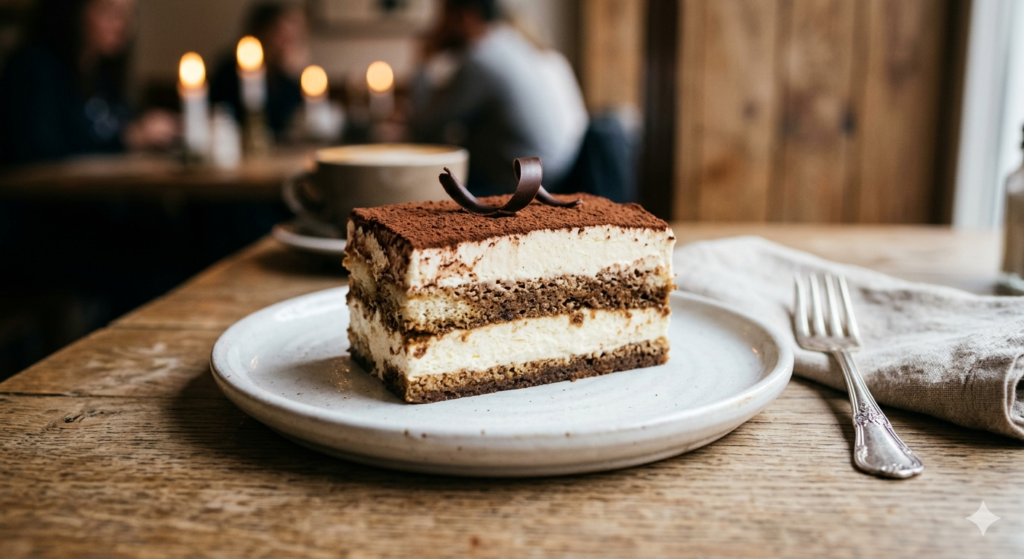
Easy Tiramisu Recipe Variations
The classic recipe is perfect as written — but there are excellent reasons to adapt it. Here are the most popular and trusted variations.
Easy Tiramisu Without Raw Eggs (Cooked Egg Method)
If raw eggs concern you — or if you’re serving vulnerable groups — use the zabaglione method. Place the egg yolks and sugar in a heatproof bowl set over a pan of barely simmering water. Whisk continuously until the mixture reaches 160°F (71°C) and becomes thick. Remove from the heat, continue whisking until cool, then proceed as normal. The heat fully pasteurises the eggs without sacrificing flavour.
For a completely egg-free tiramisu, omit the egg yolks entirely and fold only whipped mascarpone with lightly sweetened whipped cream. The result is slightly less rich but still delicious.
Tiramisu Without Alcohol (Kid-Friendly Version)
Simply omit the Marsala wine or rum from the espresso soak. For extra flavour depth, add 1 teaspoon of pure vanilla extract to the espresso, or stir in a teaspoon of chocolate syrup. This version is perfect for children, non-drinkers, and pregnancy-safe preparations.
No-Whip Cream Tiramisu (All-Mascarpone Version)
Many older Italian recipes use no heavy cream at all. Instead, egg whites — beaten to stiff peaks — are folded into the mascarpone-egg mixture to add lightness. This produces a denser, more intensely flavoured cream that is deeply authentic. If food safety is a concern, use pasteurised egg whites from a carton.
Tiramisu in a Cup (Individual Tiramisu Cups)
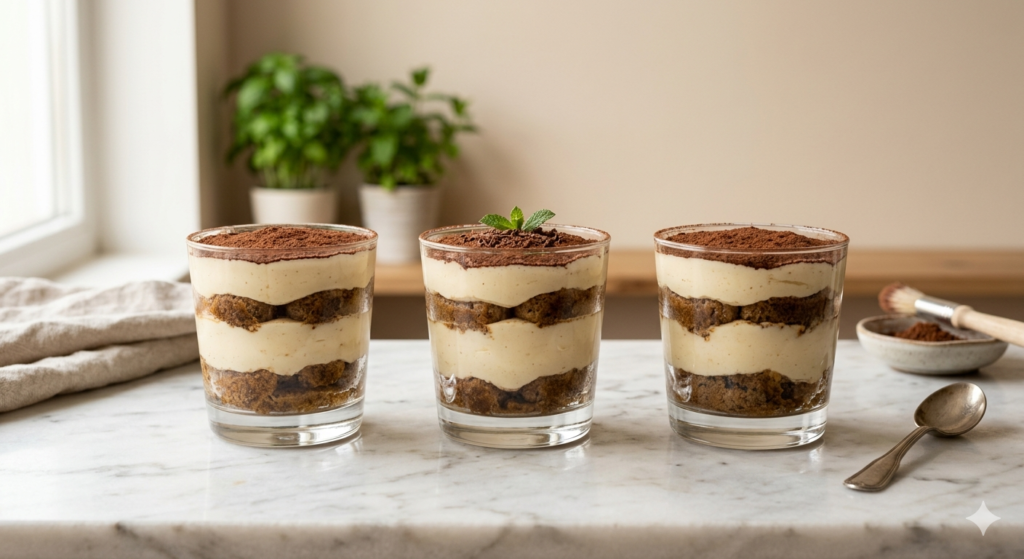
Assemble the recipe in individual 8-ounce glasses or small trifle dishes. Break the savoiardi to fit as needed. These individual tiramisu cups are perfect for dinner parties — no slicing required, and each guest gets a beautifully visible cross-section of espresso-soaked biscuit and cream. They set faster, too (4 hours is usually sufficient).
Strawberry Tiramisu (Summer Variation)
Swap the espresso for macerated strawberry juice (blend 200g strawberries with 2 tbsp sugar and a squeeze of lemon, strain). Use the same 1-second dip method. Layer with fresh sliced strawberries between the cream and biscuit layers. This caffeine-free summer variation is stunning in a glass trifle bowl and works beautifully with the mascarpone cream.
For more dessert inspiration with the same creamy, indulgent spirit, our complete guide to cheesecake toppings covers 25+ finishing ideas — from berry compotes and chocolate drizzles to caramel glazes — many of which work equally well layered into creative tiramisu variations. If you love desserts you can make without turning on the oven, our edible cookie dough recipe is another safe-to-eat, no-bake treat that satisfies sweet cravings on demand using just a few pantry ingredients. Discover even more classic and creative no-bake dessert recipes at MyRecipesCollections.
Pro Tips for the Best Tiramisu Recipe
- Use room-temperature mascarpone.Cold mascarpone is dense and prone to breaking when mixed. Take it out of the fridge 30 minutes before you start. If it does look slightly lumpy, beat it gently alone before adding to the egg mixture.
- The 1-second dip rule is sacred.Dip each savoiardi for a maximum of 1 second per side. It sounds counterintuitively brief, but the biscuit continues absorbing moisture from the cream during chilling. Start with less soaking, not more.
- Chill for a minimum of 4–6 hours.The setting time is not optional. The cream firms, the flavours deepen, and the layers become sliceable. Tiramisu made the night before is measurably better than same-day tiramisu — give it the time it deserves.
- For clean, restaurant-style slices, run a thin sharp knife under hot water, wipe dry, and cut in one downward motion. Wipe and re-heat the knife between slices. The cold cream releases cleanly from a warm, dry blade.
- Homemade whipped cream always beats store-bought.Pre-whipped cream from a can contains stabilisers and lacks the fat content to hold structure in a layered dessert. Always whip your own from cold heavy cream.
- Use quality cocoa powder.Dutch-process cocoa (darker, smoother, less acidic) produces the most flavourful and visually striking top layer. Valrhona, Droste, and Guittard are all excellent choices.
💡 Pro Tip — Can You Freeze Tiramisu?Yes — tiramisu freezes surprisingly well. Cover the dish tightly with two layers of plastic wrap and one layer of foil. Freeze for up to 3 months. To serve, transfer to the fridge and thaw overnight (8–10 hours). The texture may be very slightly softer than fresh, but the flavour is fully preserved.
⚠️ Common Mistake — Dusting Cocoa Too EarlyMany recipes instruct you to dust cocoa before chilling. Resist the temptation. Cocoa powder absorbs moisture from the cream during refrigeration and turns from a dry, velvet-like powder into a damp, dark paste. Always dust right before serving.
Make-Ahead, Storage & Freezing Guide
Tiramisu is one of the best make-ahead desserts in the Italian repertoire — and it genuinely improves with time. Here’s exactly how to store it.
Refrigerator: Tiramisu keeps well in the fridge, tightly covered, for up to 3 days. The ladyfingers continue to absorb moisture over time, becoming softer. Day 2 tiramisu is almost universally preferred over day 1.
Why does it taste better the next day? Science explains this beautifully. On day 1, the layers are distinct and the biscuits still have slight texture variation. By day 2, moisture has migrated from the espresso-soaked biscuits into the dry interior, and from the cream into the biscuit surface. The flavours — espresso, Marsala, mascarpone, cocoa — have also had time to diffuse and integrate into a single harmonious profile. It tastes more cohesive, more deeply flavoured, and more satisfyingly unified.
Freezer: Freeze for up to 3 months, well wrapped. Thaw in the refrigerator overnight before serving. Do not thaw at room temperature — the cream can separate. Dust with fresh cocoa after thawing.
Food safety note: Because this recipe contains eggs and cream, do not leave tiramisu at room temperature for more than 2 hours. Always keep refrigerated when not serving.
Frequently Asked Questions
- Q1: Can I make tiramisu without raw eggs?
- Yes. Use the cooked zabaglione method: whisk egg yolks and sugar in a heatproof bowl over barely simmering water until the mixture reaches 160°F (71°C) and thickens. Cool completely before adding mascarpone. Alternatively, omit eggs entirely and fold only sweetened whipped cream with mascarpone for a fully egg-free version.
- Q2: What can I substitute for mascarpone in tiramisu?
- Full-fat cream cheese beaten smooth with 2–3 tablespoons of heavy cream is the closest substitute. The flavour is slightly more acidic and the texture a little stiffer, but it holds well in layers. For the most authentic Italian tiramisu experience, mascarpone is irreplaceable — it’s widely available in most large supermarkets.
- Q3: How long should tiramisu be refrigerated before serving?
- A minimum of 4–6 hours is required for the layers to firm and the flavours to meld. For the absolute best result, refrigerate overnight (8–12 hours). The dessert is noticeably better on day 2 than day 1 — make it ahead whenever possible.
- Q4: Can I use regular cream cheese instead of mascarpone?
- Yes, with modifications. Beat an 8-ounce block of full-fat cream cheese until completely smooth, then blend in 2–3 tablespoons of heavy cream to loosen it. The result is tangier and denser than mascarpone but will still produce a good tiramisu — particularly in a no-egg version where the cream provides more lightness.
- Q5: What is the best coffee to use in tiramisu?
- Strong espresso is the gold standard — freshly brewed, cooled to room temperature. If you don’t have an espresso machine, a Moka pot produces excellent results. You can also dissolve 2–3 teaspoons of high-quality instant espresso powder in 300ml of hot water. Avoid weak filter coffee — the biscuits will taste bland.
- Q6: Is tiramisu safe to eat during pregnancy?
- Classic tiramisu contains raw egg yolks and alcohol, both of which are generally avoided during pregnancy. You can make a pregnancy-safe version by using the cooked zabaglione method (egg yolks heated to 160°F/71°C) and omitting the Marsala or rum from the espresso. The result is equally delicious and completely safe.
- Q7: Can I make tiramisu the night before?
- Not only can you — you absolutely should. Making tiramisu the night before is the best approach. An overnight chill allows the ladyfingers to fully absorb the espresso, the cream to firm up completely, and all the flavours to meld into one harmonious profile. Day-of tiramisu is good; overnight tiramisu is exceptional.
- Q8: What does tiramisu taste like?
- Tiramisu is rich, creamy, and layered with contrasting flavours. The mascarpone cream is silky, mildly sweet, and almost ethereal in texture. The ladyfingers carry a deep espresso bitterness softened by the coffee soak. The cocoa dusting adds a final bittersweet, slightly dry note. Together, it is indulgent without being overly sweet — deeply satisfying and deeply Italian.
- Q9: Why is my tiramisu runny?
- Runny tiramisu usually comes from one of three causes: over-soaked ladyfingers (they release too much liquid into the cream during chilling), mascarpone that was too cold and seized/broke when mixed, or insufficient chilling time. Use room-temperature mascarpone, observe the 1-second dip rule, and always refrigerate for at least 4–6 hours.
- Q10: What alcohol is traditionally used in authentic Italian tiramisu?
- Marsala wine — a Sicilian fortified wine with a nutty, slightly sweet flavour — is the most traditional choice. Dry or semi-dry Marsala both work. Dark rum is an equally classic alternative, particularly in northern Italian variations. Coffee liqueur (such as Kahlúa) adds a sweet, intensely coffee-forward note and is a popular modern choice.
Nutritional Information (Per Serving)
Tiramisu is an indulgent treat, best enjoyed on occasions rather than daily. Here is the approximate nutritional breakdown per serving (based on 8 servings from one 9×13 dish, using the full recipe with alcohol).
| Nutrient | Per Serving (~180g) | Per 100g |
|---|---|---|
| Calories | 420 kcal | 233 kcal |
| Total Fat | 28g | 15.5g |
| Saturated Fat | 17g | 9.4g |
| Carbohydrates | 32g | 17.8g |
| Sugar | 18g | 10g |
| Protein | 8g | 4.4g |
| Sodium | 95mg | 53mg |
* Nutritional values are estimates calculated using standard ingredient databases. Values will vary based on specific brands used and exact portion size.
Make This Tonight — You Won’t Regret It
This is the only tiramisu recipe you will ever need. Authentic, tested, foolproof — and breathtakingly good after a night in the refrigerator. Whether you make the classic Italian version or one of the egg-free, alcohol-free, or individual cup variations, the result will be spectacular.
Related Posts :

Hi, I’m Jamie! I’m a home cook turned recipe developer with a deep love for honest, approachable food. After years of experimenting in my own kitchen — and feeding anyone who’d sit still long enough — I started My Recipes Collections to share the dishes that have become staples at my table.
My recipes focus on bold flavors, simple techniques, and ingredients you can actually find at your local grocery store. Whether you’re a weeknight warrior or a weekend baker, there’s something here for you.