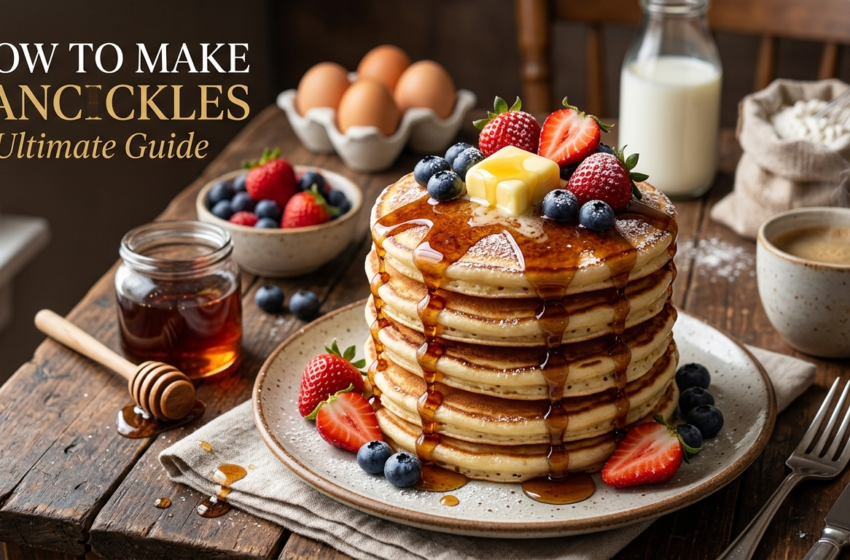
If you’ve ever wondered how to make pancakes that are genuinely spectacular — light, golden, and tender all the way through — you’re in the right place. Learning how to make pancakes from scratch is one of the most rewarding kitchen skills you can build, and in this guide I’m sharing everything: the classic base recipe, the science of fluffiness, and eleven delicious variations from banana to Japanese soufflé. Whether you’re a total beginner or you’ve been flipping stacks for years, this guide will level up your breakfast game immediately.

Table of Contents
What Makes the Perfect Pancake? (The Science Behind Fluffy Results)
Great pancakes are a chemistry experiment as much as a recipe. Here’s what’s actually happening in your bowl — and why it matters.
Baking powder is your engine. When it hits liquid, it releases carbon dioxide bubbles. Heat causes those bubbles to expand, giving you lift. Double-acting baking powder fires twice — once when wet, once in the oven — so your batter stays viable for a few minutes on the counter.
Overmixing is the enemy. Stirring vigorously develops gluten in the all-purpose flour, making pancakes tough and chewy instead of tender. You want just enough mixing to bring the batter together.
Griddle temperature is everything. Too hot, and the outside burns before the inside cooks. Too cold, and you get pale, rubbery discs. Aim for 375°F (190°C) — a drop of water should skitter and evaporate immediately.
Bubbles on the surface are your flip signal. Once bubbles form and begin to pop across the top and the edges look set, it’s time.
⚡ Pro TipRest your batter for 5–10 minutes before cooking. This allows the baking powder to activate, the gluten to relax, and the flour to fully hydrate — all of which translate directly into a more tender, light-and-airy result.
How to Make Pancakes from Scratch (Classic Base Recipe)
This is the foundation. Once you master how to make homemade pancakes using this recipe, every variation in this guide becomes easy.

Ingredients for Homemade Pancakes (Serves 4)
- 🥣 1½ cups (190g) all-purpose flour
- 🥄 2 tsp baking powder
- 🧂 ½ tsp fine salt
- 🍬 1 tbsp granulated sugar
- 🥛 1¼ cups (300ml) whole milk
- 🥚 1 large egg
- 🧈 3 tbsp unsalted butter, melted and cooled
- 🍦 1 tsp pure vanilla extract
- 🫒 Neutral oil or butter, for the griddle
Step-by-Step Instructions
SCHEMA: HowTo
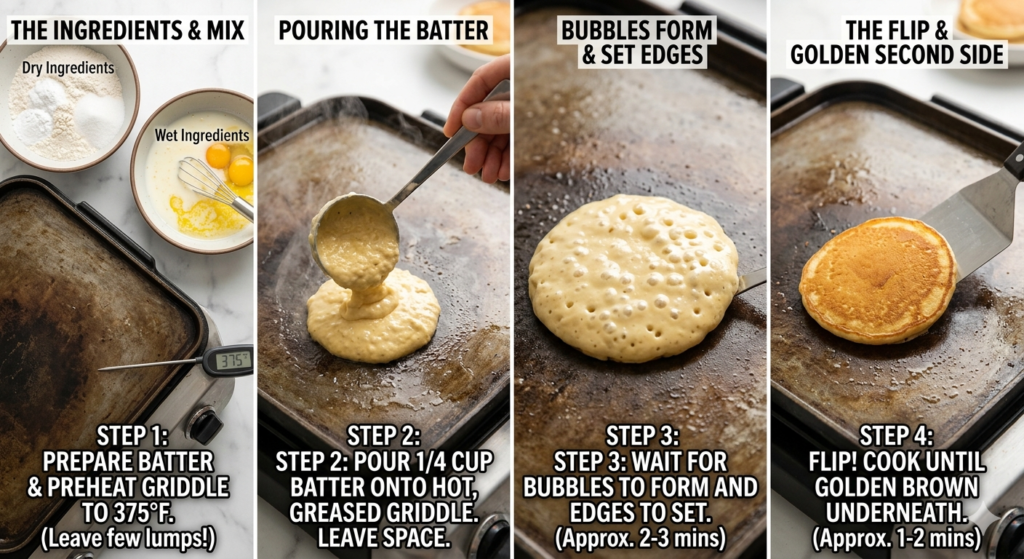
- Whisk the dry ingredients — flour, baking powder, salt, and sugar — in a large bowl. Make a well in the center.
- Mix wet ingredients separately — whisk milk, egg, melted butter, and vanilla in a jug until combined.
- Combine wet into dry — pour the wet mixture into the well and fold gently with a spatula or whisk. Stop mixing as soon as no dry flour is visible — lumps are fine.
- Rest the batter for 5 minutes while your non-stick pan or griddle heats over medium heat.
- Grease lightly — add a small knob of butter or a thin film of oil and swirl to coat.
- Pour ¼ cup of batter per pancake and cook until bubbles form and pop across the surface, about 2–3 minutes.
- Flip once and cook 1–2 minutes more until golden brown underneath. Do not press down with the spatula.
- Serve immediately, or keep warm in a 200°F (93°C) oven while you finish the batch.
How to Make Fluffy Pancakes That Actually Rise
Everyone wants how to make fluffy pancakes that stack tall and feel like a cloud. Here are the two techniques I rely on every single time.
The Buttermilk Trick for Extra Soft Texture
Buttermilk is the single biggest upgrade you can make to any pancake recipe. Its natural acidity reacts with baking powder (and optionally a touch of baking soda) to produce extra lift and a tender crumb. The slight tang also balances sweetness beautifully. No buttermilk? Add 1 tablespoon of lemon juice or white vinegar to regular milk and let it sit for 5 minutes — you’ll get a very convincing substitute.
Why Resting the Batter Is Non-Negotiable
In my experience, skipping the rest is the number one mistake home cooks make. During those 5–10 minutes, gluten strands that formed during mixing relax, the flour granules fully absorb the liquid, and the baking powder begins its first activation cycle. The result is a smoother, more cohesive batter that cooks up dramatically fluffier. I always rest mine while the griddle preheats — zero extra time wasted.
⚡ Pro TipFor maximum fluffiness, separate your egg. Mix the yolk in with the wet ingredients, then whip the egg white to soft peaks and fold it in last — just before cooking. This traps air directly into the batter.
How to Make Pancakes with Pancake Mix (Faster, Better Results)
Box pancake mix gets a bad rap, but with a few tweaks you can produce homemade pancakes that taste genuinely from scratch. Here’s how to make pancakes with pancake mix that nobody will guess came from a box:
- Add vanilla extract — ½ tsp per cup of dry mix completely transforms the flavor profile.
- Use melted butter instead of oil — the fat is the same but butter adds a richness and aroma that oil can’t match.
- Let the batter rest for 5 minutes before cooking, even with mix. The rest time works regardless of whether you started from scratch.

How to Make Banana Pancakes (2-Ingredient + Full Version)
Banana pancakes are one of the most searched breakfast recipes today — and for good reason. They’re naturally sweet, satisfying, and incredibly versatile.
2-Ingredient version (egg-free option): Mash 1 ripe banana until completely smooth and mix with 1 egg (or 1 flax egg for vegan). Cook in a lightly greased non-stick pan over medium-low heat, about 1–2 minutes per side. These are more crepe-like than fluffy but wonderfully wholesome.
Full recipe version — for proper fluffy banana pancakes, follow the classic recipe above but: reduce milk to 1 cup, mash 1 large ripe banana into the wet ingredients, and add ½ tsp cinnamon. The mashed banana adds natural sweetness and keeps the pancakes incredibly moist. I always use overripe bananas with lots of black spots — they’re sweeter and blend seamlessly into the batter.
⚡ Pro TipCook banana pancakes over medium-low heat — lower than regular pancakes. The natural sugars in banana caramelize quickly and can burn before the center sets.
How to Make Protein Pancakes (High-Protein Breakfast Recipe)
Protein pancakes have exploded in popularity over the last few years, and now they’ve genuinely caught up to traditional recipes in texture and taste. Here are two reliable methods for a high-protein breakfast that stays light and airy:
Protein powder method: Replace ¼ cup of flour with your favorite vanilla or unflavored protein powder. Add an extra splash of milk if the batter feels too thick. Expect roughly 20–25g of protein per 2-pancake serving.
Greek yogurt method: Swap half the milk for full-fat Greek yogurt. This adds protein, creaminess, and a subtle tang without changing the texture significantly. Combine with one scoop of protein powder for maximum macros.
In both cases, don’t overcook — protein-enriched batters dry out faster than standard ones. Pull them off the heat as soon as they’re just set.

How to Make Japanese Pancakes (Soufflé Pancake Recipe)
Japanese soufflé pancakes — the tall, cloud-like, jiggly stacks you’ve seen all over social media — are genuinely achievable at home. The technique is what separates them from the rest.
The key difference: whipped egg whites. Separate your eggs, whip the whites to stiff peaks with a pinch of cream of tartar, then gently fold them into a simple batter (egg yolk, milk, flour, baking powder). The trapped air is what makes them skyscraper-tall.
Ring molds are essential — without them, the batter spreads flat before it sets. Grease 3-inch metal rings well and place them on a lightly greased non-stick pan over the lowest heat possible.
Steam cooking is the secret to the interior. Add 1 tbsp of water to the pan, cover immediately with a lid, and cook for 4–5 minutes. Flip carefully using a spatula under both the ring and pancake. Cook another 4 minutes covered.
The result: an impossibly jiggly, cotton-soft soufflé pancake that wobbles on the plate. Serve immediately — they deflate within minutes.
How to Make Pancakes Without Eggs (Vegan & Allergy-Friendly)
Eggs provide structure, binding, and a touch of richness — but they’re entirely replaceable. Here’s how to make vegan pancakes that nobody will miss.
Best Egg Substitutes for Pancakes That Actually Work
- Flaxseed egg (1 tbsp ground flax + 3 tbsp water, rested 5 min) — excellent binder, adds a very slight nuttiness. Best all-around substitute.
- Chia egg (1 tbsp chia seeds + 3 tbsp water, rested 5 min) — similar to flax, slightly more gel-like. Can add visible specks.
- Mashed banana (¼ cup per egg) — adds binding AND flavor. Makes pancakes denser and naturally sweeter. Great for banana pancake recipes.
- Applesauce (¼ cup per egg) — neutral flavor, adds moisture and binding. Results in slightly softer, moister pancakes with a tender crumb.
- Aquafaba (3 tbsp per egg) — the liquid from a can of chickpeas. Remarkably neutral in flavor and produces the lightest, most airy egg-free pancakes of any substitute on this list.
Pair any of these with plant-based milk (oat milk works beautifully) and vegan butter to keep the recipe fully vegan-friendly.
How to Make Blueberry Pancakes & Chocolate Chip Pancakes
Two of the most beloved pancake variations, handled together — because the technique is nearly identical.
For blueberry pancakes: make your standard batter, then fold in ¾ cup of fresh (or frozen, unthawed) blueberries right before cooking. Frozen blueberries can turn the batter purple if over-stirred, so fold gently and work quickly.
For chocolate chip pancakes: fold in ½ cup of mini chocolate chips after mixing — mini chips distribute more evenly than standard ones.
The golden rule for both: never press down with a spatula while cooking. Pressing squeezes out steam, flattens your pancake, and pops the berries or smears the chips. Let them cook undisturbed.
How to Make Potato Pancakes (Latke-Style Recipe)
Potato pancakes are an entirely different animal from their batter-based cousins — crispier, savory, and deeply satisfying. Here’s how to get them right:
- Grate 2 large russet potatoes on the coarse side of a box grater.
- Remove moisture aggressively — squeeze grated potato in a clean kitchen towel until very dry. This is non-negotiable for crispiness.
- Season with salt, pepper, 1 grated small onion, and 1 egg (binder).
- Pan-fry in ¼ inch of neutral oil over medium-high heat, about 3–4 minutes per side until deeply golden.
Serve with sour cream and chives or applesauce. They’re crispy on the outside, tender in the center, and completely irresistible.

How to Make Syrup for Pancakes at Home
Store-bought maple syrup is wonderful, but homemade syrup for pancakes costs a fraction of the price and takes under 10 minutes.
3-Ingredient Maple-Style Syrup:
- 1 cup brown sugar
- ½ cup water
- 1 tsp pure maple extract (or vanilla extract for a different flavor)
- Optional: 1 tbsp unsalted butter for a richer, golden finish
Combine sugar and water in a small saucepan over medium heat, stirring until dissolved. Simmer 5 minutes until slightly thickened. Remove from heat, stir in extract (and butter if using). Pour warm over your stack. Keeps refrigerated for 2 weeks.
Common Pancake Mistakes & How to Fix Them
1. Overmixing the batter — develops too much gluten, resulting in dense, rubbery pancakes. Fix: fold just until no dry flour remains.
2. Pan too hot or too cold — burns the outside or creates pale, gummy interiors. Fix: medium heat, preheated 2–3 minutes, water-drop test.
3. Skipping the rest time — results in flatter, tougher pancakes. Fix: always rest batter 5–10 minutes before cooking.
4. Wrong batter consistency — too thick means dense; too thin means flat and lacey. Fix: pancake batter should ribbon off the spoon like heavy cream.
5. Lifting the pancake too early — causes tearing and uneven cooking. Fix: wait until bubbles form and pop across the surface and edges look matte before flipping.
If dietary needs call for a gluten-free option, our gluten-free pancakes recipe delivers the same fluffy, golden stack you love using a simple blend of alternative flours — perfect for the whole family without any compromise on texture or taste. For a different kind of breakfast bread experience, the classic crumpet recipe offers those iconic honeycomb holes that soak up butter and honey beautifully at any morning table. Explore our full breakfast and brunch lineup at MyRecipesCollections for more morning meal inspiration.
Frequently Asked Questions About Making Pancakes
Can I make pancake batter the night before?
Yes — mix the dry and wet ingredients separately and refrigerate each in covered containers overnight. Combine them in the morning and rest for 5 minutes before cooking. Fully mixed batter can be refrigerated up to 24 hours, though it may lose a little lift; a small pinch of extra baking powder stirred in the next morning helps restore it.
Why are my pancakes flat?
The most common culprits are expired baking powder, overmixed batter, or skipping the rest time. Test your baking powder by dropping a teaspoon into hot water — it should bubble vigorously. Also check that you’re not using too much liquid, which thins the batter and prevents proper rise.
How do I know when to flip the pancake?
Watch the surface. When bubbles appear across the entire top of the pancake and begin to pop, and when the edges look set and no longer shiny or wet, it’s time to flip. This typically takes 2–3 minutes on medium heat. Flipping too early is the most common flip mistake.
Can I freeze leftover pancakes?
Absolutely — and they reheat beautifully. Let pancakes cool completely, then stack them between sheets of parchment paper and place in a zip-lock freezer bag. They keep well for up to 3 months. To reheat, pop them in the toaster (best), microwave for 60 seconds, or warm in a 300°F oven for 8 minutes
What is the best pan for making pancakes?
A flat, heavy non-stick pan or a cast iron griddle is ideal. Non-stick ensures easy release and requires less butter. Cast iron holds heat exceptionally evenly but takes 5–7 minutes to fully preheat. Avoid pans with ridges or sloped edges — you need a completely flat surface to flip cleanly.

Hi, I’m Jamie! I’m a home cook turned recipe developer with a deep love for honest, approachable food. After years of experimenting in my own kitchen — and feeding anyone who’d sit still long enough — I started My Recipes Collections to share the dishes that have become staples at my table.
My recipes focus on bold flavors, simple techniques, and ingredients you can actually find at your local grocery store. Whether you’re a weeknight warrior or a weekend baker, there’s something here for you.