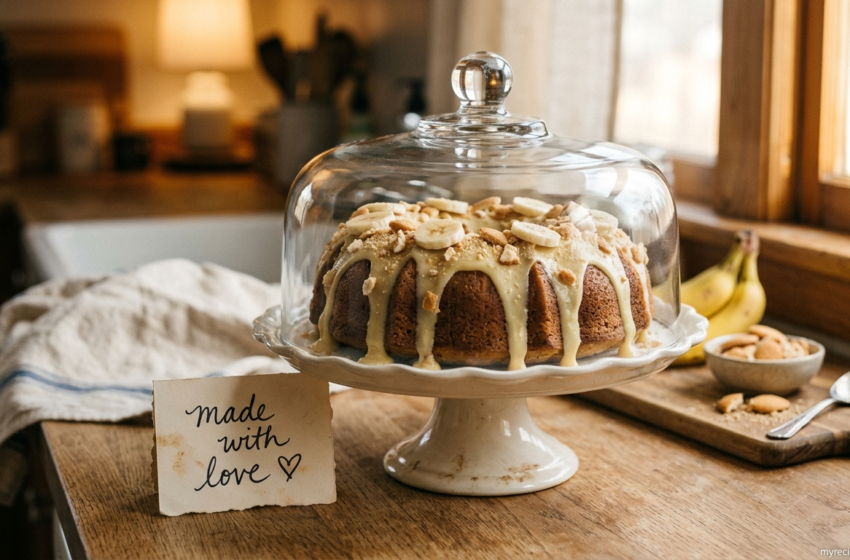
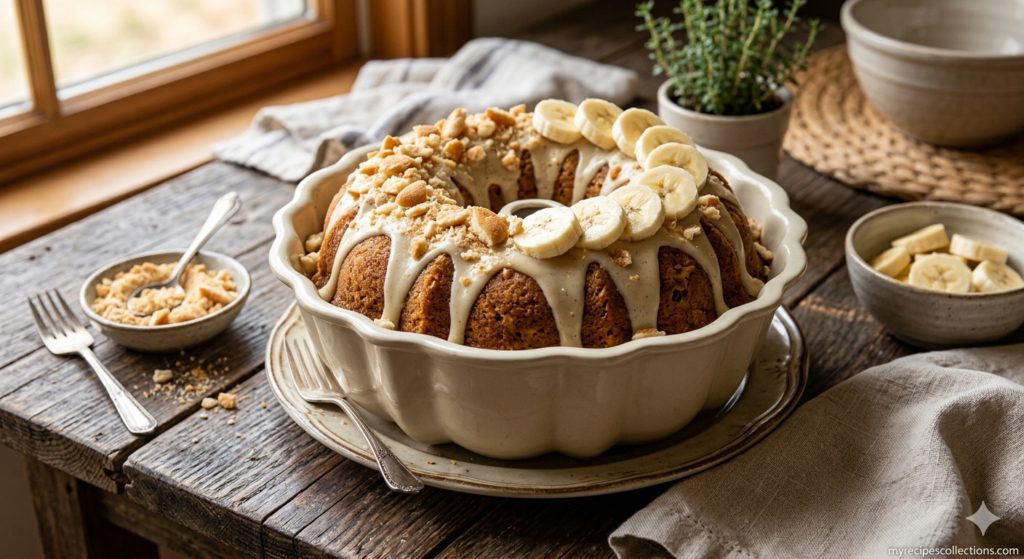
If you are dreaming of the most moist banana pudding pound cake that combines the nostalgic soul of old-fashioned Southern banana pudding with the buttery richness of a classic pound cake — you have landed in exactly the right place. This recipe has been tested, perfected, and loved by thousands of home bakers, and today I am sharing everything you need to bake a showstopper that ranks above anything you will find in a bakery.
Whether you want an easy banana pudding pound cake, a sour cream version, a cake mix shortcut, or a truly scratch-made old-fashioned beauty — this one complete guide covers every variation so you never have to search again
Table of Contents
What Makes This Banana Pudding Pound Cake the Best?
Most banana pudding pound cake recipes online give you one option — a standard bundt cake with banana extract. This guide is different. Here is what sets it apart:
- Triple banana flavor: Real mashed ripe bananas + banana cream pudding mix + banana extract work together for deep, layered banana flavor that extract alone can never achieve.
- Ultra-moist crumb: The combination of sour cream, butter, and pudding mix creates a dense yet tender crumb that stays moist for days.
- Topical authority: This recipe covers the scratch version, the cake mix shortcut, the sour cream variation, and the old-fashioned Southern style — all in one place.
- Nilla wafer crust option: Line the bottom of your bundt pan with crushed vanilla wafers before pouring the batter. This creates an authentic banana pudding texture built right into the cake.
This is not just a pound cake with banana flavor. This is banana pudding transformed into pound cake form, and the difference is everything.
Ingredients You Need (With Substitutions)
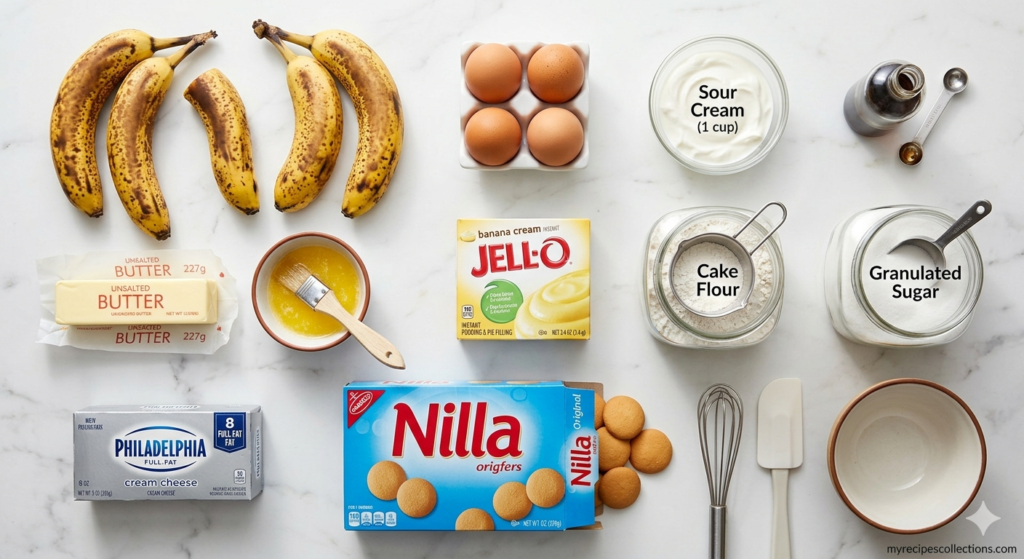
For the Pound Cake Batter:
- 3 very ripe bananas (the spottier, the better — maximum natural sweetness and moisture)
- 1 cup (2 sticks) unsalted butter, room temperature
- 3 cups granulated sugar
- 6 large eggs, room temperature
- 1 cup full-fat sour cream (the secret to a moist, tender crumb)
- 1 tablespoon pure vanilla extract
- 1 teaspoon banana extract (optional but recommended)
- 3 cups cake flour (or all-purpose flour — see notes below)
- 1 package (3.4 oz) instant banana cream pudding mix (dry — do NOT prepare it)
- ½ teaspoon baking powder
- ½ teaspoon fine sea salt
For the Vanilla Glaze:
- 1½ cups powdered sugar
- 3–4 tablespoons whole milk
- ½ teaspoon vanilla extract
- Pinch of salt
Optional Toppings:
- Crushed Nilla wafers (vanilla wafers)
- Fresh banana slices
- Cream cheese frosting (see variation below)
Ingredient Substitutions:
How to Make Banana Pudding Pound Cake From Scratch — Step-by-Step
This scratch recipe produces the most flavourful, deeply moist banana pudding pound cake. Follow every step carefully for guaranteed results.
Step 1: Prep Your Pan and Oven
Preheat your oven to 325°F (163°C). This lower temperature is critical — it prevents the outside from over-browning while the dense batter bakes through slowly and evenly. Generously spray a 12-cup bundt pan with nonstick baking spray (the kind with flour). Do not skip this step — pound cake batter sticks aggressively.
If you want the Nilla wafer crust: press ¾ cup crushed vanilla wafers firmly into the bottom and sides of the greased pan before adding any batter.
Step 2: Mash Your Bananas Properly
Mash 3 very ripe bananas in a bowl until almost completely smooth with just a few small lumps remaining. Very ripe bananas (dark yellow with brown spots) have converted most of their starch to natural sugars, which means more banana flavor, more natural sweetness, and more moisture in your finished cake. Set aside.
Step 3: Cream Butter and Sugar
In the bowl of a stand mixer fitted with the paddle attachment (or a large bowl with a hand mixer), beat butter and sugar together on medium-high speed for 5 full minutes. The mixture should turn pale, light, and fluffy. This step is not optional — proper creaming creates the air pockets that give pound cake its characteristic tender, close crumb.
Step 4: Add Eggs One at a Time
Add eggs one at a time, beating on medium speed for 30 seconds after each addition. Do not rush this step. Adding all eggs at once can break the emulsion and result in a dense, greasy cake. Scrape down the sides of the bowl between additions.
Step 5: Add Sour Cream, Vanilla, and Banana Extracts
Mix in the sour cream, vanilla extract, and banana extract until just combined. The batter may look slightly curdled at this stage — that is completely normal. It will come together when the dry ingredients are added.
Step 6: Fold in Mashed Bananas
Add the mashed bananas and stir gently to combine. Do not overmix at this stage.
Step 7: Combine Dry Ingredients
In a separate bowl, whisk together: cake flour, dry banana cream pudding mix, baking powder, and salt. Adding the dry pudding mix directly to the flour ensures it distributes evenly throughout the batter, which is what gives every single bite that iconic banana pudding flavor.
Step 8: Add Dry to Wet — Low and Slow
With the mixer on low speed, add the dry ingredients to the wet ingredients in three additions, mixing until just combined after each addition. Do not overmix — overworking the gluten after adding flour creates a tough, chewy crumb instead of a tender pound cake texture.
Step 9: Pour and Bake
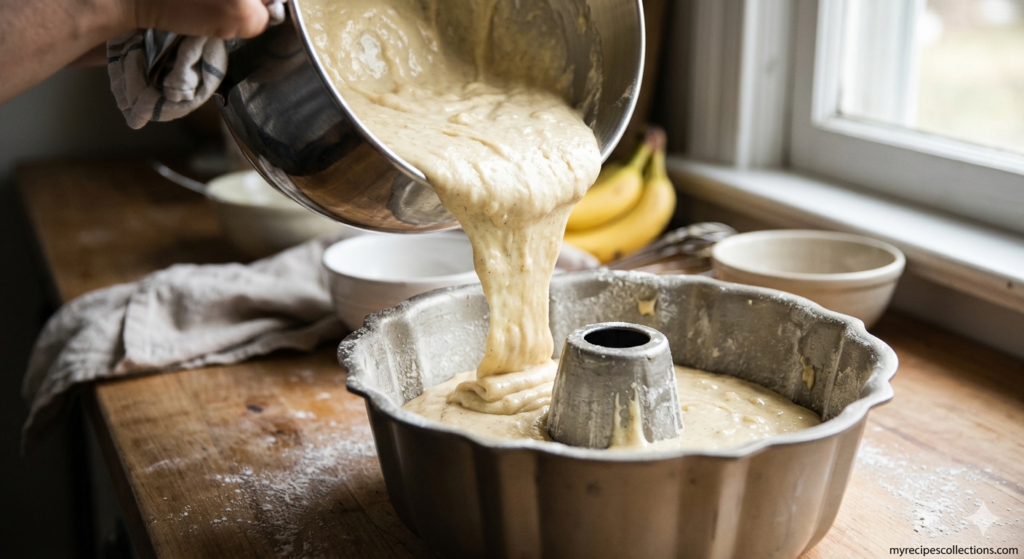
Pour the batter into the prepared bundt pan and smooth the top with a spatula. Tap the pan gently on the counter 2–3 times to release any air bubbles. Bake at 325°F for 60–70 minutes, or until a long skewer inserted into the thickest part comes out clean (a few moist crumbs are fine; wet batter is not).
Do not open the oven door during the first 45 minutes of baking.
Step 10: Cool Completely Before Glazing
Let the cake cool in the pan for 15 minutes exactly — not less, not more. Then invert it onto a wire cooling rack and allow to cool completely (at least 1 hour) before adding any glaze or frosting. Glazing a warm cake results in a thin, runny coating that soaks in and disappears.
Easy Banana Pudding Pound Cake From Cake Mix
Short on time but not willing to sacrifice flavor? The banana pudding pound cake from cake mix method delivers an impressive result in far less time.
Cake Mix Ingredients:
- 1 box (15.25 oz) yellow cake mix or butter cake mix
- 1 package (3.4 oz) instant banana cream pudding mix (dry)
- 4 large eggs
- ½ cup vegetable oil
- ½ cup full-fat sour cream
- ½ cup whole milk
- 2 very ripe bananas, mashed
- 1 teaspoon vanilla extract
- 1 teaspoon banana extract (optional)
Instructions:
- Preheat oven to 350°F. Grease a 12-cup bundt pan thoroughly.
- Combine the dry cake mix and dry pudding mix in a large bowl and whisk together.
- Add eggs, oil, sour cream, milk, and vanilla. Beat with a hand mixer on medium speed for 2 minutes.
- Fold in the mashed bananas by hand.
- Pour into the prepared pan and bake for 45–55 minutes until a skewer comes out clean.
- Cool 15 minutes in pan, then invert and cool completely.
- Top with vanilla glaze and crushed Nilla wafers.
Pro Tip: Adding sour cream to the cake mix batter transforms a standard box-mix cake into something that tastes genuinely homemade. The sour cream adds fat, moisture, and a slight tang that balances the sweetness perfectly.
Banana Pudding Pound Cake With Sour Cream
The banana pudding pound cake with sour cream is the most beloved variation for good reason. Sour cream does three critical things in pound cake baking:
- Adds fat and moisture — sour cream has a higher fat content than milk, which lubricates the gluten strands and creates a more tender crumb.
- Activates the leavening — the natural acidity in sour cream reacts with baking powder to create lift, giving even a dense pound cake a slightly lighter texture.
- Balances sweetness — the gentle tang of sour cream cuts through the sweetness of the sugar and banana, creating a more complex, well-rounded flavor.
For the sour cream version, use the full scratch recipe above exactly as written — it already includes 1 cup of full-fat sour cream. For an even more pronounced tang, you can substitute ½ cup of the sour cream with full-fat cream cheese (softened). This cream cheese-sour cream hybrid is the combination used in high-end Southern bakeries and produces an absolutely exceptional crumb.
Old Fashioned Banana Pudding Pound Cake (Southern Style)
The old fashioned banana pudding pound cake is about more than just a recipe — it is about honoring a tradition. In the American South, banana pudding and pound cake have both been Sunday dinner staples for generations. This version brings them together exactly the way grandmothers used to:
- No shortcuts, no boxed cake mix — only real butter, real eggs, real bananas
- Nilla wafer crust baked directly into the bundt pan
- Slow-baked at 325°F for maximum moisture retention
- Simple powdered sugar glaze instead of heavy frosting — letting the cake speak for itself
- Banana pudding filling option: After cooling and inverting the cake, use the handle of a wooden spoon to poke deep holes across the top. Pour warm homemade banana pudding (or prepared instant pudding) over the top and let it soak in for 30 minutes before glazing. This creates a banana pudding poke cake effect inside a traditional pound cake structure.
This is the version you bring to church potlucks, family reunions, and any occasion where you need a crowd-pleasing dessert that people will talk about for years.
Pro Tips for the Moistest Pound Cake Every Time
These are the tips that separate a good pound cake from an exceptional one:
Use room temperature ingredients. Cold butter will not cream properly. Cold eggs will shock the fat and cause the batter to break. Remove butter, eggs, and sour cream from the refrigerator at least 1 hour before baking.
Use very ripe bananas. The best bananas for baking are dark yellow with heavy brown spotting — nearly black. These have converted their starch to sugar, providing maximum natural sweetness, moisture, and banana flavor. Never use green or just-yellow bananas for pound cake.
Measure flour correctly. Spoon flour into your measuring cup and level it off — do not scoop directly from the bag. Scooping packs in up to 20% more flour, which makes your cake dry and dense.
Do not overmix after adding flour. Mix until the flour just disappears. Overmixing develops gluten and turns your tender pound cake into something closer to bread.
The skewer test is your only guide. Every oven runs slightly differently. Begin checking at the 55-minute mark by inserting a long wooden skewer into the thickest part of the cake. It should come out with just a few moist crumbs — not wet batter, but not bone dry either.
Cool before glazing — always. A warm pound cake will absorb any glaze immediately, and you will lose all the beautiful visual texture. Patience is the most important ingredient in the finishing stage.
Best Glaze & Frosting Options
Option 1: Classic Vanilla Glaze (Recommended)
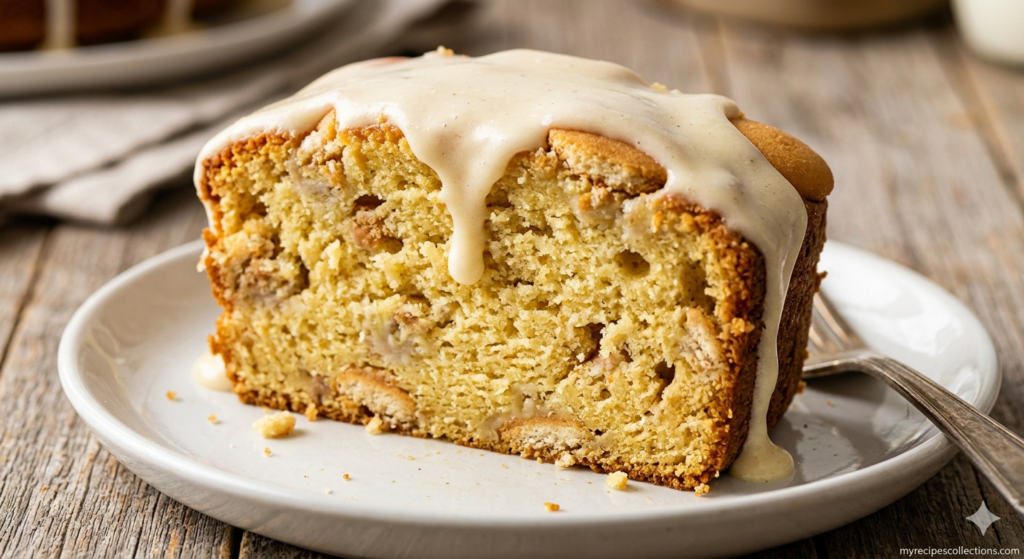
Whisk together 1½ cups powdered sugar, 3–4 tablespoons milk, and ½ teaspoon vanilla until smooth and pourable. Drizzle over completely cooled cake. Immediately top with crushed Nilla wafers before the glaze sets.
Option 2: Cream Cheese Frosting
Beat 4 oz softened cream cheese with 1 cup powdered sugar, 2 tablespoons milk, and ½ teaspoon vanilla until smooth. Spread generously over cooled cake. This thicker frosting pairs especially well with the sour cream version.
Option 3: Banana Cream Pudding Frosting
Mix 1 package dry banana cream pudding mix with 1 cup powdered sugar, 4 oz softened cream cheese, and 3–4 tablespoons heavy cream. Beat until smooth and spreadable. This frosting tastes like banana pudding itself and is what takes this cake over the top.
Common Mistakes to Avoid
Using the wrong pudding mix. Always use instant pudding mix — never “cook and serve.” Only the dry powder goes into the batter. Do not prepare the pudding first.
Underbaking. A pound cake is dense and takes time. The most common mistake is pulling the cake too early. The center should reach an internal temperature of 210°F or a skewer should come out clean.
Skipping the pan prep. A bundt pan has complex grooves. Use generous baking spray with flour and make sure every surface is coated. A sticking cake is heartbreaking.
Opening the oven door too early. During the first 45 minutes, the batter is setting its structure. Opening the door introduces cold air that can cause the cake to sink in the middle.
Using green bananas. Unripe bananas have starches that have not converted to sugar yet — the flavor will be flat and the texture will be stiff. Wait for fully ripe, spotty bananas.
Storage, Freezing & Make-Ahead Tips
Room temperature: Store the unglazed cake in an airtight container or wrapped tightly in plastic wrap for up to 3 days at room temperature.
Refrigerator: If topped with cream cheese frosting, store in the refrigerator for up to 5 days. Bring to room temperature for 30 minutes before serving for the best texture.
Freezer: Pound cake freezes exceptionally well. Wrap individual slices (or the whole unglazed cake) in plastic wrap, then in foil. Freeze for up to 3 months. Thaw overnight in the refrigerator or at room temperature for 2 hours. Add glaze after thawing.
Make-ahead: Bake the cake 1–2 days ahead and store unfrosted. Add glaze and toppings the day of serving for the freshest presentation.
Frequently Asked Questions (FAQ)
Can I make banana pudding pound cake without a bundt pan?
Yes. You can bake this in a standard 10-inch tube pan (angel food cake pan), or divide the batter between two 9×5 inch loaf pans. Adjust baking time — loaf pans will take approximately 50–60 minutes at 325°F.
What is the difference between banana pudding pound cake and regular banana pound cake?
A regular banana pound cake uses only mashed bananas for flavor. A banana pudding pound cake adds dry instant pudding mix to the batter, which adds both intense banana pudding flavor and extra moisture due to the modified starches in the pudding mix. The result is noticeably more flavorful and stays moist significantly longer.
Why did my banana pudding pound cake sink in the middle?
Sinking is almost always caused by one of three things: the oven door was opened too early, the cake was underbaked, or too much liquid was added. Follow the recipe precisely and use the skewer test (not the timer) to determine doneness.
Can I use overripe frozen bananas?
Absolutely. Thaw frozen bananas completely and drain any excess liquid before mashing. Frozen-and-thawed bananas are actually ideal for baking — the freezing process breaks down the cell walls and releases even more of the banana’s natural flavor and sweetness.
How many Nilla wafers should I use?
For the crust pressed into the pan, use about 20 crushed vanilla wafers (¾ cup crumbs). For garnishing the top after glazing, another 10–15 lightly crushed wafers creates a beautiful finish.
Can I add nuts?
Yes — ¾ cup of chopped walnuts or pecans can be folded into the batter before baking. Toasting them first (5 minutes at 350°F) deepens their flavor significantly.
More Recipes You’ll Love
If this banana pudding pound cake had you smiling, you are going to love browsing the full collection of easy dessert recipes and comfort food classics over at My Recipes Collections — your one-stop destination for recipes that work every single time.
If you love baking with bananas, you might also enjoy the Chrissy Teigen banana bread recipe — a celebrity-tested loaf that delivers the same rich, moist texture banana lovers crave. For those who prefer a deeper, chocolate-forward pound cake, our chocolate pound cake recipe uses the same old-fashioned creaming method to produce a dense, buttery crumb that pairs beautifully with any frosting. Both recipes are part of our growing baking library at MyRecipesCollections, where every recipe is tested and curated with home bakers in mind.

Hi, I’m Jamie! I’m a home cook turned recipe developer with a deep love for honest, approachable food. After years of experimenting in my own kitchen — and feeding anyone who’d sit still long enough — I started My Recipes Collections to share the dishes that have become staples at my table.
My recipes focus on bold flavors, simple techniques, and ingredients you can actually find at your local grocery store. Whether you’re a weeknight warrior or a weekend baker, there’s something here for you.